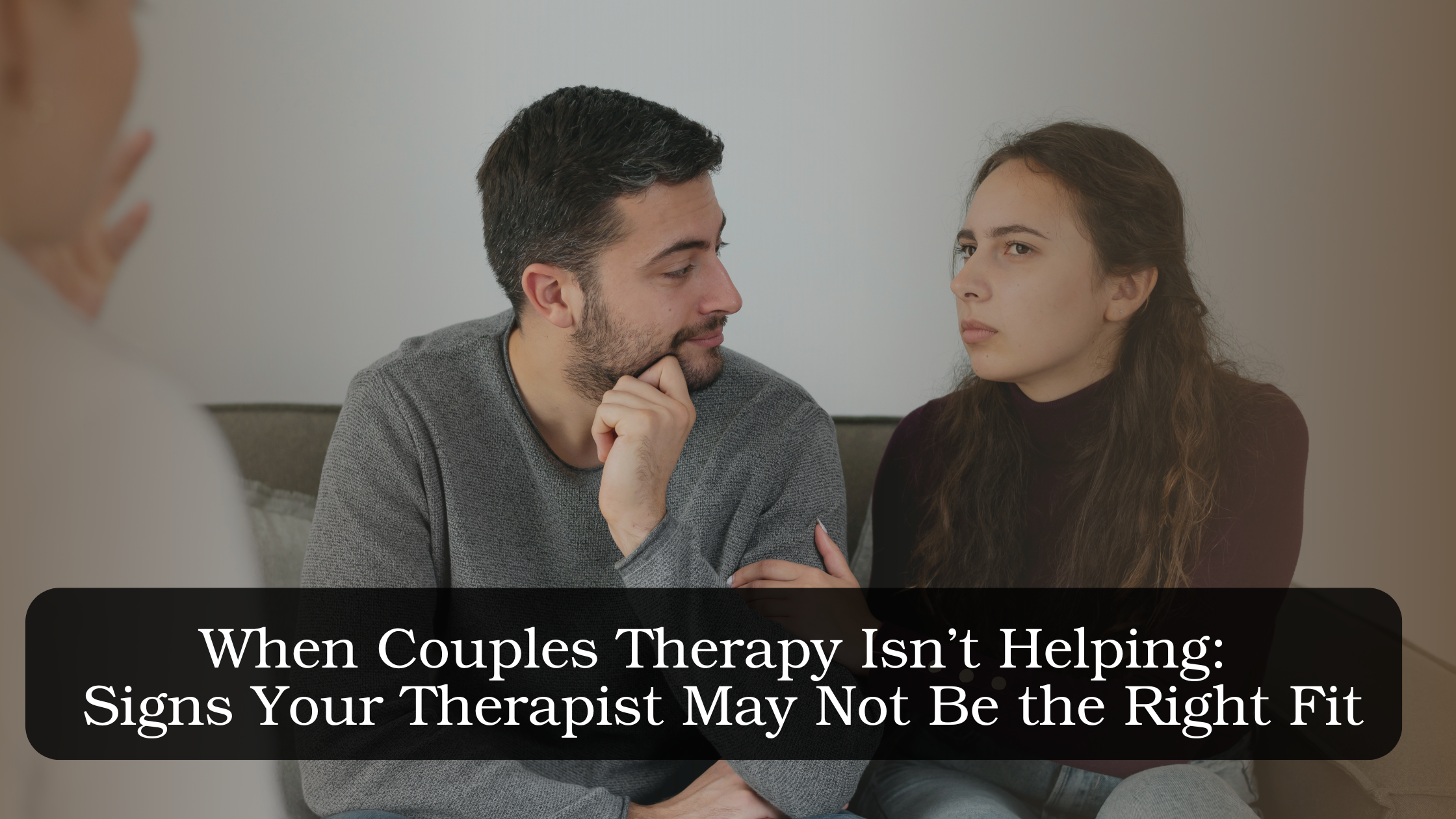
When Couples Therapy Isn’t Helping: Signs Your Therapist May Not Be the Right Fit
Couples therapy is supposed to help you understand each other, communicate better, and work through difficult issues together. But what happens when you leave every session feeling more frustrated, misunderstood, or disconnected? Sometimes, the problem may not be couples therapy itself. It may be that the therapist’s approach is not working for your relationship. A therapist can be qualified and experienced yet still be the wrong fit for a particular couple
.
In this blog, we’ll explore what that looks like, from feeling like one partner is being blamed to getting stuck in the same arguments every session. We’ll also look at how poor therapeutic experiences can affect a relationship, what healthy couples therapy should feel like, and what you can do when therapy no longer feels helpful.
Understanding What Makes A Therapist Wrong Fit
Calling someone a “bad therapist” does not always mean they are unqualified, unethical, or inexperienced.
Sometimes, the problem is simply that their approach does not work well for your relationship.
A therapist may be highly trained but still struggle to create the kind of therapeutic relationship that you and your partner need.
A poor fit may involve:
- One partner feeling consistently favored.
- A communication style that feels uncomfortable.
- Too little guidance when you need structure.
- Too much direction when you need space.
- Limited experience working with couples.
- A lack of trust between the couple and therapist.
Therapy is not one-size-fits-all. An approach that works well for one couple may feel frustrating or ineffective for another.
Understanding this distinction matters because feeling uncomfortable does not automatically mean your therapist is doing something wrong.
However, certain patterns can suggest that the therapy itself may be contributing to the problem.

Signs Your Couples Therapy May Not Be Helping
Not every difficult therapy session is a warning sign. Couples therapy can bring up uncomfortable emotions and difficult conversations.
The concern is when the same negative experience keeps happening without meaningful progress.
| What may be happening | Why it can become a concern |
| One partner always feels blamed | They may become defensive or stop participating openly |
| Sessions repeat the same argument | The couple may feel stuck without learning new ways to respond |
| You consistently leave feeling worse | Frustration can begin spilling into the relationship |
| Boundaries are not maintained | Sessions can become chaotic or disrespectful |
| Important issues are avoided | The couple may keep circling around the real concern |
These signs are more meaningful when they happen repeatedly rather than after one difficult session.
Looking at each sign more closely can help you understand whether your concerns are about normal therapy discomfort or a deeper problem.
One Partner Consistently Feels Blamed
Couples therapy should give both partners an opportunity to explain their perspective.
If one person repeatedly leaves feeling like they are “the problem,” they may eventually stop feeling safe enough to speak honestly.
They may begin to:
- Become defensive during sessions.
- Avoid sharing certain thoughts.
- Feel that their partner is being favored.
- Assume the therapist has already made up their mind.
This can make the relationship feel even more divided.
And when blame becomes the focus, couples can lose sight of the interaction happening between them.
Every Session Turns Into The Same Argument
Therapy should create opportunities to understand conflict differently.
It should not simply become another place where couples repeat the same argument without direction.
For example, a couple may spend every session arguing about household responsibilities. One partner says they do everything. The other says they are constantly criticized.
If the same exchange happens repeatedly without exploring the pattern underneath it, both partners may leave feeling frustrated.
A useful therapy process should help couples understand what keeps the conflict going, sometimes revealed through the pursuer-distancer cycle.
That becomes even more important when sessions consistently leave both partners feeling emotionally drained.
You Leave Sessions Feeling Worse Each Time
Feeling emotional after therapy is not necessarily a problem.
Difficult topics can naturally bring up sadness, anger, frustration, or vulnerability.
The concern is when you consistently leave sessions feeling:
- More disconnected from your partner.
- More confused about what happened.
- More resentful toward each other.
- Less willing to communicate.
- Unsure whether therapy is helping at all.
One difficult session does not tell you much. A repeated pattern deserves closer attention.
The same applies when the therapy environment itself starts to feel poorly managed.
Sessions Lack Boundaries Structure Or Direction
A couples therapist has an important role in keeping conversations productive.
Without enough structure, sessions can quickly turn into two partners interrupting, defending themselves, or talking over each other.
You may notice:
- Frequent interruptions.
- Raised voices going unchecked.
- One partner dominating the conversation.
- No clear direction during difficult discussions.
- Little guidance for handling conflict outside sessions.
A therapist does not need to control every conversation. But there should be enough structure for both partners to participate respectfully.
That structure also matters when couples are trying to discuss the issues they find hardest to talk about.
Important Relationship Issues Keep Getting Ignored
Sometimes therapy stays focused on safer or easier topics while the concerns that brought the couple in remain untouched.
For example, a couple may discuss communication techniques every week while avoiding a major issue involving trust or intimacy.
You may start feeling like you are making progress on the surface while the real concern remains unresolved.
Ask yourself:
- Are the issues we came to therapy for being addressed?
- Can we raise difficult subjects?
- Do we understand what we are working toward?
- Are important concerns being repeatedly pushed aside?
When important issues remain untouched, it can be difficult to know whether therapy is actually addressing what your relationship needs.
And over time, these experiences can affect more than the therapy room.
How an Unhelpful Therapy Experience Can Affect Your Relationship
When couples therapy is not the right fit, the effects can sometimes spill into everyday life.
Instead of helping partners communicate, sessions may leave them more frustrated or uncertain about each other.
This can contribute to:
- Repeated arguments.
- Increased resentment.
- Less willingness to communicate.
- Greater mistrust.
- Feeling unsupported by the therapy process.
- Hesitation about trying therapy again.
For example, if one partner repeatedly feels blamed during sessions, they may become defensive at home as well. Their partner may then become frustrated, creating another cycle of conflict.
A poor therapy experience does not necessarily mean the relationship itself is failing.
Sometimes it means the couple needs a different therapeutic approach, more specialized support, or a therapist who is a better match.
Before deciding that the therapist is the problem, however, it is also useful to consider what may be happening within the relationship itself.
Sometimes The Relationship Needs More Work
Not every difficult therapy experience is caused by the therapist.
Couples also bring their own expectations, fears, defenses, and habits into the therapy room.
Several things can make therapy feel harder than expected.
One Or Both Partners Resist The Process
Opening up about a relationship can feel uncomfortable.
One or both partners may become defensive, avoid difficult topics, or struggle to express what they really feel.
This can happen because:
- Vulnerable conversations feel uncomfortable.
- Someone is afraid of being judged.
- One partner is not ready to discuss certain issues.
- The couple expects therapy to feel easier than it actually does.
Resistance does not automatically mean therapy is failing.
It may simply show where the couple needs more support.
Expecting Therapy To Fix Everything Quickly
Couples often seek therapy when they are already exhausted by recurring problems.
It is understandable to want quick answers.
However, relationship patterns can take time to understand and change.
Progress may involve small changes such as:
- Pausing before reacting.
- Listening without immediately defending yourself.
- Recognizing a familiar conflict cycle.
- Expressing needs more clearly.
- Handling disagreements differently.
Small changes can matter even when the relationship does not transform overnight.
And sometimes, progress requires couples to become more willing to discuss the issues they have been avoiding.
Avoiding The Conversations That Matter Most
It can feel safer to discuss everyday frustrations than deeper relationship concerns.
A couple may talk about chores, schedules, or communication without addressing the hurt, fear, or resentment underneath those issues.
The harder conversation may involve:
- Trust.
- Intimacy.
- Emotional distance.
- Unresolved hurt.
- Major differences in expectations.
Avoiding these subjects can keep the relationship stuck in a recurring relationship pattern rather than addressing what’s underneath it.
Recognizing this can help you decide whether the challenge lies with the therapist, the relationship, or a combination of both.

What Healthy Couples Therapy Should Feel Like
Good couples therapy does not mean every session feels comfortable.
You may still feel challenged, emotional, or even frustrated at times.
The difference is that the discomfort should support reflection and progress rather than leave you feeling consistently blamed or dismissed.
A healthy therapy experience should include:
- Equal space for both partners.
- Respectful guidance during difficult conversations.
- A therapist who listens to both perspectives.
- Opportunities to understand recurring relationship patterns.
- Practical skills that can be used outside therapy.
Over time, you may begin to notice smaller changes in everyday life.
For example:
- You pause before reacting during arguments.
- You understand your partner’s perspective more clearly.
- You communicate your needs more directly.
- You recover from disagreements more effectively.
- You feel more connected after difficult conversations.
These changes do not happen instantly.
They develop as couples understand their patterns and learn different ways of responding to each other.
What to Do When Couples Therapy Is Not Helping
If you consistently feel that therapy is making things worse, you do not have to ignore that experience.
Start by stepping back and looking at what is actually happening.
Reflect On Your Experience With Your Partner
Before making a decision, ask yourself what specifically feels wrong.
You can consider:
- What happens during sessions?
- How do you feel afterward?
- Do both partners feel heard?
- Are important issues being addressed?
- Are you learning anything useful?
- Does your partner feel the same way?
Talking about these questions together can help you separate a therapy concern from a relationship disagreement.
Bring Your Concerns Into The Session
It may feel awkward, but you can tell your therapist what is not working.
Try being specific.
For example:
“I feel like we keep having the same argument without understanding what is underneath it.”
Or:
“I feel like my perspective is getting lost during our sessions.”
A responsive therapist can then explain their approach, clarify misunderstandings, or consider adjustments.
If your concerns are repeatedly dismissed, you have more information to consider.
Consider A Different Therapist Or Approach
You are allowed to seek another opinion.
When looking for a couples therapist, consider someone who:
- Has specific experience working with couples.
- Creates space for both partners.
- Communicates clearly.
- Can provide structure when needed.
- Understands the complexity of relationship dynamics.
Changing therapists does not mean couples therapy has failed.
It may simply mean you are looking for an approach that fits your relationship better.
How to Find the Right Couples Therapy Fit
The relationship between a couple and their therapist is an important part of the therapy experience.
You need to feel comfortable enough to discuss difficult subjects while also being willing to hear perspectives that may challenge you.
When considering a therapist, ask:
| Question | Why it matters |
| Do they regularly work with couples? | Couples therapy has different dynamics from individual therapy |
| How do they handle disagreements? | You want to understand how conflict will be managed |
| How do both partners get heard? | Balanced participation matters |
| What approach do they use? | Different couples may need different approaches |
| What happens when therapy feels stuck? | It helps to know how progress is assessed and adjusted |
You do not have to find someone who makes every session easy.
Instead, look for a therapist who can help you have difficult conversations in a way that feels respectful, structured, and productive.
That distinction can make it easier to recognize whether therapy is challenging you in a useful way or simply adding to the problem.
How Dr. Harel Papikian Creates A Balanced Therapy Space
At Dr. Harel Papikian’s practice, couples therapy focuses on creating a space where both partners can participate openly and respectfully.
Rather than deciding who is right or wrong, the focus is on understanding the patterns contributing to conflict and helping couples develop healthier ways of responding. This reflects the structure of his ARM Method.
His approach emphasizes:
- Understanding both partners’ perspectives.
- Improving communication.
- Exploring recurring relationship patterns.
- Managing conflict more constructively.
- Developing practical relationship skills.
- Creating a collaborative therapeutic experience.
This approach recognizes that couples often need more than advice about their latest argument.
They may need help understanding why the same pattern keeps appearing and what they can do differently when it happens.
If your current therapy experience feels unbalanced, confusing, or disconnected from the problems you actually want to address, exploring another perspective may help you understand what your relationship needs.
Final Thoughts:
A difficult therapy session does not automatically mean you have a bad therapist. Couples therapy can bring up uncomfortable emotions and challenging conversations. The concern is when you repeatedly have negative experiences without understanding why. A therapist who is not the right fit for you can make it harder to engage with the process, but the relationship itself may also contribute to the difficulty.
If therapy no longer feels productive, talk openly about your concerns and consider whether a different approach would better suit your relationship. Dr. Harel Papikian offers couples therapy focused on balanced communication, understanding relationship patterns, and practical change. If you are looking for a supportive space to work through relationship challenges, schedule a consultation with Dr. Papikian to explore your options.
Frequently Asked Questions
A poor therapeutic fit can sometimes increase frustration, defensiveness, or mistrust between partners. This does not mean therapy itself is harmful. The experience may indicate that the therapist’s approach, structure, or relationship with the couple needs to be reassessed.
Look for repeated patterns rather than one difficult session. Consistently feeling blamed, unheard, dismissed, or unsupported may indicate that the therapeutic relationship needs attention. Discussing these concerns directly can help clarify whether the approach can be adjusted.
Feeling emotional or upset after therapy can be normal because difficult subjects may come up. However, consistently leaving sessions feeling more disconnected, confused, or resentful without constructive insight may be worth discussing with your therapist.
Explain how specific interactions make you feel and give examples. A couples therapist should have opportunities to understand both perspectives. If you repeatedly feel overlooked after raising the concern, exploring another therapist may be appropriate.
No. Couples therapy can involve difficult conversations and uncomfortable emotions. The important distinction is whether the discomfort helps you reflect and understand each other or repeatedly leaves you feeling judged, blamed, unsafe, or stuck.
Consider reassessing the fit when concerns continue after you have discussed them, important issues remain unaddressed, or you consistently feel that the therapy is not helping you engage constructively. Seeking another perspective is a reasonable option.
Good couples therapy should help partners understand recurring patterns, communicate more effectively, navigate disagreements, and develop practical ways to respond differently. Progress can be gradual and may show up through small changes in everyday interactions.
Look at what happens outside therapy as well. Resistance, avoidance, unrealistic expectations, or unwillingness to discuss difficult issues can affect progress. Sometimes therapy is revealing where the relationship needs attention rather than causing the difficulty.

Harel Papikian
Dr. Harel Papikian is a clinical psychologist and couples therapist with more than 15 years of experience. He offers marriage counseling and couples therapy in los Angeles. It help’s couples navigate their relationship challenges and deepen their connection. Our clinic uses a unique ARM method (Awareness, Release, Mastery) to achieve rapid and profound results for our clients. We serve a diverse clientele, including LGBTQ+ and heterosexual couples, addressing issues like communication breakdowns, conflict resolution, intimacy, and trust. You can also get individual therapy sessions for concerns like depression, anxiety, and trauma.
Leave a Reply