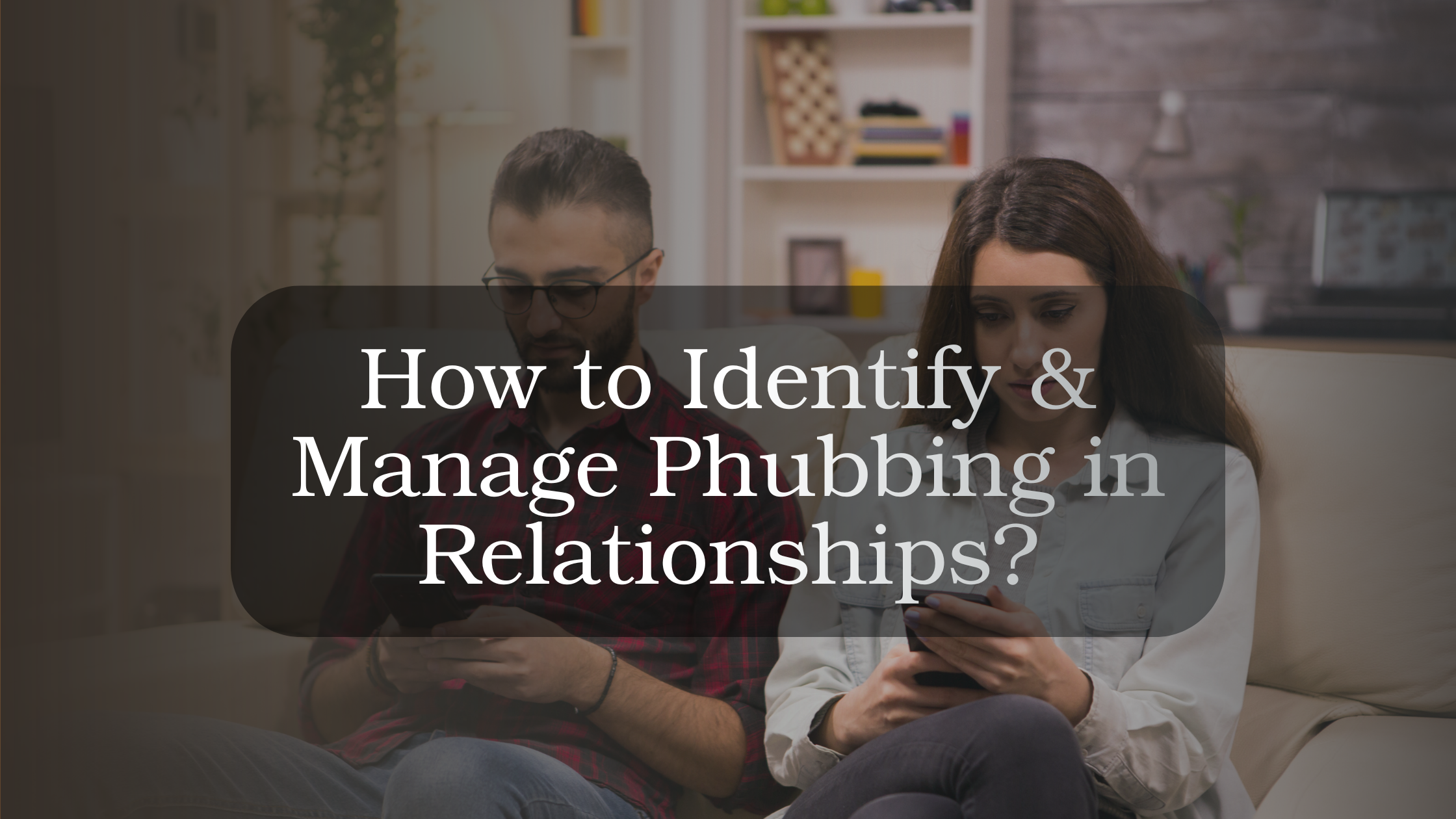
How to Identify & Manage Phubbing in Relationships?
Smartphones are deeply woven into modern relationships. While technology can help couples stay connected, it can also quietly erode intimacy when misused. One increasingly common issue therapists see today is phubbing, the act of ignoring a partner in favor of a phone. Though it may seem harmless at first, repeated phubbing can lead to emotional distance, resentment, and a breakdown in communication.
Many couples don’t realize that phubbing isn’t just a bad habit, it’s a relational stressor with real psychological consequences. Over time, it can make one partner feel unseen, unimportant, or emotionally abandoned. This article explores what phubbing is, how to identify it, why it’s damaging, and practical, therapist-approved ways to manage and repair its impact on relationships.
Understanding Phubbing in Romantic Relationships
Phubbing is a combination of the words phone and snubbing. It refers to the behavior of focusing on a mobile device during interactions with a partner, checking messages, scrolling social media, replying to emails, or consuming content instead of engaging in the present moment.
Unlike intentional neglect, phubbing is often unconscious. Many people don’t intend to hurt their partner; rather, they underestimate how frequently they disengage or how deeply it affects the relationship. Over time, however, even unintentional phubbing sends a powerful emotional message: something on my phone is more important than you right now.
Why Phubbing Has Become So Common
Several factors contribute to the rise of phubbing in relationships:
- Constant work notifications and digital demands
- Social media dopamine loops
- Fear of missing out (FOMO)
- Anxiety-driven phone checking
- Normalization of multitasking
Because smartphones are always accessible, the boundary between “together time” and “screen time” often disappears, especially in long-term relationships where routines replace intentional connection.
Signs Phubbing Is Affecting Your Relationship
1. Emotional and Behavioral Indicators
Phubbing rarely exists in isolation. It often shows up alongside emotional disconnection and communication breakdowns. You may notice:
- Conversations frequently interrupted by phone use
- One partner feeling ignored or dismissed
- Decreased eye contact and engagement
- Irritability when phone use is questioned
- Reduced emotional intimacy
Over time, the partner being phubbed may stop initiating conversations altogether, feeling it’s pointless to compete with a screen
2. How Phubbing Feels to the Receiving Partner
The emotional impact of phubbing is often underestimated. Being repeatedly ignored, even subtly, can trigger feelings of rejection and inadequacy.
Common emotional responses include:
- Feeling unimportant or invisible
- Loneliness even when together
- Resentment that builds silently
- Doubting the partner’s interest or commitment
For individuals with past attachment wounds or relational trauma, phubbing can intensify insecurity and anxiety.
Phubbing vs. Healthy Phone Use
| Healthy Phone Use | Phubbing Behavior |
| Brief, explained phone checks | Repeated, unexplained scrolling |
| Prioritizing conversations | Ignoring partner mid-sentence |
| Mutual agreement on device use | Defensive or dismissive responses |
| Phones put away during connection | Phone always present and active |
The issue is not phone use itself, it’s disconnection without awareness or repair.
The Psychological Impact of Phubbing
1. Effects on Relationship Satisfaction
Research consistently shows that phubbing is associated with lower relationship satisfaction. When one partner feels secondary to a device, emotional safety erodes. Over time, couples may experience:
- Increased conflict
- Reduced trust
- Decreased sexual and emotional intimacy
- A sense of emotional neglect
Phubbing undermines one of the most basic relationship needs: feeling valued and prioritized.
Mental Health Consequences
For the partner experiencing phubbing, ongoing exposure can contribute to:
- Anxiety and overthinking
- Depressive symptoms
- Attachment insecurity
- Emotional withdrawal
For the partner doing the phubbing, excessive phone use may also be linked to avoidance, emotional discomfort, or difficulty tolerating intimacy and presence.
Why Phubbing Triggers Conflict in Couples
a. Phubbing as a Form of Micro-Rejection
Each instance of phubbing may feel small, but cumulatively, it functions as a series of micro-rejections. Over time, these moments communicate:
- “You don’t have my full attention.”
- “I can’t pause my phone for you.”
- “This conversation isn’t important.”
These unspoken messages often lead to resentment rather than direct confrontation.
b. Why Talking About It Often Escalates
When phubbing is addressed, the conversation may quickly turn defensive:
- “I’m just checking one thing.”
- “You’re being controlling.”
- “Everyone uses their phone.”
This defensiveness can make the hurt partner feel invalidated, further deepening emotional distance.
How to Manage Phubbing in Relationships
Step 1: Acknowledge the Pattern Without Blame
The first step is naming the behavior without accusation. Instead of criticizing, describe the impact.
Example: “When we’re talking and the phone comes out, I feel disconnected and unimportant.”
This approach focuses on emotional experience rather than fault.
Step 2: Identify Triggers and Patterns
Phubbing often occurs during specific moments:
- After work when stress is high
- During meals
- Before bed
- During emotionally difficult conversations
Recognizing patterns helps couples address the root cause rather than just the symptom.
Step 3: Set Clear, Mutual Phone Boundaries
Healthy boundaries are agreements, not ultimatums. Examples include:
- No phones during meals
- Phones away during conversations
- Scheduled “tech-free” time
- Nighttime phone curfews
Boundaries work best when both partners participate willingly.
Step 4: Replace Phone Time with Connection Rituals
Simply removing phones isn’t enough; connection must replace distraction.
Examples of reconnection rituals:
- Daily check-ins without devices
- Shared walks or activities
- Eye-contact conversations
- Intentional listening exercises
These moments rebuild emotional safety and presence.
Step 5: Address Underlying Emotional Avoidance
For some individuals, phubbing is a way to avoid intimacy, conflict, or emotional discomfort. Therapy can help uncover:
- Avoidant attachment patterns
- Anxiety around emotional closeness
- Work-life imbalance
- Digital dependency
Understanding the why behind phubbing is essential for lasting change.
When to Seek Professional Help
1. Signs Phubbing Has Become a Deeper Issue
Consider therapy if:
- Phubbing continues despite repeated discussions
- One partner feels chronically lonely or rejected
- Phone use triggers frequent arguments
- Emotional intimacy has significantly declined
Couples therapy provides a neutral space to rebuild communication and restore connection.
2. How Therapy Helps Address Phubbing
A therapist can help couples:
- Improve emotional attunement
- Establish respectful boundaries
- Address unmet needs
- Rebuild trust and presence
- Strengthen secure attachment
Therapy focuses not just on stopping the behavior, but on repairing the emotional rupture it caused.
Rebuilding Intimacy After Phubbing
1. Restoring Emotional Presence
Healing requires consistency. Small, repeated moments of presence rebuild trust faster than grand gestures.
Practices that help:
- Active listening
- Validation without defensiveness
- Repair after disconnection
- Expressing appreciation
Presence is one of the most powerful forms of intimacy.
2. Creating a Healthier Digital Relationship
Rather than eliminating technology, couples can learn to integrate it intentionally, using phones as tools, not barriers.
A balanced digital relationship supports connection rather than replacing it.
Conclusion: Presence Is a Form of Love
Phubbing in relationships may seem minor, but its emotional impact is profound. Relationships thrive on attention, presence, and emotional availability, none of which can coexist with chronic distraction.
Identifying and addressing phubbing is not about control or criticism; it’s about choosing connection over convenience. With awareness, communication, and support, couples can repair the emotional distance caused by phubbing and rebuild a relationship rooted in presence and respect.
For couples struggling with disconnection, digital boundaries, or emotional distance, working with an experienced therapist like Dr. Harel can provide clarity, guidance, and tools to restore meaningful connection.
FAQs (Frequently Asked Questions)
Yes, in many cases it’s not deliberate. People often check their phones out of habit, boredom, or stress without realizing the impact. Over time, this unconscious behavior can still create emotional distance if it happens frequently.
Consistent phubbing can slowly reduce relationship satisfaction by making one partner feel ignored or less important. Even small, repeated moments of disconnection can build resentment and weaken emotional closeness over time.
It can be. While not always extreme, frequent phubbing is often tied to overuse of phones or reliance on digital stimulation. This makes it harder to stay present in real-life interactions, especially in close relationships.
Yes, indirectly. When one partner repeatedly prioritizes their phone, the other may start questioning their importance in the relationship. This can create subtle trust issues, especially if it feels like emotional neglect.
Clear boundaries help set expectations around phone use, such as no phones during meals or conversations. These small agreements create structure and make both partners more mindful of being present with each other.
The key is to approach it calmly rather than accusingly. Expressing how the behavior feels instead of blaming helps open a constructive conversation. This reduces defensiveness and makes it easier to find a solution together.

Harel Papikian
Dr. Harel Papikian is a clinical psychologist and couples therapist with more than 15 years of experience. He offers marriage counseling and couples therapy in los Angeles. It help’s couples navigate their relationship challenges and deepen their connection. Our clinic uses a unique ARM method (Awareness, Release, Mastery) to achieve rapid and profound results for our clients. We serve a diverse clientele, including LGBTQ+ and heterosexual couples, addressing issues like communication breakdowns, conflict resolution, intimacy, and trust. You can also get individual therapy sessions for concerns like depression, anxiety, and trauma.
Leave a Reply