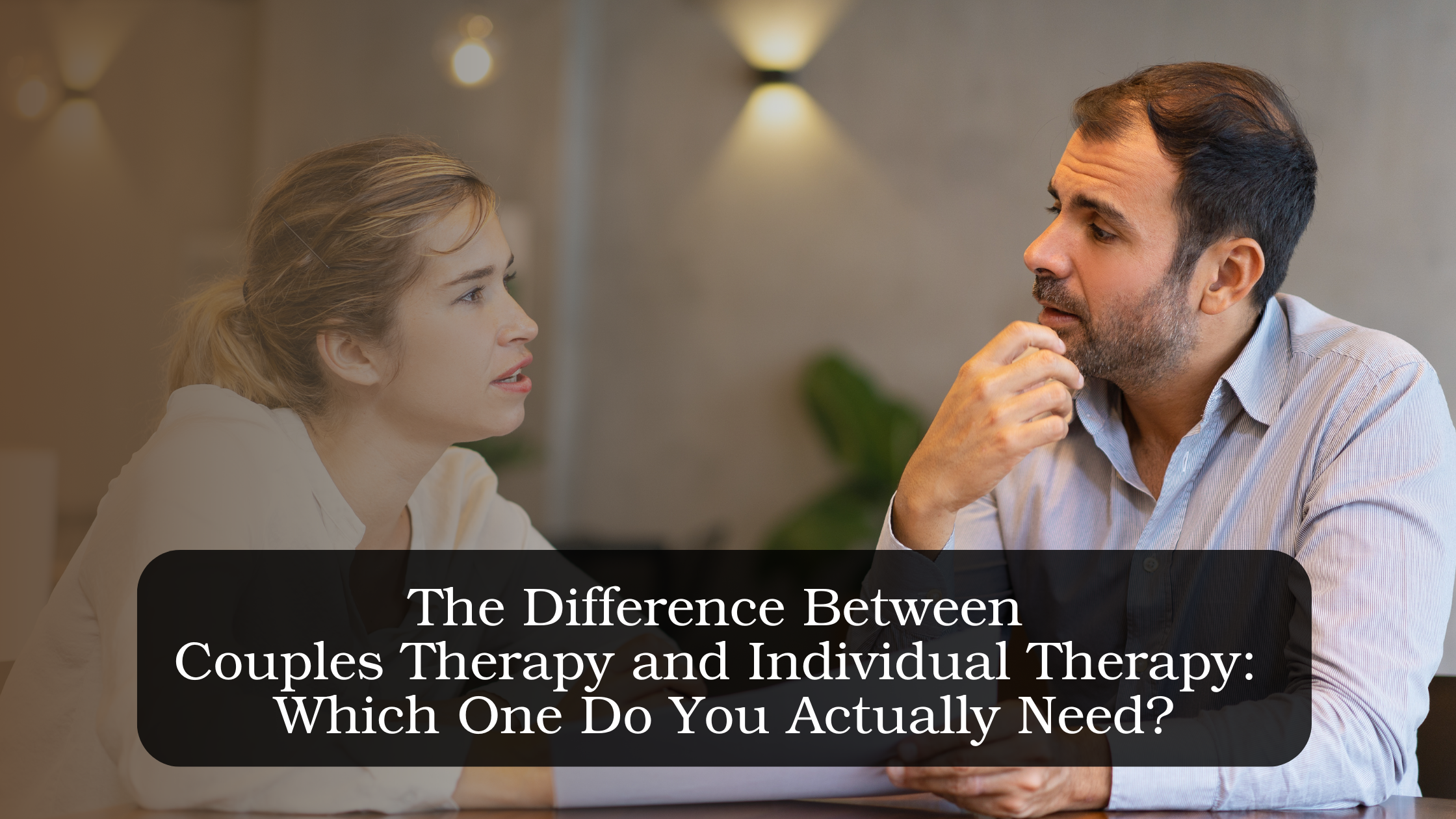
The Difference Between Couples Therapy and Individual Therapy: Which One Do You Actually Need?
When a relationship starts feeling difficult, seeking therapy can seem like an obvious next step. But another question often follows: Should we go together, or should I go alone?
Couples therapy and individual therapy can both address emotional and relationship difficulties, but they focus on different parts of the problem. Couples therapy looks primarily at the relationship between two people, while individual therapy focuses on one person’s internal experiences, emotional patterns, and personal history. In some situations, both may be appropriate.
The decision is not about which type of therapy is better. It is about understanding where the main difficulty exists: within the relationship, within an individual, or at both levels. That distinction can help you choose a starting point that fits what you are actually experiencing.

What Does Couples Therapy Focus On?
Couples therapy treats the relationship dynamic as the primary focus of treatment. Rather than determining which partner is right or wrong, the therapist helps the couple understand how they interact and what keeps their difficulties going.
Depending on the relationship, therapy may address:
- Repeated conflict
- Communication difficulties
- Emotional disconnection
- Trust concerns
- Intimacy problems
- Differences in expectations or values
- Recurring patterns of criticism and defensiveness
- Pursuing and withdrawing during conflict
Consider a couple in Los Angeles who repeatedly argue about household responsibilities. One partner feels unsupported and becomes increasingly critical. The other feels attacked and withdraws.
The argument may appear to be about chores.
But the underlying cycle may be:
One partner feels ignored → criticism increases → the other feels attacked → withdrawal begins → the first partner feels even more ignored.
Couples therapy allows both partners to examine this cycle together rather than treating each argument as an isolated incident.
The goal is to understand what happens between the partners and find ways to change that interaction.
What Does Individual Therapy Focus On?
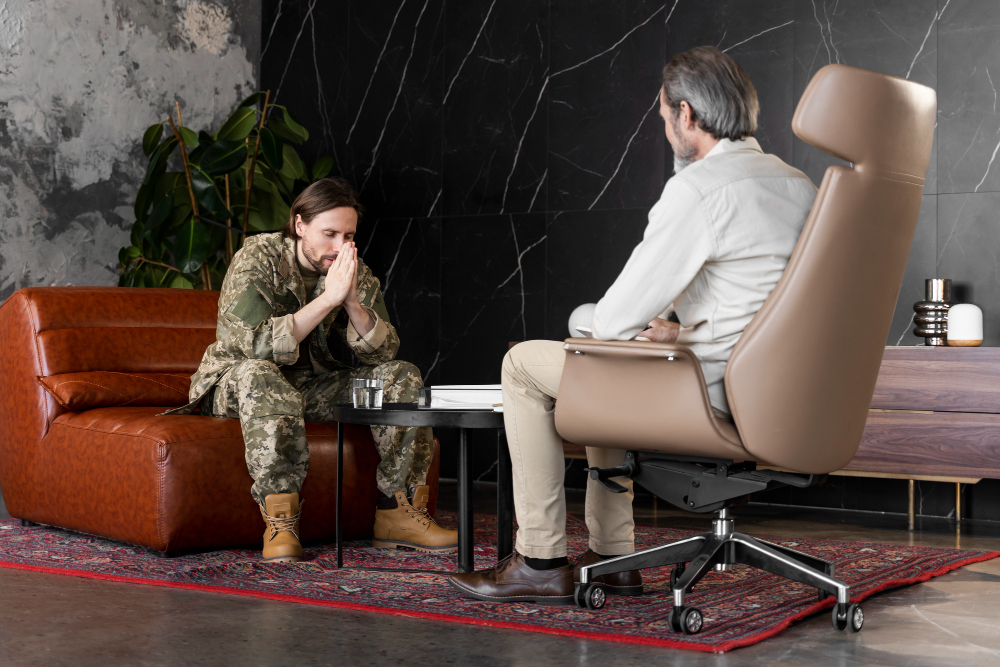
Individual therapy focuses on one person’s emotional experiences, thoughts, behaviors, relationships, and personal history.
It may explore:
- Anxiety, depression, or ongoing stress
- Trauma and difficult past experiences
- Self-esteem and identity
- Emotional regulation
- Relationship patterns
- Difficulty with trust or vulnerability
- Personal boundaries
- Decision-making
- Recurring emotional triggers
For example, someone may experience intense fear of abandonment across several relationships, even when their partners have been reliable and supportive.
Individual therapy can provide space to explore where that fear comes from, how it affects current behavior, and how the person can respond differently when those feelings arise.
The focus is not primarily on changing the partner or the relationship. It is on understanding and changing what is happening within the individual.
Couples Therapy vs Individual Therapy: What’s the Difference?
The simplest distinction is:
Couples therapy focuses on the relationship system.
Individual therapy focuses on the individual’s emotional and psychological system.
| Couples Therapy | Individual Therapy |
| Focuses on the interaction between partners | Focuses on one person’s internal experiences |
| Examines recurring relationship patterns | Examines personal emotional patterns |
| Addresses communication and conflict | Addresses individual triggers and coping patterns |
| Both partners generally participate | One person participates |
| Explores how partners affect each other | Explores how personal history affects current life |
These categories can overlap. Individual experiences inevitably influence relationships, just as relationships can influence individual wellbeing.
That is why the distinction is about primary focus, not completely separate areas of human experience.
When Is Couples Therapy Usually the Better Starting Point?
Couples therapy may be appropriate when the main difficulty occurs within the relationship itself.
This can include situations where:
- The same arguments keep returning
- Communication breaks down during conflict
- Partners feel increasingly disconnected
- Trust has been damaged
- Intimacy has changed significantly
- Both partners want to improve the relationship
- The problem mainly appears in the interaction between the two people
For example, neither partner may have significant individual emotional difficulties, but they may have developed an unhealthy way of handling disagreement.
One becomes critical.
The other becomes defensive.
One pushes for resolution.
The other withdraws.
Both leave the conversation feeling misunderstood.
In this situation, focusing exclusively on either person’s individual psychology may miss the interactional pattern that keeps the conflict going.
When Is Individual Therapy Usually the Better Starting Point?
Individual therapy may make more sense when the primary source of distress is an individual’s emotional or psychological experience.
This might include:
- Significant anxiety or depression
- Trauma-related difficulties
- Persistent problems with emotional regulation
- Strong fears of abandonment or rejection
- Difficulties that appear across multiple relationships
- Personal identity or self-esteem concerns
- Major life decisions or transitions
- A partner who is unwilling to participate in couples therapy
For example, someone may notice that they become extremely anxious whenever a partner needs time alone a pattern closely related to relationship anxiety. If similar reactions have appeared in several relationships, individual therapy may provide an opportunity to understand the pattern more deeply.
That does not mean the relationship is irrelevant.
It means the individual may need dedicated space to work on something that extends beyond the current partnership.
When Might You Need Both?
Sometimes there is no clear separation between individual and relationship difficulties.
A couple may be dealing with a serious communication problem while one partner is also working through unresolved trauma. Another couple may have experienced betrayal that has created insecurity for both partners.
In situations like these, individual and couples therapy can address different parts of the picture.
Individual therapy can help with personal emotional patterns.
Couples therapy can help partners understand and change the interaction between them.
However, the two forms of therapy should not automatically be combined simply because both sound useful. The appropriate arrangement depends on the circumstances and the therapist’s clinical judgment.
What If Only One Partner Wants Therapy?
This is common.
One person may recognize a problem before the other does. They may also be more comfortable with therapy or believe the relationship needs professional support.
If your partner is unwilling to attend couples therapy, individual therapy can still be useful.
It can help you understand your own reactions, clarify your needs and boundaries, and consider how you want to respond to the relationship.
Importantly, individual therapy should not become a way to secretly diagnose or “fix” your partner through the therapist.
The focus remains on what you can understand and change within yourself.
What If the Problem Is Both Personal and Relational?
This is often where therapy becomes more nuanced.
Imagine a couple in Pasadena experiencing frequent conflict. One partner has a history of abandonment that makes emotional distance particularly frightening. The other learned early in life to shut down whenever conflict becomes intense.
Their personal histories influence the relationship.
But the relationship also reinforces their individual reactions.
One partner pursues reassurance.
The other withdraws.
The withdrawal increases the fear of abandonment.
The pursuit increases the other person’s desire to escape.
Neither individual issue can be understood completely without looking at the relationship pattern.
In circumstances like this, both levels may need attention.
How Do You Know Where to Start?
You do not necessarily have to figure this out before contacting a therapist.
Start by describing what is happening.
You might say:
“We keep having the same arguments and don’t know how to break the cycle.”
That points toward a couples-focused concern.
Or:
“I’m struggling with anxiety and notice that it is affecting my relationship.”
That may suggest starting with individual therapy.
You can also explain both:
“My partner and I are struggling, but I also have some personal issues that seem to be affecting the relationship.”
A qualified therapist can help determine what should be addressed first.
Why the Therapist’s Assessment Matters
The same relationship problem can have very different underlying causes.
For one couple, frequent arguments may primarily reflect poor communication and unresolved resentment.
For another, conflict may be intensified by trauma, anxiety, substance use, grief, or other individual concerns.
This is why choosing therapy based only on a label can be limiting.
The more useful question is:
What is driving the difficulty, and what level of intervention is most appropriate?
Sometimes the answer becomes clearer during the initial assessment and early sessions.
How Dr. Harel Papikian Can Help
Dr. Harel Papikian is a licensed clinical psychologist in Los Angeles with more than 16 years of experience working with individuals and couples.
His work can help clarify whether a concern is primarily relational, individual, or influenced by both. In couples therapy, the focus can include recurring conflict patterns, communication difficulties, emotional disconnection, and the ways partners respond to one another.
For individual therapy, the work can focus more closely on personal emotional patterns, experiences, reactions, and concerns that may also affect relationships.
Dr. Harel’s ARM Method, centered on Awareness, Release, and Mastery, provides a structured framework for identifying patterns, addressing emotional barriers, and developing healthier ways of responding.
The starting point is not about deciding who needs to be fixed. It is about understanding what is actually happening and determining where therapeutic attention can be most useful.
Final Thoughts
Couples therapy and individual therapy are not competing versions of the same treatment.
Couples therapy focuses on the space between people. Individual therapy focuses on what is happening within one person.
Sometimes the relationship needs attention. Sometimes an individual needs dedicated support. And sometimes both levels are closely connected.
You also do not need to diagnose the problem yourself before seeking help.
If you are unsure whether to attend therapy alone or with your partner, start by describing what has been happening. A therapist can help you understand whether the primary concern is relational, individual, or a combination of both.
The right starting point is not necessarily the therapy that sounds most appropriate on paper.
It is the approach that addresses the problem you are actually trying to change.
FAQs
Not necessarily. Couples therapy is designed to address relationship dynamics, while individual therapy focuses on one person’s emotional and psychological concerns. The appropriate choice depends on what is driving the difficulty.
Yes. Individual therapy can help you understand your own reactions, needs, boundaries, and relationship patterns even when your partner does not participate.
It can help when individual emotional patterns are contributing significantly to relationship difficulties. However, if the primary problem exists in the interaction between partners, working on the relationship directly may also be necessary.
Yes, to an extent. Individual experiences are relevant to couples therapy because they influence how partners communicate and respond to each other. However, some concerns may require dedicated individual treatment.
In some circumstances, both may be appropriate. The decision depends on the concerns involved, the therapists’ clinical judgment, and how the different forms of therapy are coordinated.
You do not have to know with certainty before beginning. Explain what you are experiencing to a qualified therapist. An initial assessment can help clarify whether the primary concern is individual, relational, or both.

Harel Papikian
Dr. Harel Papikian is a clinical psychologist and couples therapist with more than 15 years of experience. He offers marriage counseling and couples therapy in los Angeles. It help’s couples navigate their relationship challenges and deepen their connection. Our clinic uses a unique ARM method (Awareness, Release, Mastery) to achieve rapid and profound results for our clients. We serve a diverse clientele, including LGBTQ+ and heterosexual couples, addressing issues like communication breakdowns, conflict resolution, intimacy, and trust. You can also get individual therapy sessions for concerns like depression, anxiety, and trauma.
Leave a Reply