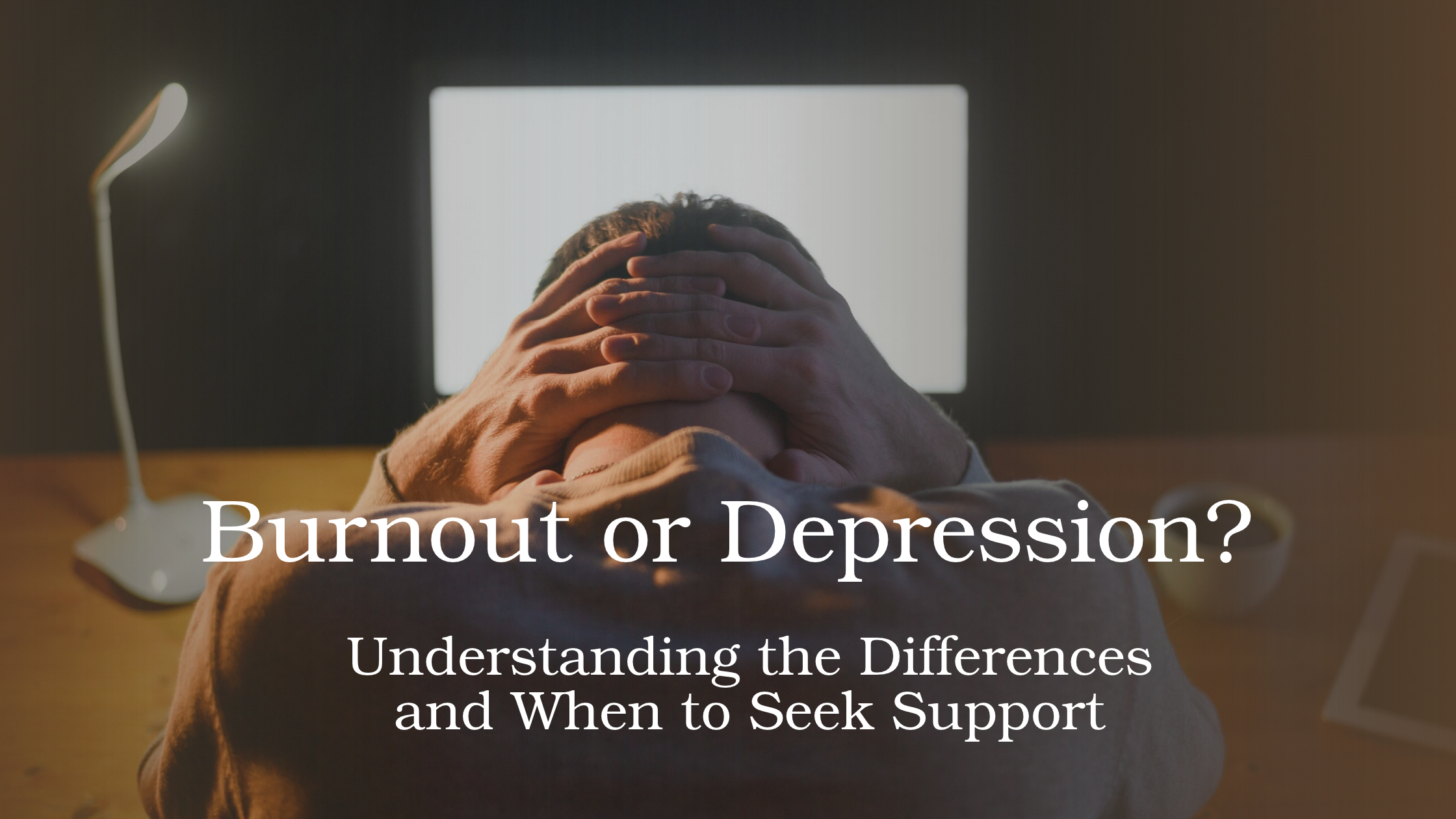
Burnout or Depression? Understanding the Differences and When to Seek Support
Feeling exhausted, unmotivated, or emotionally drained can make even ordinary responsibilities feel overwhelming. You might struggle to concentrate at work, lose interest in activities you once enjoyed, or feel as though you have nothing left to give. When these experiences persist, it can be difficult to determine whether you are experiencing burnout, depression, or both.
Although burnout and depression can share symptoms, they are not the same. Burnout is commonly associated with prolonged stress, particularly in the workplace, while depression can affect multiple areas of life, including relationships, daily activities, and how you view yourself.
Understanding the differences can help you recognise what you are experiencing and decide when professional support may be beneficial.
What Is Burnout?
Burnout is a state of physical and emotional exhaustion associated with prolonged or poorly managed stress. It is particularly recognised in occupational settings, where excessive workloads, limited control, insufficient support, and ongoing pressure can gradually deplete a person’s energy.
You may begin feeling detached from your work, become increasingly irritable, or struggle to find satisfaction in tasks that once felt manageable.
Common signs of burnout include:
- Persistent exhaustion that does not improve easily with rest.
- Feeling overwhelmed by work-related responsibilities.
- Becoming cynical, detached, or frustrated about your job.
- Difficulty concentrating or maintaining productivity.
- Feeling ineffective despite continued effort.
- Dreading work or struggling to recover after the workday.
Although burnout is most commonly discussed in relation to employment, similar exhaustion can occur when prolonged demands arise from caregiving or other responsibilities. Persistent symptoms should not automatically be attributed to burnout, as other mental or physical health conditions may contribute.

What Is Depression?
Depression, also known as major depressive disorder when specific diagnostic criteria are met, is a mental health condition that affects mood, thinking, behaviour, and everyday functioning.
Unlike burnout, which is closely associated with chronic stress in a particular context, depression can affect several areas of life even when the original source of stress is no longer present.
Symptoms may include:
- Persistent sadness, emptiness, or hopelessness.
- Losing interest in activities you previously enjoyed.
- Changes in appetite or sleeping patterns.
- Low energy and difficulty completing everyday tasks.
- Feelings of guilt, worthlessness, or excessive self-criticism.
- Difficulty concentrating or making decisions.
- Withdrawing from friends, family, or social activities, which can show up as feeling empty even when nothing seems wrong.
- Thoughts of death or suicide in some cases.
Depression is more than feeling sad or having a difficult week. Symptoms generally persist for at least two weeks and cause meaningful distress or impairment, although a professional assessment considers the complete pattern rather than relying on duration alone.
Burnout vs. Depression: What Are the Key Differences?
Burnout and depression can overlap, but several patterns may help distinguish them.
1. What Triggers the Symptoms?
Burnout: Symptoms often develop in response to prolonged demands, excessive workload, insufficient control, or an unsustainable work environment. You may notice that your distress intensifies when dealing with particular responsibilities.
Depression: Symptoms may arise following stressful experiences or without an obvious trigger. They can affect your mood and functioning across different areas of life.
However, neither condition has a single universal cause, and identifying a trigger cannot establish a diagnosis.
2. How Widespread Are the Feelings?
Burnout: You may feel particularly exhausted or detached when thinking about work while still enjoying hobbies, friendships, or activities outside your job.
Depression: Low mood, loss of interest, and reduced motivation may extend into relationships, hobbies, self-care, and everyday routines.
This distinction is not absolute. Severe burnout can affect life outside work, and depression can initially appear connected to a specific situation.
3. Does Rest Make a Difference?
Burnout: Time away from stressful responsibilities may provide some relief, especially when accompanied by meaningful changes to workload and working conditions.
Depression: Rest alone may not substantially improve symptoms. You might continue feeling low, unmotivated, or disconnected even when you have time to recover.
Neither pattern is definitive, but noticing how your symptoms respond to rest can provide useful information.
4. How Do You Feel About Yourself?
Burnout: You may feel ineffective, frustrated, or disconnected from your professional role. Your negative thoughts may focus primarily on your performance and responsibilities.
Depression: Self-criticism may become more generalised. You might feel worthless, hopeless about the future, or believe that you are a burden to others.
These experiences can occur in both conditions, so the broader symptom pattern matters.
5. What Happens to Your Motivation?
Burnout: You may struggle to engage with work while retaining interest in activities that feel meaningful or enjoyable outside it.
Depression: Motivation and pleasure may decline across several activities, including those that previously brought happiness or comfort.
Loss of interest, known as anhedonia, is an important symptom of depression, although not everyone experiences it in the same way.
Can Burnout Turn Into Depression?
Burnout and depression are distinct, but they can occur together. Prolonged stress, inadequate recovery, and difficult working conditions may contribute to worsening emotional well-being.
Someone who initially experiences work-related exhaustion may begin struggling with sleep, relationships, motivation, and self-worth. These changes do not automatically mean depression has developed, but they deserve attention.
Research also suggests an association between burnout and depressive symptoms, although the relationship is complex. It is not accurate to assume that burnout inevitably progresses into depression.
If your symptoms are becoming more persistent, spreading beyond work, or interfering with everyday functioning, consider speaking with a mental health professional rather than waiting for the situation to become more severe.
Why Is It Important to Recognise the Difference?
Understanding whether you are experiencing burnout, depression, or both can help you identify appropriate support.
If burnout is closely connected to an unsustainable work environment, taking individual responsibility for relaxation .may not be enough, since prolonged strain also shows up in relationships, as covered in how stress impacts romantic relationships. Changes to workload, working hours, expectations, or workplace support may be necessary.
Depression may require a broader approach that addresses mood, thinking patterns, functioning, and other contributing factors. Treatment can include psychotherapy, medication when appropriate, or a combination of approaches.
Because the symptoms overlap, self-assessment alone cannot reliably distinguish the two conditions. A qualified professional can evaluate your experiences and consider other possible explanations, including sleep difficulties and physical health conditions.
How to Manage Burnout Before It Gets Worse
If your symptoms appear closely linked to prolonged stress, the following strategies may help.

1. Identify the Sources of Stress
Consider which responsibilities are draining your energy. Excessive workload, unclear expectations, limited autonomy, and inadequate support may all contribute.
Identifying specific pressures can help you determine which changes are realistic and where you may need assistance.
2. Establish Healthier Boundaries
Where possible, set limits around working hours, availability, and additional responsibilities. Take breaks and avoid treating constant productivity as the only measure of success.
If your workplace expectations are unreasonable, consider discussing workload adjustments or support with an appropriate supervisor or trusted colleague.
3. Make Recovery a Priority
Consistent sleep, balanced meals, movement, and enjoyable activities can support your well-being. However, these strategies should complement efforts to address the underlying stress rather than replace necessary changes.
4. Reconnect With Activities Outside Work
Make time for relationships, hobbies, and experiences that give you a sense of enjoyment or purpose beyond professional achievement.
If you continue feeling exhausted despite meaningful changes, consider seeking professional guidance.
How to Seek Support if You May Be Experiencing Depression
If low mood, loss of interest, hopelessness, or other symptoms persist, professional support can help you understand what is happening.
1. Speak With a Mental Health Professional
A psychologist, psychiatrist, or other qualified healthcare professional can assess your symptoms, their duration, and their impact on daily life.
You do not need to wait until you are unable to function before asking for help.
2. Consider Evidence-Based Treatment
Psychotherapy can help you address negative thinking patterns, emotional difficulties, and challenges affecting daily functioning. Cognitive behavioural therapy is one approach commonly used to treat depression.
Depending on symptom severity and individual circumstances, a healthcare professional may also discuss medication or other treatment options.
3. Maintain Manageable Daily Routines
When depression affects motivation, even small tasks can feel difficult. Breaking responsibilities into manageable steps, maintaining regular sleep and meal routines, and staying connected with supportive people may help.
These strategies can complement professional treatment but are not substitutes for it when depression requires clinical care.
4. Reach Out Instead of Isolating Yourself
You may feel tempted to withdraw when you are struggling. Consider telling someone you trust what you have been experiencing and what kind of support would help.
If you experience thoughts of suicide or feel unable to keep yourself safe, seek immediate professional or emergency assistance.
When Should You Seek Professional Support?
Consider arranging an assessment if exhaustion, low mood, or loss of motivation persists, affects your relationships or work, or makes everyday responsibilities increasingly difficult.
Professional support is particularly important when symptoms include persistent hopelessness, significant changes in sleep or appetite, loss of interest in most activities, or feelings of worthlessness.
You should not have to determine the cause of your distress alone. An assessment can help clarify whether burnout, depression, another condition, or a combination of factors may be contributing.
How Dr. Harel Can Help With Burnout and Depression
When emotional exhaustion or low mood begins affecting your daily life, professional support can help you understand the underlying difficulties and identify appropriate ways forward.
Dr. Harel is a Licensed Clinical Psychologist in California with over 20 years of experience. His therapeutic work helps individuals understand emotional patterns, navigate difficult experiences, and develop healthier ways of responding to stress.
depression Therapy can provide a space to explore the pressures contributing to burnout, recognise patterns of negative thinking, and address emotional difficulties associated with depression. Depending on your needs, treatment may focus on coping strategies, boundaries, self-esteem, and changes that support your overall well-being.
If you are unsure whether you are experiencing burnout or depression, a qualified mental health professional can help you explore your symptoms and determine what support may be appropriate.
Consider reaching out to Dr. Harel to discuss your concerns and explore your therapy options.
Moving Forward
Burnout and depression can leave you feeling exhausted, disconnected, and uncertain about how to move forward. Although they share certain symptoms, understanding their differences can help you recognise when lifestyle changes may be useful and when professional care is needed.
You do not have to push through persistent distress or wait until everyday life becomes unmanageable. With appropriate support, healthier boundaries, and a clearer understanding of your needs, you can take meaningful steps toward improved emotional well-being.
If you are struggling to distinguish burnout from depression, consider speaking with a mental health professional. Understanding what you are experiencing is an important first step toward finding the support that fits your circumstances.
Frequently Asked Questions About Burnout and Depression
Burnout is commonly associated with prolonged stress in a specific context, particularly work. Depression can affect mood, motivation, self-worth, and interest across multiple areas of life. Because symptoms overlap, professional assessment is the best way to clarify what you may be experiencing.
Burnout and depression can occur together, and prolonged stress may contribute to worsening mental health. However, burnout does not inevitably lead to depression. Persistent or worsening symptoms deserve professional attention.
Time away from work may provide temporary relief, but it may not resolve the underlying causes of burnout. Sustainable improvement often requires addressing workload, workplace expectations, boundaries, and support.
Yes. A person can experience work-related exhaustion alongside depressive symptoms. A professional assessment can help distinguish overlapping symptoms and identify appropriate treatment.
Consider seeking support when symptoms persist, interfere with daily functioning, or affect your relationships and well-being. You do not need to wait until the symptoms become severe to ask for help.
Therapy can help address stress, emotional exhaustion, negative thinking patterns, and depressive symptoms. The most appropriate approach depends on the underlying difficulties and individual needs. Depression may also require medication or additional healthcare support.

Harel Papikian
Dr. Harel Papikian is a clinical psychologist and couples therapist with more than 15 years of experience. He offers marriage counseling and couples therapy in los Angeles. It help’s couples navigate their relationship challenges and deepen their connection. Our clinic uses a unique ARM method (Awareness, Release, Mastery) to achieve rapid and profound results for our clients. We serve a diverse clientele, including LGBTQ+ and heterosexual couples, addressing issues like communication breakdowns, conflict resolution, intimacy, and trust. You can also get individual therapy sessions for concerns like depression, anxiety, and trauma.
Leave a Reply