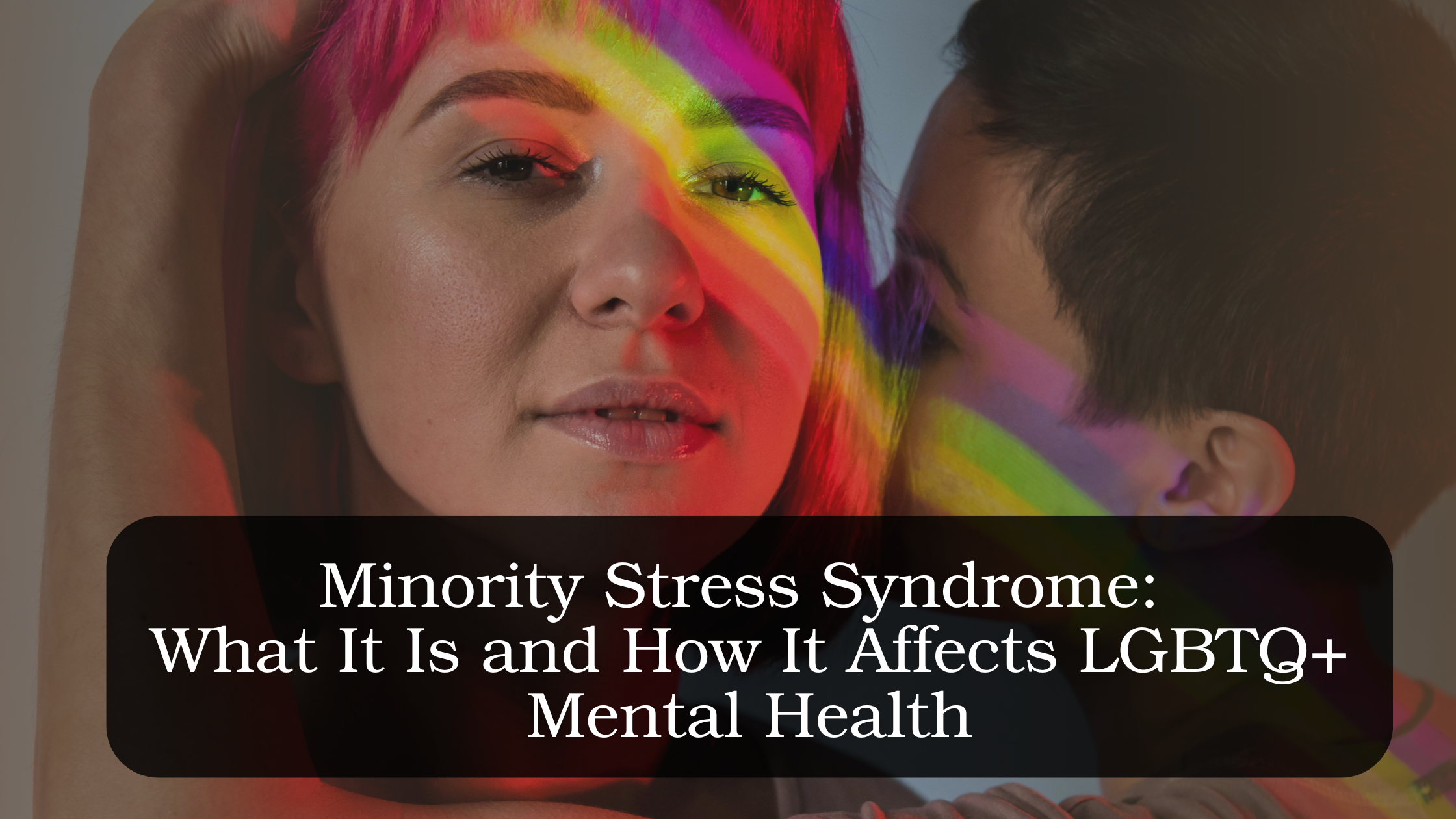
Minority Stress Syndrome: What It Is and How It Affects LGBTQ+ Mental Health
Most people understand that discrimination and prejudice can cause emotional distress. What is less obvious is how the ongoing possibility of rejection, judgment, or exclusion can affect someone even when nothing openly negative is happening. For LGBTQ+ individuals, repeatedly having to assess whether it is safe to be open about their identity can create an additional layer of stress.
This experience is commonly described through the concept of minority stress, a psychological framework used to understand how stigma and marginalization can affect mental health. It does not mean that being LGBTQ+ causes mental illness. Instead, it recognizes that living in environments where acceptance, safety, or equal treatment cannot always be assumed can create additional psychological strain.
Understanding minority stress can help LGBTQ+ individuals make sense of anxiety, exhaustion, guardedness, or self-doubt they may have previously blamed entirely on themselves. It can also help identify ways to build support, strengthen coping skills, and create environments where authenticity feels safer.
What Is Minority Stress and How Does It Affect LGBTQ+ People?
Minority stress refers to the additional, often chronic stress experienced by people who belong to stigmatized or marginalized groups.
For LGBTQ+ people, it can involve discrimination, family rejection, social stigma, concealment of identity, fear of rejection, or negative beliefs about oneself that develop after repeated exposure to stigma.
The term Minority Stress Syndrome is sometimes used informally, but it is important to clarify that it is not a formal psychiatric diagnosis. Minority stress is a psychological framework for understanding how social experiences can affect mental and emotional well-being.
A person experiencing minority stress is not necessarily “too sensitive” or unable to cope. Their reactions may make more sense when viewed in the context of what they have experienced and the environments they have had to navigate.
Why Minority Stress Is Different From Everyday Stress
Everyone experiences stress. Work deadlines, financial concerns, family responsibilities, health problems, and relationship difficulties can affect anyone.
Minority stress adds another layer of uncertainty.
An LGBTQ+ person may also find themselves wondering:
- Is it safe to mention my partner here?
- Will my healthcare provider respect my identity?
- What will happen if someone finds out I am transgender?
- Will my family fully accept my relationship?
- Could being open about my identity affect my career?
- Should I correct someone who misgenders me?
Any one of these situations may seem relatively minor. The emotional burden can become greater when similar decisions have to be made repeatedly over months or years.

What Are the Main Sources of Minority Stress?
Minority stress can come from several interconnected experiences rather than one single event.
1. Experiences of Discrimination
This can include bullying, harassment, workplace discrimination, family rejection, social exclusion, unequal treatment, or verbal and physical abuse.
Not everyone experiences discrimination in the same way or to the same degree. However, repeated experiences can influence how safe a person expects future environments to be.
2. Anticipation of Rejection
Minority stress can continue even when no discrimination is currently taking place.
Someone may hesitate before introducing their spouse, avoid discussing their personal life at work, or assess whether a new healthcare provider or social environment will be accepting.
This kind of vigilance can become exhausting because the person is constantly evaluating possible social consequences.
3. Internalized Stigma
Repeated exposure to negative messages can sometimes influence how people view themselves.
Internalized stigma may sound like:
- “Maybe I really don’t belong.”
- “People won’t accept the real me.”
- “I should keep this part of myself private.”
- “I’m asking for too much by expecting acceptance.”
These beliefs are not evidence that something is wrong with the person. They can develop in response to repeated social messages and experiences.
How Can Minority Stress Affect LGBTQ+ Mental Health?
Minority stress does not affect everyone in the same way. Some people may experience significant distress, while others have strong protective factors that help them cope with difficult experiences.
Possible effects include:
- Anxiety
- Depression
- Low self-esteem
- Chronic self-doubt
- Emotional exhaustion
- Hypervigilance
- Social withdrawal
- Loneliness
- Difficulty feeling safe or relaxed around others
Someone may describe themselves as an “overthinker” without recognizing how much of that vigilance developed in response to previous experiences of rejection or uncertainty.
How Can Minority Stress Affect Physical Well-Being?
Chronic stress can affect physical well-being as well as emotional health. Some people experiencing prolonged stress report difficulty sleeping, muscle tension, headaches, fatigue, digestive symptoms, or difficulty concentrating.
These symptoms have many possible causes, so they should not automatically be attributed to minority stress. Persistent or concerning physical symptoms should be evaluated by an appropriate healthcare professional.
Still, understanding the relationship between prolonged stress and physical symptoms can help people recognize that emotional strain is not simply “in their head.”
How Minority Stress Can Affect Relationships
The effects of minority stress can extend into romantic relationships, friendships, and family relationships.
Someone who has repeatedly experienced rejection may have difficulty trusting that others will remain accepting. Another person may seek frequent reassurance or become highly alert to signs of disapproval.
Others may become extremely independent and avoid relying on people emotionally.
These responses can sometimes create relationship difficulties even when the partner is not the source of the original stress.
For example, a person who has learned to anticipate rejection may interpret a partner’s neutral comment as criticism. Someone accustomed to hiding important parts of themselves may struggle to express their needs even in a supportive relationship a dynamic explored further in internalized homophobia and its effect on same-sex relationships.
Understanding where these patterns come from can reduce blame the same territory covered in why LGBTQ+ individuals experience higher rates of depression and anxiety.
Why Some LGBTQ+ People Seem to Be Coping Well
Minority stress does not have a uniform appearance.
Someone may be professionally successful, socially active, and surrounded by friends while privately experiencing significant anxiety or emotional exhaustion. Conversely, strong support systems can substantially reduce the impact of stressful experiences.
Protective factors may include:
- Supportive family relationships
- Affirming friendships
- LGBTQ+ community connection
- Safe and inclusive workplaces
- Access to affirming healthcare
- Healthy coping strategies
- Supportive romantic relationships, though even healthy ones can carry unique relationship challenges gay couples face.
Resilience does not mean never experiencing stress. It can also mean having people, resources, and coping strategies that help you recover from difficult experiences.
What Can Help Reduce the Impact of Minority Stress?
Individuals cannot eliminate discrimination or control how other people behave. They can, however, make choices that increase support and reduce unnecessary emotional strain.
This may involve building relationships where you can be authentic, setting boundaries with consistently unsupportive people, finding affirming communities, challenging internalized negative beliefs, and developing healthier ways to manage stress.
For some people, therapy can provide another form of support. An LGBTQ+-affirming therapist can help distinguish between distress arising from current circumstances and patterns that developed in response to earlier experiences.

What Does LGBTQ+-Affirming Therapy Look Like?
Affirming therapy involves more than using inclusive language. It means understanding that a person’s mental health cannot always be separated from the social experiences they have had.
Instead of assuming that an LGBTQ+ identity is the source of distress, therapy may explore questions such as:
- What experiences have influenced your sense of safety?
- How has rejection or stigma affected your self-worth?
- Which coping strategies helped you manage difficult situations?
- Are any of those strategies creating problems in your life now?
- What would authentic and healthy relationships look like for you?
This approach can help reduce self-blame, similar to the model described in LGBTQIA+ affirming therapy in West Hollywood.
When Should You Consider Professional Support?
Therapy may be worth considering if you are experiencing persistent anxiety or depression, emotional exhaustion, chronic self-criticism, difficulty trusting others, fear of being authentic, relationship difficulties connected to shame or rejection, or ongoing distress after discrimination.
You do not need to wait until these experiences become overwhelming.
Professional support can be particularly useful when you understand intellectually that you deserve acceptance but still find yourself expecting rejection or feeling unsafe in situations that are objectively supportive.
How Dr. Harel Can Help
Dr. Harel is a licensed clinical psychologist in Los Angeles with more than 16 years of experience working with individuals and couples. His LGBTQ+-affirming therapy provides space to explore concerns such as anxiety, depression, identity-related stress, relationship difficulties, family conflict, and major life transitions.
Therapy can also help clients understand how experiences outside the relationship may influence the way they respond to partners, friends, family members, or other people in their lives.
The focus is not on changing someone’s identity or asking them to simply tolerate discrimination. Instead, therapy can help clients understand their responses, strengthen their coping resources, challenge internalized stigma, and develop healthier ways of navigating relationships and everyday life.
Final Thoughts
Minority stress helps explain why the psychological effects of stigma can continue even when a person is no longer experiencing an obvious crisis. Constantly assessing whether you are accepted, safe, or free to be yourself can create an emotional burden that is easy to overlook.
Being LGBTQ+ is not a mental health problem. The distress associated with minority stress is better understood in the context of stigma, discrimination, rejection, and the pressure to conceal or defend one’s identity.
With appropriate support, people can recognize which responses developed as forms of protection, challenge internalized stigma, and build a life in which authenticity does not always feel like something that has to be negotiated.
FAQs
No. “Minority Stress Syndrome” is not a formal psychiatric diagnosis. Minority stress is a psychological framework used to describe the additional stress that can result from stigma, discrimination, rejection, and marginalization.
No. Being LGBTQ+ does not inherently cause mental illness. Higher rates of some mental health concerns among LGBTQ+ populations are understood in part through factors such as discrimination, stigma, rejection, minority stress, and unequal access to support.
Yes. Experiences of rejection or stigma can influence trust, vulnerability, communication, and expectations of acceptance. These patterns can sometimes affect relationships even when a current partner is supportive.
Consider whether your distress is connected to experiences such as discrimination, concealment, fear of rejection, family conflict, identity-related stigma, or constantly evaluating whether it is safe to be yourself. A therapist can also help you explore these connections without assuming that minority stress is the only cause.
It can. Therapy may help you understand the effects of stigma and rejection, work through internalized beliefs, develop healthier coping strategies, strengthen relationships, and become more comfortable with authenticity.
Not necessarily. Supportive relationships are an important protective factor, but therapy can still be useful if you are experiencing distress that is affecting your relationships, work, or daily life. The decision depends on your individual needs.

Harel Papikian
Dr. Harel Papikian is a clinical psychologist and couples therapist with more than 15 years of experience. He offers marriage counseling and couples therapy in los Angeles. It help’s couples navigate their relationship challenges and deepen their connection. Our clinic uses a unique ARM method (Awareness, Release, Mastery) to achieve rapid and profound results for our clients. We serve a diverse clientele, including LGBTQ+ and heterosexual couples, addressing issues like communication breakdowns, conflict resolution, intimacy, and trust. You can also get individual therapy sessions for concerns like depression, anxiety, and trauma.
Leave a Reply