Are You an Anchor, Island, or Wave? Understand Your Attachment Style
Why do some people feel most secure when they are close to their partner, while others become uncomfortable when a relationship starts feeling emotionally intense? Why might one person seek reassurance when a partner becomes distant, while another instinctively pull away?
Attachment patterns can offer a useful way to understand these reactions. They are influenced by early relationships, later experiences, personality, and the ways people learn to manage closeness, uncertainty, and emotional vulnerability. Attachment does not determine your future or define your personality. It provides a framework for understanding patterns that may emerge when relationships feel uncertain or emotionally threatening.
The Anchor, Island, and Wave descriptions offer an accessible way to think about three common relationship patterns. They are not formal clinical diagnoses or official attachment categories. Instead, they roughly correspond with secure, avoidant, and anxious attachment tendencies and can help people recognize how they approach intimacy, independence, conflict, and emotional security.
What Is Attachment Style?
Attachment describes patterns in how people experience emotional closeness and respond to relationships, particularly when they feel vulnerable, rejected, uncertain, or disconnected.
Attachment theory grew from the work of researchers including John Bowlby and Mary Ainsworth. Subsequent psychological research has explored different patterns of attachment, commonly described using terms such as secure, anxious, avoidant, and disorganized attachment.
These patterns can influence how people interpret the same relationship event.
Imagine your partner takes longer than usual to respond to a message. You might assume they are busy. Someone with stronger anxious attachment tendencies may immediately wonder whether something is wrong. Someone with stronger avoidant tendencies may respond by emotionally distancing themselves or deciding they do not need anyone.
The event is the same. The emotional interpretation and response can be very different.
Attachment patterns are also not necessarily identical across every relationship. A person may feel relatively secure in one relationship and experience much more anxiety or avoidance in another.

What Does the Anchor Attachment Style Look Like?
The Anchor represents a relatively secure attachment pattern.
Anchors tend to be comfortable with both emotional closeness and independence. They can value their relationship without feeling that they must constantly monitor their partner’s feelings or prove that they are worthy of love.
An Anchor might say:
“I love being close to you, but I also need some time for myself.”
They can generally tolerate temporary distance without immediately assuming that the relationship is falling apart. They may communicate concerns directly and remain willing to work through conflict.
That does not mean secure people never become jealous, insecure, angry, or afraid.
Secure attachment is not emotional perfection. Someone with secure tendencies can experience intense emotions while still having ways of responding to them without immediately acting on those emotions.
They may feel hurt during an argument but remain open to repair. They may feel insecure but communicate that insecurity instead of demanding constant reassurance.
The difference is often less about what you feel and more about what you do with those feelings.
What Does the Island Attachment Style Look Like?
The Island represents patterns that can resemble avoidant attachment.
Islands tend to place a strong value on independence. Depending heavily on another person may feel uncomfortable, and emotional intensity can sometimes feel overwhelming.
An Island might think:
“I can handle this myself.”
“Why does everything have to become such a big emotional conversation?”
“I just need some space.”
There is nothing inherently unhealthy about wanting independence. Personal interests, friendships, privacy, and time alone are important parts of a healthy relationship.
The difficulty arises when independence becomes a consistent strategy for avoiding emotional vulnerability.
An Island may withdraw when their partner seeks reassurance, become uncomfortable with emotionally intense conversations, or feel trapped when their partner asks for greater closeness.
During conflict, they might shut down, leave the conversation, become unusually quiet, or convince themselves that needing someone is a weakness.
This can create a difficult cycle when paired with an anxious partner.
The more one person seeks connection, the more the other withdraws. The withdrawal then increases the first person’s anxiety, lleading them to pursue even more strongly this is the same mechanism described in the pursuer-distancer cycle.
Neither person necessarily intends to create this pattern. Yet both can become trapped inside it.
What Does the Wave Attachment Style Look Like?
The Wave represents patterns that can resemble anxious attachment.
Waves often experience relationships intensely and place a high value on emotional closeness. They may also become particularly sensitive to signs that their partner is pulling away.
A delayed text, a different tone of voice, an unanswered question, or a partner asking for time alone can sometimes trigger significant worry.
A Wave might think:
“Are they upset with me?”
“Do they still love me?”
“Why aren’t they responding?”
“Did I do something wrong?”
This can lead to reassurance-seeking behaviors such as repeatedly checking messages, analyzing conversations, asking whether everything is okay, or seeking frequent confirmation of a partner’s feelings.
Wanting reassurance is not inherently unhealthy. Everyone needs reassurance at times.
The difficulty occurs when uncertainty becomes extremely difficult to tolerate a pattern explored in depth in relationship anxiety.
A partner may say, “Everything is fine,” and the Wave may feel better briefly. But the anxiety can return the next time the partner becomes quiet or unavailable.
How Do Different Attachment Styles Interact in Relationships?
Attachment differences can become particularly visible when partners have different needs around closeness and independence.
An Anchor may be relatively comfortable providing reassurance without feeling overwhelmed by a partner’s need for connection. An Anchor may also be able to request personal space without interpreting their partner’s independence as rejection.
An Island and a Wave can have a more difficult interaction.
The Wave wants reassurance.
The Island feels pressured and withdraws.
The Wave experiences the withdrawal as rejection and seeks even more reassurance.
The Island feels increasingly overwhelmed and withdraws further.
This is often described as a pursue-withdraw cycle.
The important point is that the problem is not necessarily one person’s attachment style. The interaction between two people’s patterns can create a cycle that becomes difficult for both partners to interrupt.
Can Your Attachment Style Change Over Time?
Attachment patterns can change.
You are not permanently destined to behave according to patterns that developed earlier in your life. Relationships, life experiences, self-awareness, and therapy can all provide opportunities to develop different ways of responding often shaped originally by how childhood experiences affect adult relationships.
Someone who tends to withdraw can learn to remain present during difficult conversations.
Someone who frequently seeks reassurance can learn to tolerate uncertainty without immediately turning to their partner for relief.
Someone who already feels relatively secure can continue developing emotional awareness and communication skills.
The goal is not to become completely independent or completely dependent.
It is to develop the ability to experience closeness without losing yourself and independence without shutting other people out.
What Triggers Your Attachment System in Relationships?
Attachment patterns often become more noticeable when you feel emotionally threatened. Certain situations can bring stronger reactions, especially when you feel disconnected, uncertain, rejected, or emotionally exposed.
You might notice stronger reactions when:
- Your partner becomes distant
- Someone does not respond to you
- You feel criticized
- Your partner asks for space
- You fear rejection
- You feel emotionally exposed
- A disagreement remains unresolved
- Your partner becomes unusually quiet
- You sense that the relationship is changing
Instead of focusing only on “Which attachment style am I?”, consider asking:
“What happens inside me when I feel disconnected from someone I care about?”
Do you pursue?
Do you withdraw?
Do you become defensive?
Do you overanalyze?
Do you pretend you do not care?
Do you immediately seek reassurance?
Noticing this sequence can help you understand your attachment pattern and recognize opportunities to respond differently.
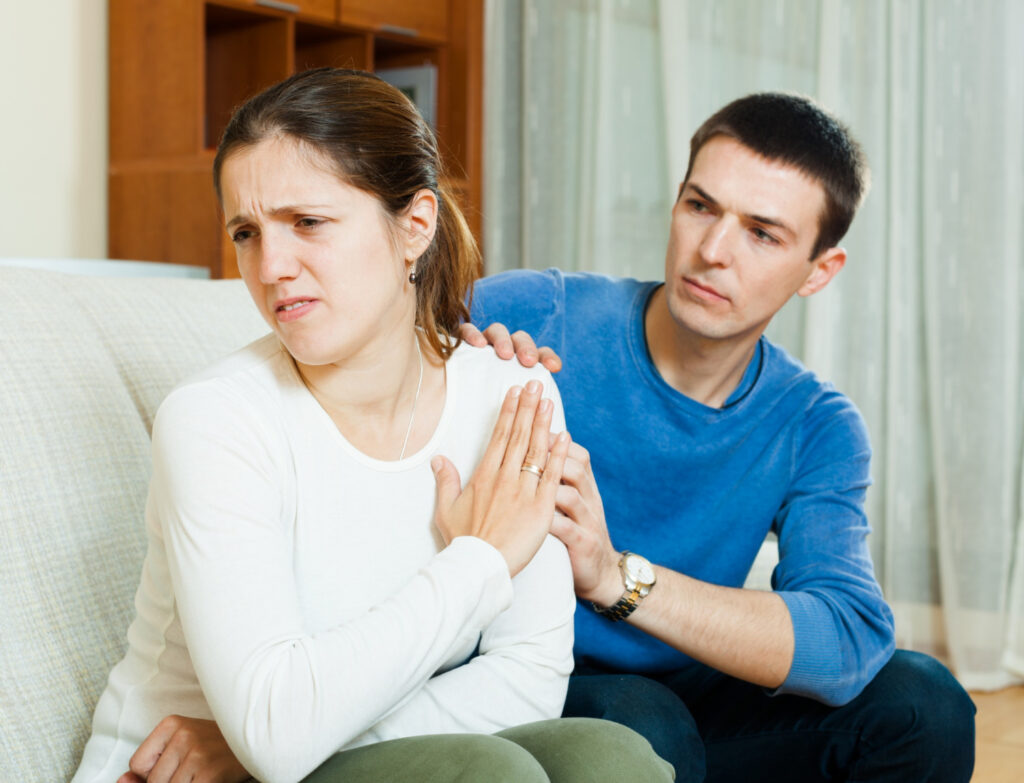
How Dr. Harel Can Help You Understand Your Relationship Patterns
Attachment patterns can be difficult to recognize from inside a relationship because your reactions often feel completely justified in the moment.
Dr. Harel Papikian is a licensed clinical psychologist in Los Angeles with more than 16 years of experience working with individuals and couples. He helps clients explore relationship patterns involving emotional insecurity, communication difficulties, recurring conflict, emotional distance, and difficulty maintaining connection.
Rather than simply assigning someone a label such as “anxious” or “avoidant,” therapy can explore what happens underneath the behavior.
For example, reassurance-seeking may be connected to a fear of abandonment, while withdrawal may be connected to feeling overwhelmed or vulnerable. Understanding those underlying responses can help partners stop treating each other’s behavior as the entire problem.
Dr. Harel can help individuals and couples recognize recurring patterns, communicate emotional needs more clearly, manage difficult relationship triggers, and develop healthier ways of responding to one another.
The goal is not to decide who is the Anchor, Island, or Wave. It is to understand the cycle and create more flexibility in how both partners respond.
Moving Toward More Secure Relationships
You do not need to become a different person to build a healthier relationship. If you identify with the Island, you can learn that vulnerability does not mean losing your independence.
If you identify with the Wave, you can learn that uncertainty does not automatically mean rejection. If you identify with the Anchor, you can continue strengthening communication and emotional awareness.
A few practical steps can help:
- Notice situations that trigger strong emotional reactions.
- Identify how you respond when you feel rejected or disconnected.
- Communicate your needs directly.
- Pause and regulate before responding during conflict.
- Consider whether your reaction is connected to an older emotional pattern.
- Respect both connection and independence.
- Practice returning to difficult conversations and repairing after conflict.
Attachment awareness is about understanding how you respond to closeness, uncertainty, and vulnerability. These patterns can vary across relationships and are not fixed identities. When they repeatedly create conflict or distance, therapy can help you develop more flexible responses and healthier relationship patterns.
Frequently Asked Questions
They are informal metaphors for relationship patterns. Anchor roughly represents secure attachment, Island resembles avoidant attachment, and Wave resembles anxious attachment. These are not formal clinical diagnoses or official attachment categories.
Anxious attachment tends to involve greater sensitivity to rejection or separation and a stronger desire for reassurance. Avoidant attachment tends to involve greater discomfort with emotional dependence and a stronger preference for independence. These patterns can sometimes reinforce each other in relationships.
Yes. Attachment patterns are not necessarily fixed. Self-awareness, relationships, life experiences, and therapy can help people develop more flexible and secure ways of responding to emotional situations.
Yes. Attachment-related responses can vary depending on the relationship, circumstances, level of trust, and emotional triggers involved. A person may feel relatively secure in one relationship and considerably more anxious or avoidant in another.
If you have anxious attachment tendencies, your partner’s need for space may be interpreted as rejection or a sign that the relationship is weakening. Learning to distinguish temporary independence from abandonment can help you respond with greater flexibility.
If you have avoidant tendencies, emotional intimacy may sometimes feel uncomfortable or threatening to your sense of independence. Withdrawal can become a way of managing that discomfort, even when part of you wants connection.
Yes. They can influence how people express needs, respond to criticism, seek reassurance, handle disagreements, and react when they feel emotionally threatened.
Yes. Different attachment tendencies do not automatically determine whether a relationship will work. What matters is how partners understand and respond to their patterns and whether they can develop healthier ways of communicating and relating.
Professional support may be useful when attachment-related reactions repeatedly contribute to conflict, jealousy, reassurance seeking, emotional withdrawal, or difficulty maintaining close relationships. Therapy can help identify the underlying patterns and develop different responses.
Dr. Harel can help individuals and couples explore recurring relationship cycles, emotional triggers, communication difficulties, and patterns of closeness and withdrawal. The focus is on understanding what is happening beneath the behavior and developing healthier ways of responding rather than simply assigning an attachment label.

Harel Papikian
Dr. Harel Papikian is a clinical psychologist and couples therapist with more than 15 years of experience. He offers marriage counseling and couples therapy in los Angeles. It help’s couples navigate their relationship challenges and deepen their connection. Our clinic uses a unique ARM method (Awareness, Release, Mastery) to achieve rapid and profound results for our clients. We serve a diverse clientele, including LGBTQ+ and heterosexual couples, addressing issues like communication breakdowns, conflict resolution, intimacy, and trust. You can also get individual therapy sessions for concerns like depression, anxiety, and trauma.
Leave a Reply