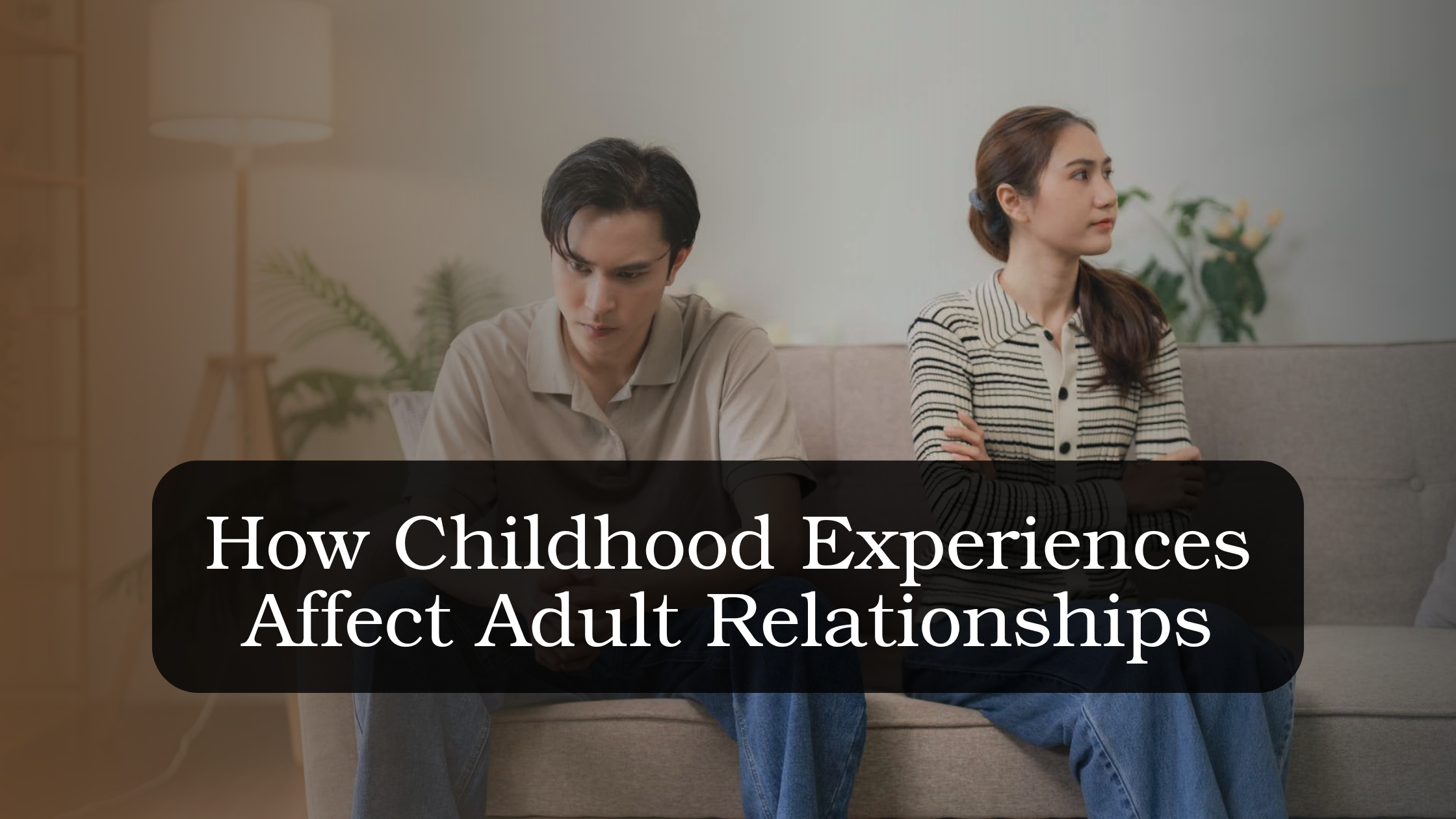
How Childhood Experiences Affect Adult Relationships
Most people do not immediately connect their childhood with the difficulties they experience in adult relationships. Yet a partner’s tone, a delayed response, or a disagreement can sometimes bring up feelings that seem much stronger than the situation itself. What feels like a reaction to the present may also be connected to emotional lessons learned much earlier in life.
These early experiences can shape how people understand love, trust, closeness, conflict, and emotional safety. Over time, they can influence expectations and responses without conscious awareness, making certain relationship dynamics feel familiar even when they are difficult.
Understanding this connection does not mean blaming childhood for every relationship problem. Instead, it can help explain why certain reactions happen and create an opportunity to develop healthier ways of responding.
Why Childhood Matters More Than Most People Realize
Childhood is one of the first places where people learn what relationships are supposed to feel like. Before children can fully explain their experiences, they begin developing emotional expectations about love, attention, safety, and connection.
Early experiences can shape questions such as:
- Is love consistent or unpredictable?
- Do I need to earn attention, or is it freely given?
- Is it safe to express emotions?
- What happens when I make a mistake or upset someone?
These lessons are usually learned through repeated experiences rather than direct explanations. A child who receives comfort when upset may learn that emotions are safe to express. A child whose distress is ignored, criticized, or dismissed may instead learn that emotional needs are unsafe or inconvenient.
Over time, these experiences can become emotional templates that influence adult intimacy.

How Emotional Learning Becomes Relationship Patterns
Adults do not enter relationships as blank slates. They bring internal expectations about how relationships work, and these expectations can influence reactions before conscious thought has a chance to intervene.
For example:
- Someone who experienced inconsistency may become highly sensitive to changes in a partner’s attention.
- Someone who took emotional responsibility early may struggle to depend on others.
- Someone who experienced frequent criticism may become defensive during conflict.
These reactions may feel immediate because they are not always responses to the present situation alone. Earlier emotional experiences can become activated by something happening now.
As a result, two partners may experience the same event very differently. One person may view a disagreement as a normal part of a relationship, while the other may experience the same disagreement as threatening or emotionally unsafe.
Attachment Styles and Adult Relationships
One of the clearest ways childhood experiences can appear in adult relationships is through attachment pattern for some, this shows up specifically as a pull toward emotionally unavailable partners.
Anxious Attachment Tendencies
People with anxious attachment tendencies may:
- Seek frequent reassurance
- Worry about abandonment or rejection
- Overanalyze changes in tone or behavior
- Become highly sensitive to emotional distance
Avoidant Attachment Tendencies
People with avoidant attachment tendencies may:
- Strongly value independence
- Withdraw during emotional intensity
- Struggle with vulnerability
- Feel overwhelmed by closeness or dependency
Secure Attachment Tendencies
People with more secure early experiences may find it easier to:
- Balance closeness and independence
- Communicate emotional needs clearly
- Handle conflict without extreme reactivity
- Trust stability within relationships
These patterns are not fixed identities. They can be understood as strategies developed in response to early environments. When partners with different strategies come together, their responses can complement one another or create recurring tension.
How Childhood Experiences Show Up in Conflict
Conflict is often one of the clearest places where childhood emotional learning becomes visible.
A disagreement about plans, finances, or household responsibilities can quickly become emotionally charged. For example:
- One partner raises a concern, while the other hears criticism and becomes defensive.
- One partner withdraws during conflict, while the other experiences that withdrawal as abandonment.
These reactions may be connected to earlier experiences in which conflict was associated with rejection, punishment, emotional withdrawal, or unpredictability.
Understanding this connection can help couples look beyond the surface argument which is part of why learning how to handle conflict the right way matters as much as resolving any single disagreement. The disagreement may be about something happening today, while the emotional intensity may be connected to something learned much earlier.
Why Emotional Triggers Feel So Immediate
Relationship reactions can sometimes escalate before a person understands why they are reacting so strongly.
When something in the present resembles an earlier emotional experience, the response may feel immediate. For example:
- A partner becomes quiet → it feels like emotional withdrawal.
- A tone becomes sharp → it feels like criticism or rejection.
- A message is delayed → it feels like being ignored.
Even when the current situation is different from the past, the emotional response can feel equally powerful.
This helps explain why someone may recognize afterward that they “overreacted” but still struggle to change the reaction in the moment. The response can be connected to an established emotional pattern rather than simply a conscious decision.
How Childhood Experiences Affect Trust and Intimacy
Early experiences of reliability and emotional safety can influence how easily trust develops in adulthood.
When early relationships were consistent and responsive, trusting others may feel more natural. When they were inconsistent, unpredictable, or emotionally unavailable, trust may feel more fragile.
This can appear as:
- Difficulty accepting reassurance
- Fear that stability will not last
- Hesitation to rely on another person
- Closely monitoring changes in the relationship
Intimacy can be affected as well. If emotional expression was previously dismissed or discouraged, vulnerability may feel risky. Some people may therefore share selectively, avoid emotional dependence, or maintain distance even when they want connection.
These behaviors do not necessarily mean a person does not want intimacy. They may instead represent learned ways of protecting themselves.

When Childhood Patterns Collide in Adult Relationships
Every partner brings a different emotional history into a relationship. One person may seek closeness when stressed, while the other may need space. One may need verbal reassurance, while the other may show care through actions.
Without awareness, these differences can create a repeating cycle:
- One partner feels anxious and seeks reassurance.
- The other feels pressured and withdraws.
- The first partner increases pursuit.
- The second partner withdraws further.
Neither person may intend to create conflict. Both may simply be responding according to emotional strategies learned earlier in life.
Recognizing the cycle can therefore be more productive than deciding which partner is at fault.
Why Awareness Alone Is Not Always Enough
Understanding that childhood affects relationships is valuable, but insight alone does not automatically change emotional reactions.
A person may know:
- “My partner is not my parent.”
- “This situation is not the same as my childhood.”
Yet the emotional response may still feel immediate and difficult to control.
This is why meaningful change can require more than intellectual understanding. Repeated experiences of emotional safety, regulation, healthier communication, and corrective relationship experiences can help create new responses over time.
How Couples Can Begin Breaking Old Patterns
Change begins with awareness and continues through practice.
Couples can work on:
- Recognizing when a reaction feels disproportionate to the present situation
- Naming emotional triggers instead of immediately reacting
- Asking questions rather than assuming intent
- Taking space to regulate before continuing a difficult conversation
- Offering reassurance and connection during disagreements
For example, instead of saying, “You don’t care,” someone might communicate, “I’m feeling disconnected right now, and I want to understand what’s happening” a shift that reflects the kind of therapist-approved communication skills that help de-escalate conflict.
This type of communication can help separate what is happening in the present from what an earlier experience may have taught someone to expect.
How Couples Therapy Helps Change Relationship Responses
Couples Therapy can provide a structured environment for exploring how childhood experiences influence current relationships.
For couples and individuals, this may involve connecting emotional reactions to earlier experiences while developing new ways of responding during real-time interactions. Over time, therapy can help partners understand each other more clearly and regulate emotional reactions more effectively during stress or misunderstanding.
The aim is not simply to understand the past, but to use that understanding to create different experiences in the present.
How Dr. Harel Deals With Childhood Experiences in Adult Relationships
In his Los Angeles practice, Dr. Harel works with individuals and couples who notice that their emotional reactions sometimes feel larger than the situation itself. His approach connects present-day relationship responses with earlier emotional experiences, helping people understand the patterns beneath conflict, distance, or insecurity.
His work focuses on:
- Connecting past and present: Exploring how earlier experiences may influence current relationship reactions.
- Identifying emotional triggers: Helping individuals recognize what situations activate strong emotional responses.
- Understanding relationship patterns: Looking at recurring dynamics rather than treating every disagreement as an isolated event.
- Building emotional awareness: Helping people recognize their reactions as they occur.
- Developing healthier responses: Supporting individuals and couples as they practice different ways of communicating and responding.
- Strengthening regulation: Helping partners manage emotional reactions more effectively during stressful interactions.
The aim is not simply to understand the past, but to use that understanding to create different experiences in the present which is also why couples therapy can still help even outside of a crisis. Over time, this combination of insight and practice can help create healthier relationship patterns.
Final Thoughts
Childhood experiences do not determine the fate of adult relationships, but they can influence how people experience, interpret, and respond to intimacy. Some of the strongest reactions in adult relationships may be connected to earlier lessons about love, safety, trust, and connection.
The goal is not to blame the past. It is to understand its influence well enough that old emotional patterns do not continue controlling present interactions without awareness.
When partners recognize that they bring different emotional histories into a relationship, conflict can become less about deciding who is right and more about understanding, repair, and growth.
Ultimately, changing relationship patterns involves more than changing behavior. It means understanding why certain reactions happen and learning, gradually, that the present can be different from the past.
Frequently Asked Questions
Yes. Childhood does not have to involve obvious trauma for early experiences to influence adult relationships. How emotions, conflict, affection, and communication were handled can shape expectations about closeness.
Yes. Certain behaviors, tones, or situations can activate emotional responses connected to earlier experiences without the connection being immediately obvious.
Romantic relationships involve a high level of emotional vulnerability. Because intimate partners matter deeply, they can activate attachment needs and fears that may remain less noticeable in other relationships.
They can influence what feels familiar or emotionally compelling. People may sometimes gravitate toward relationship dynamics that resemble what they learned earlier in life.
Awareness is an important first step, but recognizing a pattern does not automatically change it. New responses often require repeated practice with emotional regulation, communication, boundaries, and healthier relationship experiences.
Yes. Depending on the individual and relationship, therapy can focus on present-day reactions, communication, emotional regulation, and healthier relationship experiences rather than requiring detailed discussion of every past event.

Harel Papikian
Dr. Harel Papikian is a clinical psychologist and couples therapist with more than 15 years of experience. He offers marriage counseling and couples therapy in los Angeles. It help’s couples navigate their relationship challenges and deepen their connection. Our clinic uses a unique ARM method (Awareness, Release, Mastery) to achieve rapid and profound results for our clients. We serve a diverse clientele, including LGBTQ+ and heterosexual couples, addressing issues like communication breakdowns, conflict resolution, intimacy, and trust. You can also get individual therapy sessions for concerns like depression, anxiety, and trauma.
Pingback: Relationship Ambivalence: Loving Someone but Feeling Unsure - westhollywoodcouples.com