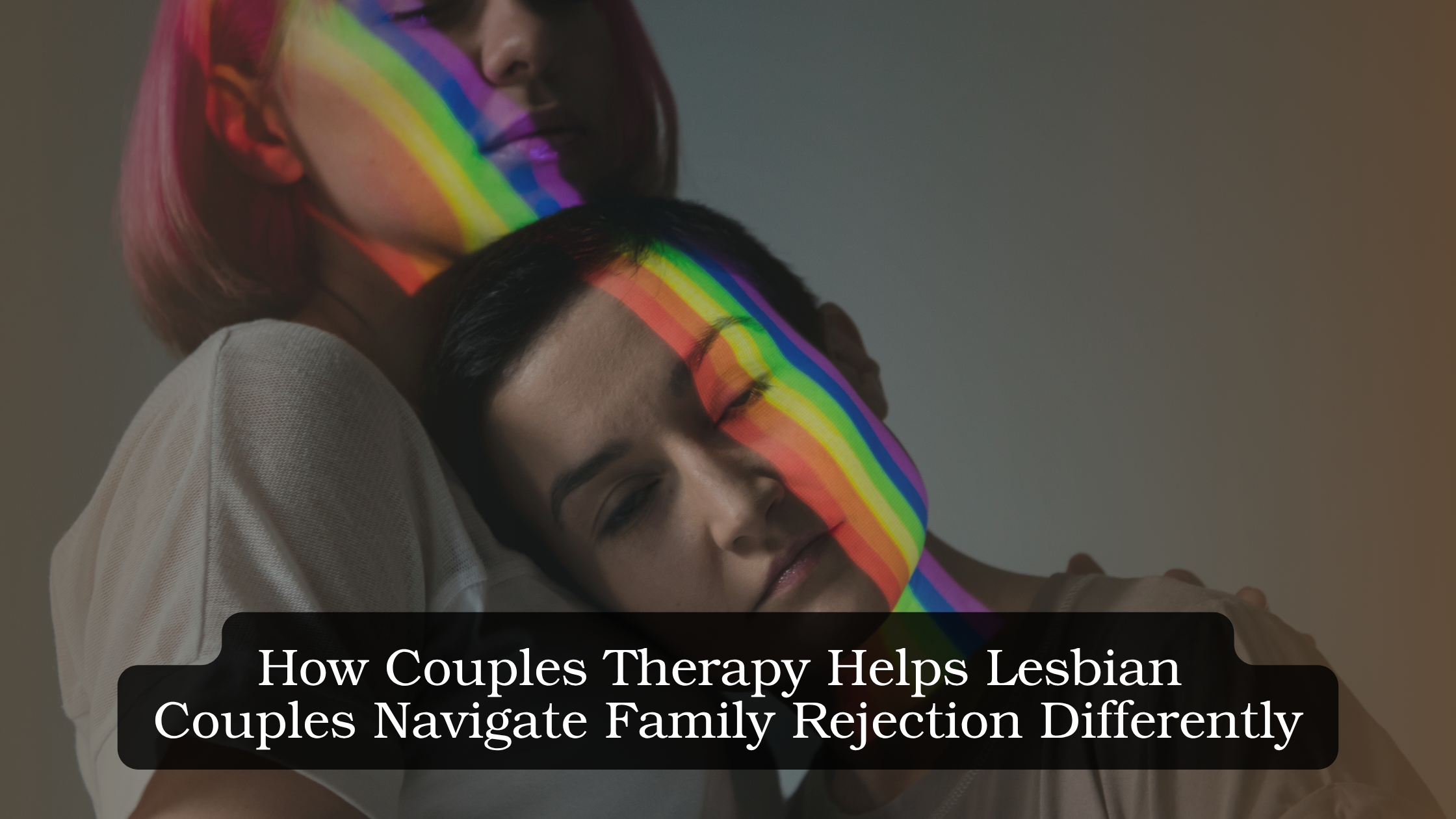
How Couples Therapy Helps Lesbian Couples Navigate Family Rejection Differently
When a family rejects a same-sex relationship, the impact rarely stays between the couple and their relatives. It can affect trust, emotional intimacy, decisions about the future, and each partner’s sense of belonging. One partner may want to maintain contact with family despite their disapproval, while the other may feel hurt by being excluded, hidden, or treated as less important.
These differences can become difficult to navigate, particularly when both partners are dealing with rejection in different ways. One may grieve the loss of family acceptance, while the other may feel protective, angry, or uncertain about how much more rejection the relationship should tolerate.
Couples therapy can help lesbian partners understand these differences without assuming there is one correct way to respond to family rejection. It offers space to discuss boundaries, loyalty, visibility, and emotional needs while strengthening the relationship as a partnership.
How Family Rejection Can Affect a Lesbian Relationship
Family rejection can take many forms. Some families openly oppose the relationship, while others avoid acknowledging it, exclude one partner from gatherings, or continue to treat the relationship as temporary.
The impact depends on the couple’s circumstances, family relationships, cultural expectations, financial dependence, and available support systems.
Common experiences include:
- A family refusing to acknowledge one partner as a significant other
- One partner being excluded from family events
- Pressure to keep the relationship private
- Relatives making negative comments about the relationship
- Family members expecting one partner to change or end the relationship
- Disagreements about attending gatherings where the relationship is not respected
- Fear of losing family support, housing, or financial assistance
- Grief over the family relationship one partner hoped to have
Even when both partners experience the same rejection, they may not experience it in the same way.
Why Partners May Respond Differently

One partner may want to preserve family relationships
A partner who has experienced rejection may still want contact with their parents or relatives. Their family may remain emotionally important despite the hurt.
They may hope that continued communication will eventually lead to acceptance. They may also feel responsible for maintaining family relationships or worry about losing access to younger siblings, extended family, or important cultural traditions.
Their desire to stay connected does not necessarily mean they agree with the family’s behavior.
The other partner may feel the need to establish firm boundaries
The partner who has been excluded or disrespected may not want to attend family events or participate in conversations where the relationship is denied.
They may feel that continuing to show up without acknowledgment means accepting unequal treatment.
This can create tension if one partner views contact as an attempt to preserve family ties, while the other experiences it as continued exposure to rejection.
One partner may be more ready to be open
Partners may also differ in how publicly they want to acknowledge their relationship.
One may be comfortable being open with relatives, friends, and colleagues, while the other may be concerned about safety, financial consequences, privacy, or social repercussions.
These differences can become especially painful when one partner interprets privacy as shame or rejection, while the other sees it as a necessary way to manage their circumstances.
The Difference Between Supporting Your Partner and Agreeing With Every Decision
When family rejection occurs, couples may expect each other to respond in the same way.
One partner may want immediate distance from rejecting relatives. The other may need time to process what has happened or decide what kind of relationship they want to maintain.
Support does not have to mean making identical choices.
A partner can acknowledge that family contact is painful while understanding why the other person is not ready to cut ties. Similarly, wanting to preserve family relationships does not mean expecting a partner to attend events where they are disrespected.
Couples therapy can help partners communicate what they need from each other, approaching the difference with curiosity rather than judgment.
How Family Rejection Can Create Conflict Between Partners
Feeling that the relationship is being hidden
If one partner is not acknowledged by the other’s family, they may feel invisible or secondary.
This can be especially painful when the couple has built a committed life together but one partner is introduced as a friend, roommate, or companion.
The partner maintaining family contact may not intend to minimize the relationship. However, the impact on the other partner still needs to be discussed.
Disagreements about family visits
A family gathering can involve complicated decisions.
One partner may want to attend because a parent or sibling is important to them. The other may not want to enter a setting where their relationship is ignored or criticized.
Without clear communication, these decisions can lead to arguments about loyalty, respect, and priorities.
Resentment about emotional labor
The partner who is more directly affected by rejection may feel they are expected to remain patient, understanding, and accommodating.
The other partner may feel caught between their family and their relationship.
Both may experience emotional strain, but in different ways. If these experiences are not acknowledged, resentment can build.
Disagreements about future plans
Family rejection can affect decisions about marriage, children, holidays, caregiving, and long-term involvement with relatives.
For example, partners may disagree about whether rejecting family members should be invited to a wedding or included in future family events.
These decisions often involve grief as well as practical considerations.
How Couples Therapy Helps Lesbian Partners Navigate Family Rejection

Creating space for both experiences
Couples therapy can help each partner explain what family rejection means to them.
One may be grieving the loss of parental acceptance. The other may be grieving the possibility of having a family that openly welcomes their relationship.
Both experiences can be acknowledged without requiring the partners to feel the same way.
Separating the family conflict from the couple’s conflict
When relatives reject a relationship, partners may begin directing their frustration toward each other.
One may feel the other is not defending the relationship enough. The other may feel pressured to make decisions before they are ready.
Therapy can help identify when the couple is responding to the family’s behavior and when they are responding to each other’s choices.
This distinction can make difficult conversations more constructive.
Establishing boundaries together
Boundaries may involve decisions about family visits, communication, introductions, social media, holidays, and responses to disrespectful comments.
The purpose is not necessarily to end family contact. It is to clarify what each partner can accept and what they need to feel respected.
For example, a couple may decide that they will attend a family event only if both partners are acknowledged as a couple. Another couple may decide that one partner will visit relatives independently while the other takes space.
The right arrangement depends on the couple’s circumstances and the safety and wellbeing of each person.
Discussing privacy and being out
Coming out is not a single decision that applies equally to every part of life.
A person may be open with friends but not with family, or comfortable in some settings but concerned about others. Financial dependence, housing, cultural expectations, safety, and personal readiness may all influence these decisions.
Couples therapy can help partners discuss the emotional impact of different levels of visibility.
The goal is to understand what privacy means to each person and avoid treating every difference as evidence of a lack of commitment.
Rebuilding a sense of partnership
Family rejection can make couples feel as though they are constantly defending their relationship.
Therapy can help partners reconnect with what they value about their life together beyond the family conflict.
This may include strengthening communication, making shared plans, maintaining meaningful traditions, and recognizing the support they already have.
When Cultural and Family Expectations Are Involved
For some lesbian couples, family rejection is connected to broader expectations about marriage, gender roles, religion, community reputation, or having children.
These expectations may influence how openly someone can live, whether they feel able to challenge relatives, and what they fear losing if they set boundaries.
A partner may understand intellectually that family rejection is unfair while still feeling deeply attached to family traditions and relationships. This tension is part of the broader picture covered in unique relationship challenges gay couples face.
Therapy should make room for that complexity. It should not assume that every person wants to separate from their family or that maintaining family contact means accepting rejection.
The focus is on helping partners make decisions that reflect their needs, values, and circumstances.
Building Support Beyond the Family
When family acceptance is limited, couples may need to identify other sources of connection.
Support may come from trusted friends, affirming relatives, LGBTQ+ community groups, chosen family, or a service like LGBTQIA+ affirming therapy.
Building these connections does not erase the pain of family rejection. It can, however, reduce the pressure on the romantic relationship to meet every emotional and social need.
Couples can also create their own traditions around holidays, celebrations, and milestones, particularly when family gatherings are difficult.
How Dr. Harel Approaches Couples Therapy for Lesbian Couples Facing Family Rejection
Dr. Harel can help lesbian couples explore how family rejection is affecting their relationship and how each partner responds to it.
The work may involve examining differences in readiness, visibility, family contact, and boundary-setting. Rather than assuming that one partner is more committed because they want to be open or that the other is less committed because they want privacy, therapy can explore the circumstances and emotions behind each position.
Dr. Harel can also help couples recognize patterns that emerge during conflict. For example, one partner may push for a clear decision about family contact, while the other withdraws, a version of the pursuer-distancer cycle.
couples Therapy can help them communicate their needs more directly, make decisions collaboratively, and distinguish between protecting the relationship and trying to control each other’s choices. Therapy, often guided by his ARM Method, can help them communicate their needs more directly.
Final thought
Family rejection can place significant pressure on a relationship, especially when partners respond to it in different ways. With the support of Dr. Harel, lesbian couples can explore these differences, strengthen communication, establish boundaries, and find ways to protect their relationship while navigating complicated family dynamics.
If family rejection is creating conflict or emotional distance in your relationship, Dr. Harel can help you work through these challenges together. Book a free phone consultation to discuss your relationship and learn how couples therapy may support you.
Frequently Asked Questions
No. Couples therapy does not require a joint confrontation or family meeting. The focus can remain on how the rejection affects the relationship, what boundaries the couple needs, and how partners can support each other.
Coming out is personal and may involve practical concerns about safety, housing, finances, or family dependence. Therapy can help both partners discuss the emotional impact of privacy without pressuring someone to disclose before they are ready.
Wanting to maintain family connections does not mean you approve of their rejection. Family relationships can involve love, history, dependence, grief, and conflicting feelings. Therapy can help you consider what kind of contact is possible while also protecting your relationship and wellbeing.
You are not required to attend gatherings where you are disrespected or denied recognition. Couples therapy can help you communicate that boundary and discuss how your partner can maintain family contact without expecting you to participate in situations that feel harmful.
This difference can be explored without assuming either person is making the wrong choice. Partners can discuss what contact means to them, what boundaries are necessary, and whether different levels of family involvement can be accommodated.
This difference can be explored without assuming either person is making the wrong choice. Partners can discuss what contact means to them, what boundaries are necessary, and whether different levels of family involvement can be accommodated.
Yes. One partner may have an accepting family while the other’s family is rejecting or distant. Therapy can help couples discuss how these differences affect holidays, social events, future plans, and feelings of belonging.
Couples can work toward boundaries that reduce repeated conflict while also investing in shared interests, friendships, traditions, and future goals. Therapy can help make room for the pain of rejection without allowing it to define every part of the relationship.

Harel Papikian
Dr. Harel Papikian is a clinical psychologist and couples therapist with more than 15 years of experience. He offers marriage counseling and couples therapy in los Angeles. It help’s couples navigate their relationship challenges and deepen their connection. Our clinic uses a unique ARM method (Awareness, Release, Mastery) to achieve rapid and profound results for our clients. We serve a diverse clientele, including LGBTQ+ and heterosexual couples, addressing issues like communication breakdowns, conflict resolution, intimacy, and trust. You can also get individual therapy sessions for concerns like depression, anxiety, and trauma.
Leave a Reply