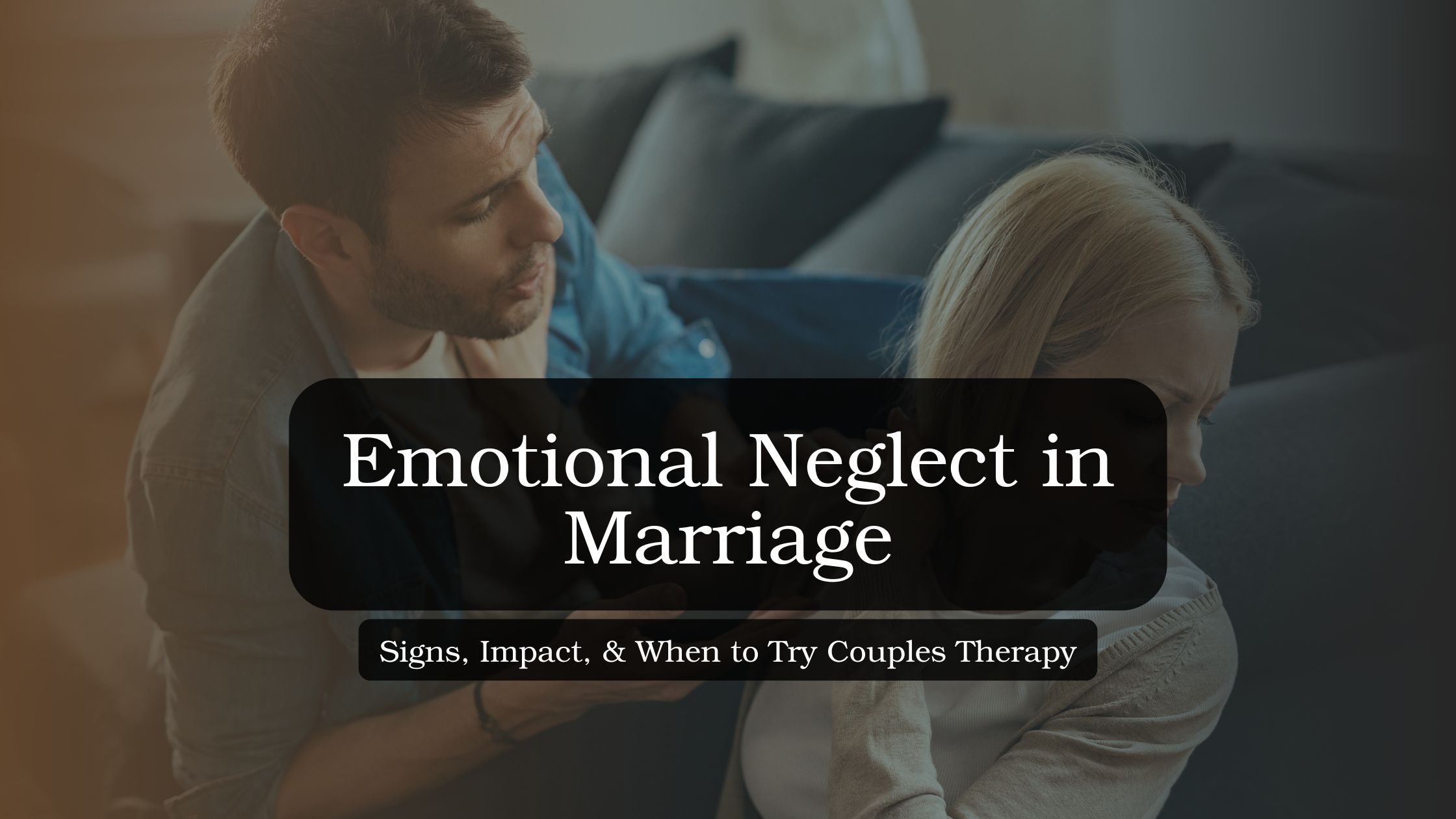
Emotional Neglect in Marriage: Signs, Impact, & When to Try Couples Therapy
It rarely starts with a fight. There’s no dramatic moment, no clear breaking point. Just a slow, quiet shift. Conversations become shorter. Affection becomes occasional. You stop sharing the small details of your day because it no longer feels like it matters. And one day, you realize something unsettling.
You’re not being hurt. But you’re not being seen either. That is what emotional neglect often lo oks like. For many couples, this growing sense of disconnection is what eventually leads them to seek couples therapy in hopes of rebuilding the emotional bond that has gradually faded.
In Los Angeles, where life is fast, demanding, and constantly pulling attention outward, emotional connection can quietly fade inside relationships. Partners may still live together, function as a team, and even care about each other, but the emotional bond that once held everything together begins to weaken.
Dr. Harel, a licensed clinical psychologist in Los Angeles with over 16 years of experience, often works with couples who are not in crisis, but feel deeply disconnected. Emotional neglect is not always obvious, but its impact can be just as painful as overt conflict.
Understanding the signs, consequences, and solutions can help you address it before the distance becomes permanent.
What Is Emotional Neglect in Marriage?

Emotional neglect is not about what is done. It is about what is missing. It occurs when one or both partners consistently fail to respond to each other’s emotional needs. This can happen even in relationships that appear stable on the surface.
Emotional neglect may include:
- Lack of meaningful conversations
- Minimal emotional support during stress
- Reduced affection or appreciation
- Feeling unheard or dismissed
- Absence of curiosity about each other’s inner world
For example, a couple in Santa Monica may manage their daily responsibilities efficiently. They co-parent, share finances, and maintain routines. But when one partner feels overwhelmed, the other responds with distraction or indifference instead of empathy. In some relationships, this lack of emotional responsiveness can gradually contribute to a Power Struggle in Relationship dynamics, where unmet emotional needs create tension and disconnection.
Over time, the absence of emotional connection becomes the problem.
Signs of Emotional Neglect in Marriage
Emotional neglect is often difficult to identify because it is not loud or obvious. It shows up through patterns that repeat over time.
Common signs include:
- Conversations feel surface-level and transactional
- Your partner rarely asks how you feel
- You feel alone even when you are together
- Emotional needs are minimized or ignored
- Affection and appreciation are infrequent
- Important topics are avoided
- You stop expecting emotional support altogether
For instance, in Pasadena, a partner may stop sharing work-related stress because previous attempts were met with disinterest. Over time, silence replaces connection.
Neglect often becomes normalized until the emotional distance feels permanent.
Why Emotional Neglect Happens

Most partners do not consciously decide to neglect each other. It often develops due to:
1. Chronic Stress
In Los Angeles, demanding careers, long commutes, and financial pressure can leave little emotional energy for connection.
2. Assumptions in Long-Term Relationships
Partners may assume emotional closeness will maintain itself without effort.
3. Lack of Emotional Skills
Some individuals were never taught how to respond to emotions effectively. They may feel uncomfortable with vulnerability.
4. Avoidance of Conflict
To avoid arguments, partners may avoid emotional conversations altogether.
Dr. Harel emphasizes that emotional neglect is often a result of disconnection, not lack of care.
The Emotional Impact of Neglect
1. What It Does to the Individual
Emotional neglect can lead to:
- Loneliness within the relationship
- Decreased self-worth
- Feeling invisible or unimportant
- Emotional withdrawal
- Increased anxiety or sadness
A partner in Brentwood may begin to question their own value, wondering why their needs are not being met.
2. What It Does to the Relationship
Over time, neglect affects the foundation of the marriage.
| Area | Impact of Emotional Neglect |
| Communication | Becomes minimal and task-focused |
| Intimacy | Declines significantly |
| Conflict | Avoided rather than resolved |
| Connection | Weakens gradually |
| Satisfaction | Decreases over time |
In Manhattan Beach, a couple may appear functional externally but feel like roommates internally. Neglect erodes connection quietly but consistently.
Emotional Neglect vs Intentional Harm
Understanding the Difference
It is important to distinguish emotional neglect from emotional abuse.
| Emotional Neglect | Emotional Abuse |
| Passive absence of response | Active harmful behavior |
| Often unintentional | Intentional or repeated harm |
| Involves disconnection | Involves control or intimidation |
| Can be repaired with effort | Requires immediate boundaries |
If there is fear, intimidation, or consistent harm, the issue goes beyond neglect and requires a different level of intervention.
Can Emotional Neglect Be Reversed?

Yes, With Awareness and Effort. The good news is that emotional neglect is often reversible if both partners are willing to engage.
Reconnection begins with:
- Acknowledging the problem
- Reintroducing emotional conversations
- Increasing intentional connection
- Practicing empathy and responsiveness
For example, a couple in Santa Monica began scheduling weekly check-ins where they discussed not just logistics but emotions. Over time, this small shift improved their connection significantly. For couples navigating challenges related to Alexithymia in Relationships, creating intentional opportunities for emotional conversations can be especially valuable. Change does not require perfection. It requires consistency.
What You Can Do Right Now
1. Name What You Are Feeling
Instead of withdrawing, express your experience clearly.
“I feel disconnected lately and I miss feeling close to you.”
This invites awareness without blame.
2. Ask for Specific Emotional Needs
Avoid vague requests like “be more present.”
Instead, say:
“I would like us to spend 20 minutes talking without distractions each evening.”
Clarity increases the likelihood of change.
3. Reintroduce Small Moments of Connection
Connection does not require grand gestures.
- Check in emotionally once a day
- Share something meaningful about your day
- Express appreciation regularly
In Los Angeles, where schedules are demanding, small consistent efforts matter more than occasional big ones.
4. Notice and Acknowledge Effort
If your partner begins to engage more, acknowledge it. Positive reinforcement encourages continued effort.
When to Try Couples Therapy

Consider therapy if:
- Emotional distance has persisted for months or years
- Conversations about connection lead to defensiveness
- One or both partners feel emotionally numb
- Attempts to reconnect are unsuccessful
- Resentment has started to build
Dr. Harel, a licensed clinical psychologist in Los Angeles with over 16 years of experience, works with couples experiencing emotional neglect by helping them:
- Rebuild emotional awareness
- Improve responsiveness
- Strengthen communication
- Restore intimacy
- Address underlying patterns
Therapy provides a structured space to reconnect without blame.
What Therapy Focuses On
In couples therapy, the focus often includes:
- Understanding each partner’s emotional needs
- Learning how to respond with empathy
- Practicing active listening
- Reintroducing vulnerability
- Breaking patterns of avoidance
For many couples, therapy becomes the first place where they truly feel heard again.
Final Thoughts
Emotional neglect does not destroy a relationship overnight. It creates distance slowly, quietly, and often unintentionally. In many cases, these patterns can contribute to deeper Unresolved Issues in Relationship that continue to grow beneath the surface.
In Los Angeles, where life constantly demands attention and energy, emotional connection can easily take a back seat. But without it, even the most stable relationships begin to feel empty.
Dr. Harel emphasizes that emotional presence is not automatic. It is a skill that requires attention and intention. If you feel unseen, unheard, or disconnected in your marriage, it is not something to ignore. It is something to address.
Because relationships do not fail only because of conflict. They often fade because of absence. And the good news is, what fades can often be rebuilt, if both partners are willing to show up again.
Frequently Asked Questions (FAQs)
Yes. Some couples rarely argue but still experience emotional neglect. A lack of conflict does not necessarily indicate emotional closeness. In some relationships, emotional needs go unspoken and unmet despite a generally peaceful environment.
Often, yes. Emotional connection and physical intimacy are closely linked. When partners feel emotionally distant, physical affection and intimacy may gradually decrease, even when there is still love and commitment in the relationship.
Yes. Significant life changes such as becoming parents, changing careers, relocating, or caring for aging family members can shift attention away from the relationship and contribute to emotional disconnection over time.
The timeline varies depending on the severity and duration of the neglect, as well as both partners’ willingness to engage. Some couples notice improvement within weeks, while deeper patterns may require several months of consistent effort and support.
Yes. Prolonged emotional neglect may contribute to increased stress, low self-esteem, feelings of rejection, emotional exhaustion, and reduced overall well-being, even in other areas of life.
It can occur at any stage of a relationship, but long-term couples may be particularly vulnerable because routines, responsibilities, and familiarity can sometimes replace intentional emotional engagement if connection is not actively maintained.
Early indicators may include feeling less excited to share personal experiences, a decrease in emotional check-ins, reduced curiosity about each other’s lives, fewer meaningful conversations, and a growing sense of emotional distance despite spending time together.

Harel Papikian
Dr. Harel Papikian is a clinical psychologist and couples therapist with more than 15 years of experience. He offers marriage counseling and couples therapy in los Angeles. It help’s couples navigate their relationship challenges and deepen their connection. Our clinic uses a unique ARM method (Awareness, Release, Mastery) to achieve rapid and profound results for our clients. We serve a diverse clientele, including LGBTQ+ and heterosexual couples, addressing issues like communication breakdowns, conflict resolution, intimacy, and trust. You can also get individual therapy sessions for concerns like depression, anxiety, and trauma.
Leave a Reply