How Childhood Wounds Show Up in Adult Relationships and What to Do About It
You may become anxious when your partner needs space, shut down during conflict, or worry that a small disagreement means the relationship is ending. Sometimes your reaction feels much stronger than the situation itself, leaving you wondering why something so minor affected you so deeply.
Early experiences can influence how you understand love, trust, safety, rejection, and emotional closeness. Childhood wounds do not necessarily come from severe trauma. Repeated criticism, emotional neglect, unpredictable caregiving, or frequent conflict can also shape expectations that continue into adult relationships.
Recognizing these patterns can help you respond differently instead of automatically repeating them. If you understand what triggers you, what you fear, and how those reactions affect your relationship, you can begin developing healthier ways to communicate, manage emotions, and experience intimacy.
What Are Childhood Wounds?
Childhood wounds are emotionally significant experiences that can influence how you see yourself and other people. They may develop through repeated experiences such as:
- Emotional needs being dismissed
- Frequent criticism or comparison
- Inconsistent affection or attention
- Unpredictable caregiving
- Repeated conflict at home
- Feeling responsible for a parent’s emotions
- Rejection or exclusion
- Abandonment, loss, or significant instability
Children often create explanations for these experiences.
Someone who was frequently criticized may internalize, “I am not good enough.” Someone who experienced inconsistent caregiving may learn, “People cannot be depended on.” Someone who experienced abandonment may become afraid that anyone they love will eventually leave.
These beliefs can remain active even when adult circumstances are very different.
How Childhood Wounds Show Up in Adult Relationships
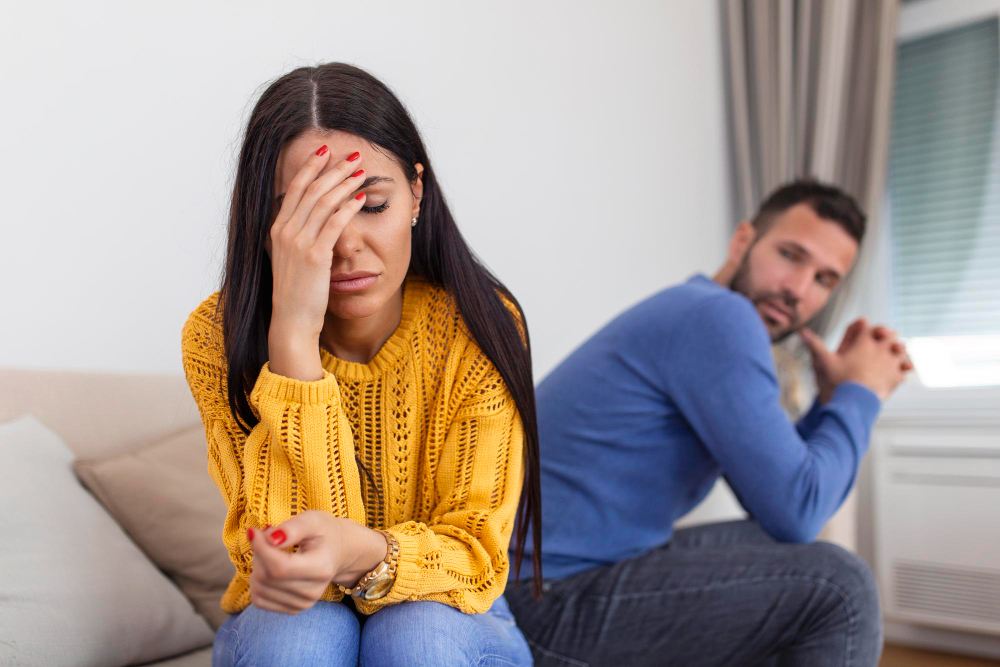
Fear of Abandonment
You may become unusually distressed when your partner travels, needs alone time, responds slowly to messages, or seems emotionally distant.
You might:
- Seek frequent reassurance
- Overthink changes in communication
- Fear that disagreements will end the relationship
- Become anxious when your partner needs space
- Interpret temporary distance as rejection
The useful question is not simply, “Why am I so anxious?”
Try asking, “What does this situation mean to me?”
If your partner needing space immediately feels like “They’re going to leave me,” the emotional reaction may be connected to an older fear rather than only the present situation a pattern explored further in relationship anxiety.
Sensitivity to Criticism
If criticism was common during childhood, even reasonable feedback can feel deeply personal.
You may become defensive, withdraw, become perfectionistic, or assume your partner is disappointed in you.
Before reacting, pause and separate feedback about a behavior from judgment about your worth.
Your partner saying, “Can we handle this differently next time?” does not necessarily mean, “You’re a failure.”
Emotional Neglect and Difficulty Asking for Support
People who grew up learning to handle their emotions alone may become extremely self-sufficient in adulthood.
You may think:
“I don’t want to burden my partner.”
“I should be able to handle this myself.”
“They should know what I need.”
But emotional independence can sometimes become emotional disconnection the same territory covered in what hyper-independence does to relationships.
Instead of expecting your partner to guess what you need, practice making a direct request:
“I’m having a difficult day and could use some reassurance.”
Conflict Anxiety
Growing up around frequent yelling, unpredictable arguments, or emotional withdrawal can make adult conflict feel threatening.
You may shut down, avoid difficult conversations, monitor your partner’s mood, become defensive, or try to keep everyone happy.
When conflict begins, notice whether you are responding to what your partner is actually saying or to what conflict has historically meant to you.
Why Your Reaction Can Feel Bigger Than the Situation
A present-day event can activate an older emotional expectation.
For example, your partner may not answer a message for several hours. Objectively, there could be many explanations. But if inconsistency or abandonment was part of your childhood experience, the uncertainty may trigger fear before you have enough information to understand what is actually happening.
This does not mean your feelings are irrational or that your partner is never responsible for relationship problems. It means that the intensity of a reaction can sometimes contain information about both the present situation and your past experiences.
What Can You Do When an Old Wound Gets Triggered?
1. Pause Before Reacting
Give yourself a few minutes before sending an angry message, withdrawing completely, or demanding reassurance.
Ask:
- What happened?
- What am I feeling?
- What am I afraid will happen?
- What evidence do I have?
- Am I reacting only to the present?
2. Identify the Underlying Emotion
Anger may be covering fear. Withdrawal may be covering hurt. Irritability may be covering loneliness.
Try naming the emotion more precisely.
“I feel abandoned.”
“I feel rejected.”
“I feel afraid that I don’t matter.”
Putting the experience into words can make it easier to communicate.
3. Communicate the Need Instead of the Accusation
Rather than:
“You clearly don’t care about me.”
Try:
“When communication suddenly changes, I become anxious. Some reassurance would help me feel connected.”
This does not guarantee your partner will respond perfectly, but it gives them something they can actually understand and respond to.
4. Challenge the Old Belief
Ask whether the belief still accurately describes your life.
“I have to handle everything alone.”
“People always leave.”
“If someone is disappointed in me, they will reject me.”
These beliefs may have developed for understandable reasons, but that does not mean they must continue directing your relationships.
5. Notice Repeated Relationship Patterns
Look for situations that repeatedly produce the same reaction.
Do you become anxious whenever someone becomes less available? Do you repeatedly choose partners who are emotionally distant? Do you withdraw whenever someone gets close?
Patterns can reveal where deeper work may be needed this is exactly what’s explored in why you keep repeating the same relationship problems.

When Should You Consider Therapy?
Consider professional support if relationship patterns are repeatedly causing distress or interfering with intimacy.
Therapy may be particularly useful when you:
- Experience intense reactions that feel difficult to control
- Repeatedly struggle with abandonment fears
- Avoid emotional intimacy
- Shut down during conflict
- Have difficulty trusting your partner
- Repeat unhealthy relationship patterns
- Understand your patterns but cannot seem to change them
Seeking therapy does not mean that something is fundamentally wrong with you , and couples therapy can help even outside a crisis for exactly this reason.
How Dr. Harel Papikian Can Help
Dr. Harel Papikian is a licensed clinical psychologist in Los Angeles with more than 16 years of experience working with individuals and couples.
Therapy with Dr. Harel can help you understand the connection between earlier experiences and current relationship patterns without reducing your relationship difficulties to a single childhood explanation.
The work may involve identifying emotional triggers, understanding recurring relationship patterns, .developing healthier responses often using a structured framework like Dr. Harel’s ARM Method.
For individuals who understand their patterns intellectually but continue reacting emotionally in the same ways, therapy can provide a structured space to work on those patterns rather than simply trying to suppress them.
Final Thoughts
Childhood experiences can influence how adults experience trust, conflict, vulnerability, rejection, and emotional closeness. But recognizing a connection between your past and present does not mean you are destined to repeat it.
The goal is not to blame childhood for every relationship problem. It is to understand which old patterns may be influencing your reactions today and develop more intentional ways of responding.
With awareness, communication, self-compassion, and appropriate support, it is possible to build relationships that feel safer, more connected, and less controlled by old fears.
FAQs
Yes. Early experiences can influence expectations about trust, abandonment, emotional safety, conflict, and closeness, which may affect how someone responds to their partner.
Look for reactions that feel disproportionately intense, happen repeatedly, or involve familiar fears such as abandonment, rejection, criticism, or being emotionally unsupported. Therapy can also help identify these patterns.
People cannot change what happened in childhood, but they can work through its emotional effects and develop healthier beliefs, coping strategies, and relationship patterns.
You can share what feels appropriate and safe. Explaining your triggers and emotional needs can help your partner understand your reactions, but your partner is not responsible for healing your childhood experiences.
Yes. Individual therapy can help you understand personal patterns that affect relationships, including emotional triggers, attachment-related fears, communication difficulties, and responses to conflict.

Harel Papikian
Dr. Harel Papikian is a clinical psychologist and couples therapist with more than 15 years of experience. He offers marriage counseling and couples therapy in los Angeles. It help’s couples navigate their relationship challenges and deepen their connection. Our clinic uses a unique ARM method (Awareness, Release, Mastery) to achieve rapid and profound results for our clients. We serve a diverse clientele, including LGBTQ+ and heterosexual couples, addressing issues like communication breakdowns, conflict resolution, intimacy, and trust. You can also get individual therapy sessions for concerns like depression, anxiety, and trauma.
Leave a Reply