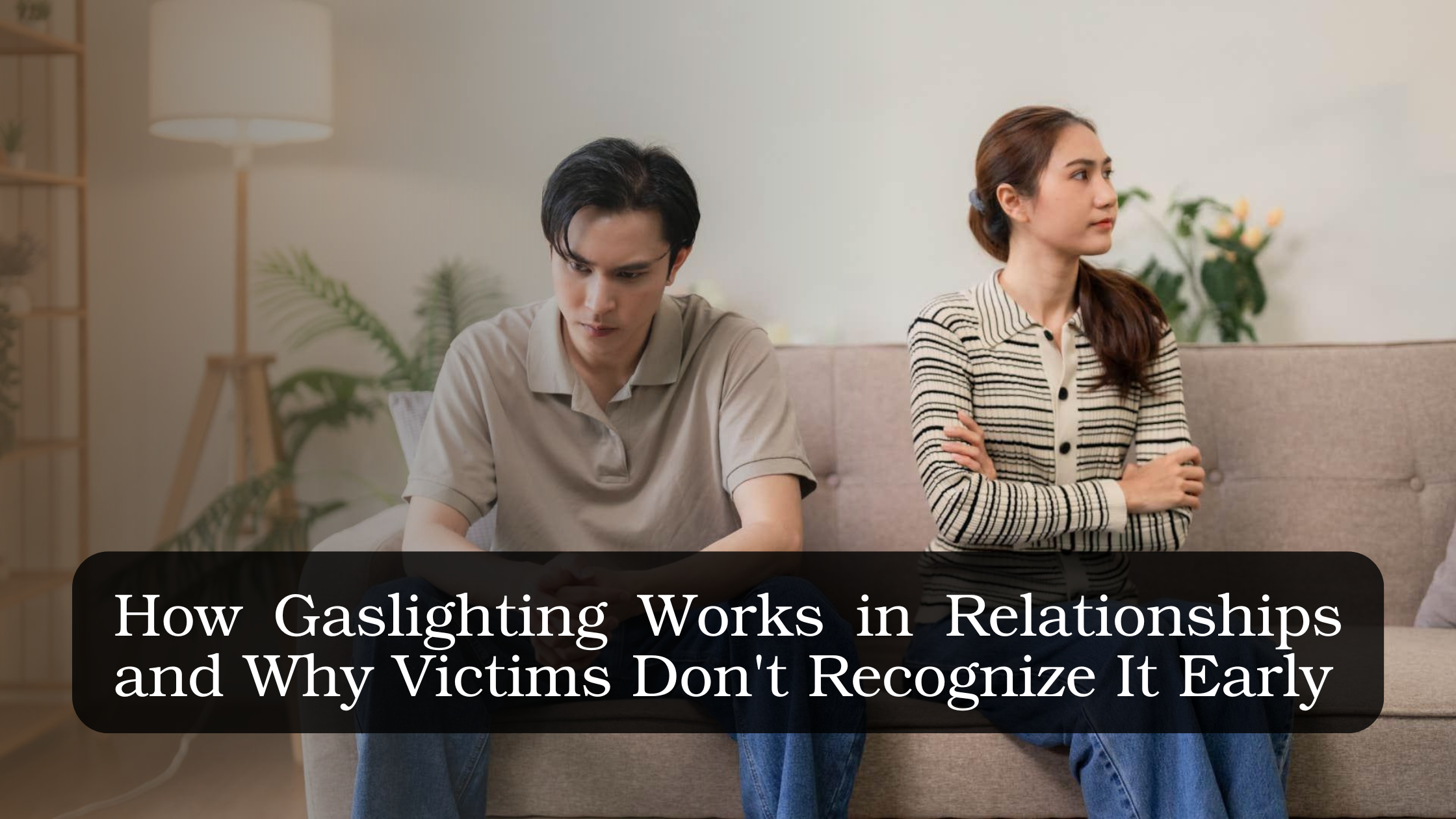
How Gaslighting Works in Relationships and Why Victims Don’t Recognize It Early
Gaslighting is a confusing relationship dynamic because it rarely begins with an attempt to control someone. It can start with a denied conversation, dismissed feeling, or a disagreement about what happened. At first, these moments may seem like conflict rather than a pattern.
Over time, repeated denial and invalidation can make one partner question their memory, judgment, emotions, or perception. They may apologize to end an argument, avoid raising concerns, or ask others whether their reaction was reasonable. The relationship can begin to feel confusing.
Understanding how gaslighting develops matters because recognizing the pattern helps protect self-trust and safety. In his Los Angeles practice, Dr. Harel, a licensed clinical psychologist with over 16 years of experience, helps couples understand patterns of communication, defensiveness, and invalidation without reducing disagreements to manipulation.
What Is Gaslighting in a Relationship?
Gaslighting is a repeated pattern of communication that causes one person to question their memory, perception, feelings, or judgment. It is more than simply disagreeing about an event.
Healthy partners can remember the same situation differently while respecting each other’s experience. Gaslighting becomes concerning when one person repeatedly insists that the other person’s reality is wrong, irrational, or imagined.
Common statements may include:
- “That never happened.”
- “You’re remembering it wrong.”
- “You’re too sensitive.”
- “You’re imagining things.”
- “I never said that.”
- “You’re making a big deal out of nothing.”
Context and repetition matter.
How Gaslighting Slowly Develops Over Time
Gaslighting often develops through small interactions rather than one dramatic incident. A partner raises a concern, receives a defensive response, and begins questioning their reaction.
When similar interactions repeat, the affected partner may gradually rely more on the other person’s version of events.
The pattern may repeat until self-doubt becomes more common.

Why Victims Do Not Recognize Gaslighting Early
1. It often begins with trust
Most people enter relationships expecting honesty. If a partner says, “That is not what happened,” the first response may be to reconsider your own memory rather than suspect manipulation.
2. Individual incidents seem minor
A disagreement about one conversation may not feel significant. The difficulty comes when similar moments repeatedly follow the same pattern.
3. People naturally question themselves
Healthy relationships require self-reflection. You may genuinely have misunderstood something. The problem begins when self-reflection becomes chronic self-doubt the opposite of approaching disagreement with genuine curiosity.
4. Love makes the pattern harder to see
Emotional attachment can make unhealthy behavior easier to explain away.
5. The pattern becomes normal
When an interaction happens repeatedly, people can adapt to it. They may stop asking why they feel confused and focus instead on avoiding the next argument.
Common Signs Gaslighting May Be Occurring
Some recurring signs include:
- Frequently second-guessing your memory
- Apologizing without understanding what you did wrong
- Feeling confused after conversations
- Being repeatedly told you are “too sensitive”
- Feeling anxious before raising concerns
- Needing others to confirm what happened
- Losing confidence in your decisions
- Avoiding difficult conversations
A particularly important sign is a growing loss of confidence in your own judgment. Disagreement is normal; persistent confusion and invalidation are different.
The Emotional Impact of Gaslighting
Repeated self-doubt can affect confidence and emotional wellbeing.
Gaslighting may contribute to:
- Chronic self-doubt
- Anxiety during communication
- Difficulty making decisions
- Fear of expressing needs
- Emotional isolation
- Repeatedly reviewing conversations afterward
The person may simply think, “I feel like I am always doing something wrong,” without recognizing the communication pattern behind that feeling.

Why Gaslighting Is Sometimes Misunderstood by the Person Doing It
Not every invalidating response comes from a deliberate plan to manipulate. Some people become highly defensive when criticized, while others have learned unhealthy conflict patterns or struggle to acknowledge their impact.
Someone may respond to a partner’s hurt by explaining why the partner should not feel hurt, believing they are defending themselves rather than dismissing the other person.
This does not make the impact unimportant. Intent and impact are not always the same.
How Gaslighting Affects Communication in Relationships
Once this pattern becomes established, conversations can stop being about the original issue. Instead, couples may spend their time debating:
- What exactly was said
- Who remembers correctly
- Whether a reaction was justified
- What happened during earlier arguments
The original problem gets lost. Eventually, one partner may stop raising concerns because they expect to be challenged or dismissed. Silence can then look like peace even when the underlying problem remains a dynamic closely related to the pursuer-distancer cycle, where one partner simply stops trying.
Can Gaslighting Be Repaired?
Some patterns can improve when both partners recognize the problem and consistently change how they communicate.
Repair may involve:
- Acknowledging harmful communication patterns
- Taking responsibility without immediate defensiveness
- Validating feelings even when memories differ
- Asking questions instead of assuming motives
- Practicing healthier conflict skills , including the kind of fair fighting rules that protect both partners’ experience of a disagreement.
- Rebuilding trust through consistent behavior
If fear, coercion, or abuse is present, individual professional support may be important.
How Dr. Harel’s Couples Therapy Can Help Identify the Pattern
Gaslighting dynamics can be difficult to evaluate from inside a relationship because both partners bring their own memories, emotions, and defenses.
Therapy provides a structured setting to examine these patterns. In his Los Angeles practice, Dr. Harel, a licensed clinical psychologist with over 16 years of experience, works with individuals and couples experiencing communication problems, defensiveness, emotional invalidation, and recurring conflict.
Couples Therapy can clarify the pattern and what needs to change couples therapy can help even outside of a crisis, which matters here since gaslighting patterns often go unnoticed for years before reaching a breaking point.
Final Thoughts
Gaslighting is difficult to recognize because it often develops gradually. A single disagreement about memory is not necessarily gaslighting. The concern is a repeated pattern in which one person’s experiences are consistently denied, minimized, or treated as unreliable.
Recognizing patterns early can help you pause, rebuild confidence in your perspective, and decide what support or change the relationship may need.
Healthy relationships allow two people to remember an event differently while respecting each other’s experiences.
If you repeatedly leave conversations confused or doubt yourself, examine the larger relationship pattern.
FAQ
No. Couples can genuinely remember events differently. Gaslighting involves a repeated pattern that causes one person to chronically doubt their own perception.
Yes. Defensiveness and poor communication habits can sometimes produce invalidating behavior without conscious intent. The impact still deserves attention.
Look for patterns such as frequent self-doubt, confusion, repeated dismissal of your feelings, and difficulty trusting your own judgment.
It can help when both partners are willing to examine their behavior honestly. A therapist can help identify communication patterns and develop healthier conflict skills.
There is no single right approach. Consider your emotional safety and how your partner responds to concerns. Individual therapy can also help clarify what you are experiencing.
Consider support when communication repeatedly leaves you confused, anxious, isolated, or unable to trust your judgment. A licensed professional can help you understand the pattern and consider appropriate next steps.

Harel Papikian
Dr. Harel Papikian is a clinical psychologist and couples therapist with more than 15 years of experience. He offers marriage counseling and couples therapy in los Angeles. It help’s couples navigate their relationship challenges and deepen their connection. Our clinic uses a unique ARM method (Awareness, Release, Mastery) to achieve rapid and profound results for our clients. We serve a diverse clientele, including LGBTQ+ and heterosexual couples, addressing issues like communication breakdowns, conflict resolution, intimacy, and trust. You can also get individual therapy sessions for concerns like depression, anxiety, and trauma.
Leave a Reply