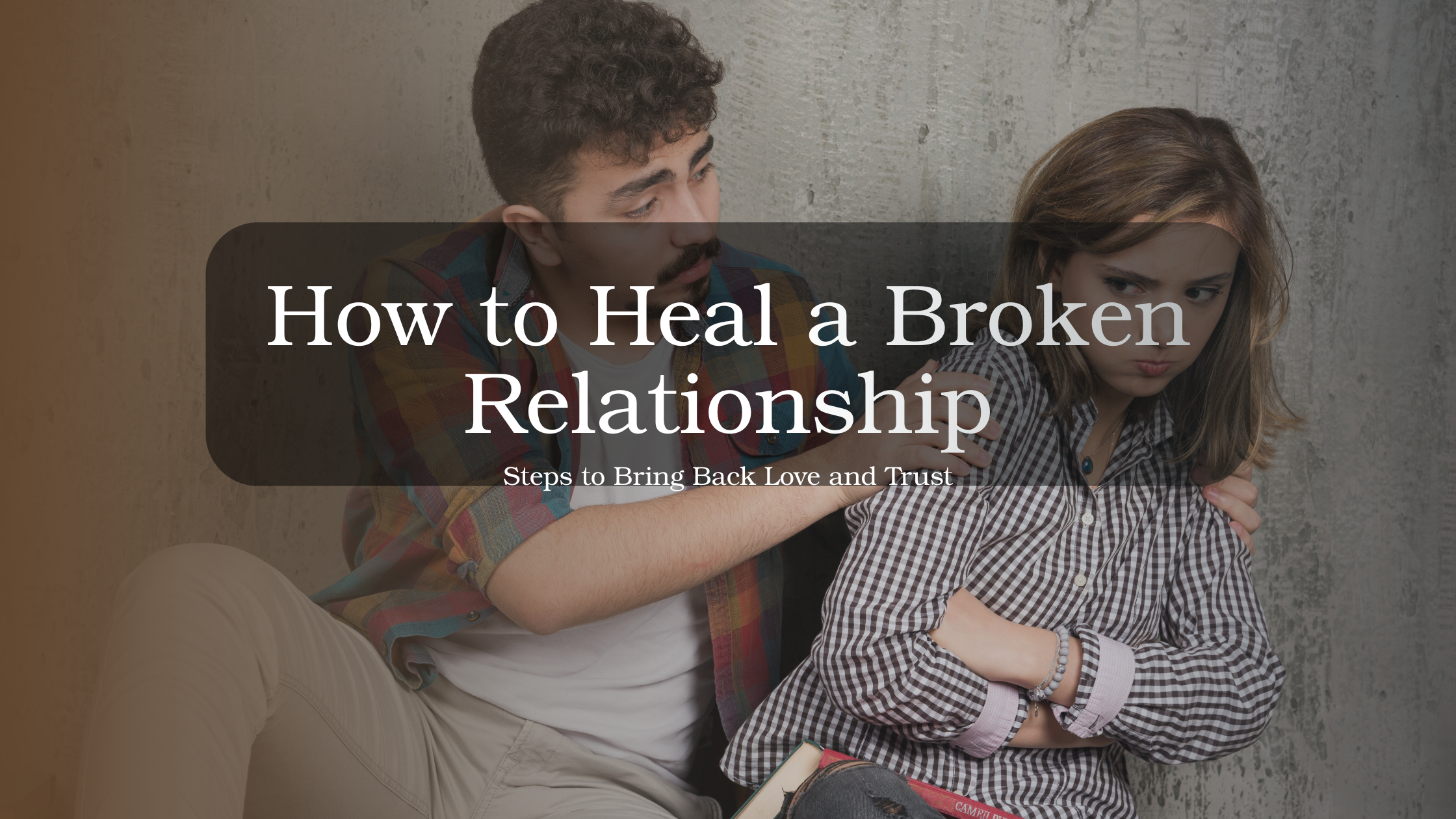
How to Heal a Broken Relationship: Steps to Bring Back Love and Trust
Every relationship goes through difficult phases, but some challenges cut deeper than others. Hurtful words, unmet expectations, unresolved arguments, emotional distance, or moments of betrayal can break the very sense of safety that a relationship depends on. When trust weakens and misunderstandings pile up, it may feel as though there is no way back.
Yet the truth is this: most relationships don’t break overnight, and they rarely heal overnight. But they can heal with the right steps, intention, and emotional honesty.
Healing a broken relationship is not about pretending the past did not hurt. It is about understanding what went wrong, learning new ways to show up for each other, and rebuilding the connection with awareness. This guide walks you through those steps in a practical, compassionate, and deeply insightful way.
Understanding What “Broken” Really Means

Before any healing can begin, both partners need to understand what “broken” looks like in their specific situation. A relationship is considered broken when the emotional bond is weakened to a point where everyday interactions feel heavy, tense, or disconnected. This may show up in several ways:
- conversations turning into arguments
- avoidance replacing openness
- lack of intimacy or warmth
- resentment building silently
- feeling unseen, unheard, or unappreciated
- repeated patterns that never get resolved
- emotional or physical infidelity
None of these signs mean the relationship cannot be saved. They simply reveal that something deeper needs attention. Healing a broken relationship begins when both partners acknowledge that something is wrong, not to blame, but to understand.
Step 1: Create Space for Honest Reflection
Healing a broken relationship requires both partners to pause and reflect before jumping into action. This reflection is not about replaying what the other person did wrong, but about gaining clarity on:
- what hurt you
- why it hurt
- what you need now
- how you may have contributed to the issue
- what fears or insecurities are involved
Many couples skip this step and rush into “fixing mode,” leading to temporary peace but repeating the same arguments later.
When you reflect honestly, you approach the relationship with maturity instead of reaction.
You may ask yourself:
- Was I feeling unheard?
- Did I avoid expressing my needs clearly?
- Did I withdraw instead of communicating?
- Did I expect my partner to read my mind?
- Were my reactions influenced by stress, past trauma, or unspoken fears?
This self-awareness sets the foundation for healthier communication later.
Step 2: Have a Calm, Vulnerable Conversation
Once both partners have reflected, the next step is to talk — but not the kind of talk that turns into shouting or defending. A healing conversation has three qualities: calmness, vulnerability, and respect.
Choose the right time when both are emotionally available. Start the conversation with emotional openness rather than accusations. For example:
Instead of saying,
“You never listen to me,”
try:
“When I shared my feelings last time, I felt unheard, and it made me withdraw. I want us to understand each other better.”
This shifts the tone from blame to connection.
A healing conversation focuses on:
- expressing feelings, not attacking behaviour
- describing the experience, not diagnosing the partner
- listening actively without interruption
- validating each other’s emotions
- agreeing on what matters most moving forward
Remember: validation does not mean agreement. It means acknowledging your partner’s feelings as real and important.
Step 3: Rebuild Trust Through Relevant Actions
Trust is not rebuilt by promises. It is rebuilt by actions that consistently match words.
Depending on the nature of the damage, rebuilding trust may require:
• Showing transparency
This may include sharing details, opening up about fears, or clarifying plans without being asked, not out of control, but out of reassurance.
• Being reliable
Small actions matter more than grand gestures. When you keep small commitments, your partner sees the relationship becoming safe again.
• Avoiding defensive reactions
If your partner expresses hurt, responding defensively only deepens the gap. Instead, staying present and calm helps rebuild emotional safety.
• Repairing without conditions
Apologies mean little if they are followed by excuses. A healing apology acknowledges harm without diluting it.
Trust grows slowly but steadily when your partner observes consistent behaviour over time.
Think of trust as emotional credit. If it was broken, the balance is low — but with patience, you can refill it.
Step 4: Relearn How to Communicate with Kindness
Poor communication is one of the biggest reasons relationships break, and improving it is one of the strongest ways to heal.
Healthy communication includes:
• Using “I feel” statements
This keeps conversations grounded in emotions instead of accusations.
• Asking for clarity
Instead of assuming intentions, simply ask. Assumptions breed resentment.
• Slowing down emotional reactions
Not every disagreement needs an instant reply. Sometimes you need a moment to breathe.
• Avoiding silent treatment
Silence may feel protective, but it disconnects the relationship.
• Checking in regularly
A five-minute daily emotional check-in can prevent misunderstandings from building up.
The goal is not to be perfect communicators but to build a safe emotional rhythm where both partners feel seen and heard.
Step 5: Address the Root Cause, Not Just the Symptoms
A broken relationship rarely stems from one incident. Often, the real problems lie underneath the surface:
- childhood emotional wounds
- unresolved trauma
- attachment style mismatches
- unmet needs
- communication problems
- mismatched expectations about roles, intimacy, or responsibilities
- unexpressed fears such as abandonment, rejection, or losing independence
Healing requires addressing these deeper layers.
For example:
If the real issue was emotional neglect, spending time together won’t be enough — you need efforts that create emotional presence.
If the issue was betrayal, repairing routines won’t work unless transparency and accountability appear consistently.
If the problem was chronic miscommunication, you need new communication tools, not another conversation.
Understanding the root cause prevents the cycle from repeating.
Final Thoughts
Healing a broken relationship takes courage. It requires admitting mistakes, facing uncomfortable truths, and choosing love even when it feels difficult. But many couples find that the process of healing makes their bond much deeper than before.
It teaches them communication, empathy, patience, and emotional maturity — the true foundations of lasting love.
If both partners are willing to grow, a broken relationship can transform into a stronger, healthier, more conscious partnership than ever before.
FAQs (Frequently Asked Questions)
Sustainable repair usually requires effort from both partners. One person can initiate change, but long-term healing depends on mutual willingness to rebuild trust, communicate, and stay consistent over time.
Progress shows up in small, consistent changes—less defensiveness, more openness, and a growing sense of emotional safety. Trust rebuilds gradually through repeated actions, not single gestures.
Avoiding the past completely can leave unresolved issues beneath the surface. While it’s not necessary to revisit every detail, some level of honest reflection is important to prevent repeating the same patterns.
Yes. While reassurance can help initially, relying on it excessively may prevent both partners from developing deeper trust and emotional independence. Balance is key.
Boundaries create clarity and safety during the healing process. They help define acceptable behavior, prevent repeated harm, and support accountability without constant conflict.
If communication remains stuck, trust isn’t improving, or the same conflicts keep repeating despite effort, professional support can provide structure and guidance that is difficult to achieve alone.

Harel Papikian
Dr. Harel Papikian is a clinical psychologist and couples therapist with more than 15 years of experience. He offers marriage counseling and couples therapy in los Angeles. It help’s couples navigate their relationship challenges and deepen their connection. Our clinic uses a unique ARM method (Awareness, Release, Mastery) to achieve rapid and profound results for our clients. We serve a diverse clientele, including LGBTQ+ and heterosexual couples, addressing issues like communication breakdowns, conflict resolution, intimacy, and trust. You can also get individual therapy sessions for concerns like depression, anxiety, and trauma.
Leave a Reply