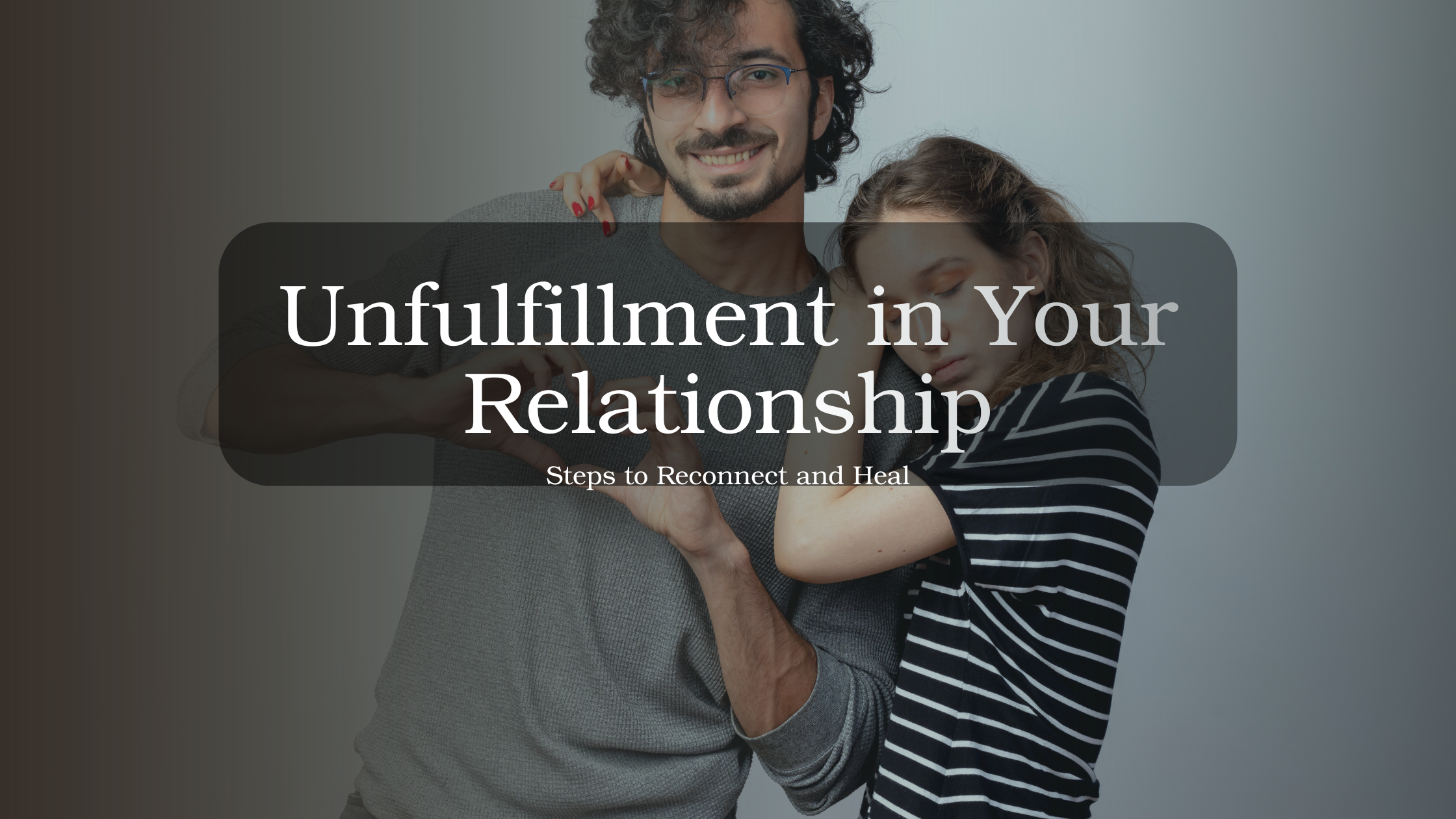
Unfulfillment in Your Relationship: Steps to Reconnect and Heal
Feeling unfulfilled in a relationship can be confusing and painful. Many people describe it as a quiet emptiness that slowly grows over time. They still care about their partner, and nothing seems seriously “wrong,” yet something feels missing. Conversations feel repetitive, emotional closeness feels distant, and the sense of being truly seen begins to fade. Some couples reach this point after years together, while others experience it suddenly after a stressful period or life transition. Whatever the cause, the feeling of unfulfillment deserves attention, understanding, and gentle care.
Emotional fulfillment in a relationship is not about constant excitement or perfect harmony. It is about connection, shared meaning, emotional safety, and feeling valued by the person you love. When these needs go unmet, even strong relationships can begin to feel heavy or disconnected. The good news is that unfulfillment is not a final verdict. With the right awareness, open communication, and supportive guidance, couples can rebuild closeness and rediscover what originally brought them together.
This article explores why unfulfillment happens, the subtle signs people often overlook, and the most effective steps to reconnect and heal. It includes clear explanations, relatable examples, and practical strategies that couples can begin applying gently in their daily lives. When deeper support is needed, professionals like Dr. Harel help couples understand their emotional patterns and reconnect through structured work rooted in the ARM Method of Awareness, Release, and Mastery.
Understanding What Emotional Unfulfillment Really Means
Feeling unfulfilled does not always mean the relationship is failing. Often, it signals that one or both partners have needs that have gone unnoticed. Human closeness constantly evolves. What worked earlier in the relationship may not meet the emotional or psychological needs that appear later.
Common causes of unfulfillment
1. Emotional disconnection
Over time, life responsibilities, stress, and distractions reduce emotional presence. Partners still care but feel distant or unsupported.
2. Unresolved conflicts
When couples avoid difficult conversations, the relationship carries silent tension. This creates emotional numbness and dissatisfaction.
3. Loss of shared goals
When partners grow in different directions, the relationship can feel purposeless or stagnant.
4. Unexpressed needs
When one partner hides needs to avoid conflict or disappointment, the relationship begins to feel unbalanced.
5. Changes in identity or life stages
Major life changes such as parenthood, career shifts, grief, or relocation can alter emotional needs and priorities.
6. Attachment differences
Some partners need closeness while others require space. Without awareness, these patterns create emotional distance.
Understanding the root of unfulfillment helps couples move from confusion to clarity. Instead of blaming themselves or each other, they begin to see the deeper patterns that shaped their current experience.
Signs You May Be Feeling Unfulfilled
Relationship unfulfillment shows up in subtle ways long before partners recognize it. The signs below commonly appear together.
1. You feel emotionally lonely even when you are together
You can sit beside your partner yet feel distant. Conversations feel surface-level, and moments of real closeness are rare.
2. You stop sharing deeper thoughts or dreams
You may hold back because you expect your partner will not understand or respond meaningfully.
3. You feel like the relationship is on autopilot
Daily routines continue, but emotional engagement fades. There is comfort, but not connection.
4. You miss who you used to be
Sometimes unfulfillment is about losing parts of yourself. You might feel less curious, playful, expressive, or confident than before.
5. Your arguments feel repetitive and unresolved
The same topics appear over and over without real progress. This leads to emotional fatigue and a sense of stuckness.
6. You rely more on distractions
Work, friends, social media, or hobbies become emotional replacements.
7. You question the future without wanting to leave
You may feel torn between love for your partner and sadness about the current state of the relationship.
Recognizing these signs helps partners pause, reflect, and begin a path of reconnection.
Why Unfulfillment Happens Even in Loving Relationships
Partners usually do not become disconnected intentionally. The loss of fulfillment often grows quietly due to long-term patterns.
1. Communication becomes functional rather than emotional
Couples talk about chores, schedules, or responsibilities but not internal experiences or needs. Emotional intimacy slowly fades.
2. Affection decreases gradually
Touch, appreciation, and small gestures of care reduce over time. Without noticing, partners shift from lovers to logistical teammates.
3. Unspoken resentment builds
When needs are consistently unmet or ignored, frustration turns into emotional withdrawal.
4. Life becomes more demanding
Parents, caregivers, busy professionals, or individuals experiencing stress often have less emotional capacity for connection.
5. Uncertainty or fear prevents honesty
If one partner is afraid of rejection, conflict, or vulnerability, they hide what they feel. The relationship becomes emotionally shallow.
Understanding these patterns helps couples replace self-blame with compassion, which is essential for healing.
Steps to Reconnect and Heal When You Feel Unfulfilled
This section offers deeply actionable steps, each explained with clarity and examples so couples can begin applying them immediately.
Step 1: Identify the Root of Your Emotional Disconnection
Understanding the cause allows couples to address the problem directly instead of reacting to symptoms.
How to explore this
- Reflect on when the unfulfillment began.
- Identify whether it is emotional, physical, intellectual, or relational.
- Notice what triggers feelings of emptiness.
Example:
A partner realizes they began feeling unfulfilled after becoming a parent and losing time for one-on-one connection.
Step 2: Share Your Feelings with Openness Instead of Blame
Honest communication is the foundation of reconnection. The goal is to express inner experience rather than criticize.
Use gentle, vulnerable language
“I feel distant, and I miss being close to you.”
“I want us to reconnect. I want more emotional closeness.”
Why this works:
Vulnerability invites closeness and reduces defensiveness.
Step 3: Rebuild Emotional Intimacy Slowly and Consistently
Emotional intimacy grows through regular moments of presence and curiosity.
Ways to rebuild intimacy
- Ask deeper questions about each other’s day or thoughts.
- Share personal feelings rather than only daily tasks.
- Create weekly routines that encourage emotional closeness.
Example:
A couple sets aside twenty minutes each evening for uninterrupted conversation.
Step 4: Reintroduce Appreciation and Positive Interactions
Positive interactions are essential for emotional fulfillment. They build trust and warmth.
Try these simple practices
- Express gratitude for small things.
- Compliment each other regularly.
- Leave notes, send thoughtful messages, or offer supportive gestures.
Why this matters:
Appreciation creates emotional safety and reduces resentment.
Step 6: Strengthen Physical and Non sexual Affection
Physical closeness reinforces emotional closeness. It nurtures trust and comfort.
Examples of non sexual affection
- Holding hands
- Sitting close during conversations
- Gentle touch while passing in the house
- Giving hugs or resting your head on a shoulder
Small acts create a stronger emotional bond.
Step 7: Create Shared Meaning and Shared Goals Again
Fulfillment grows when partners move toward something together.
Ways to rebuild a shared vision
- Discuss future plans such as travel, parenting, finances, or lifestyle dreams.
- Start a project that interests both partners.
- Revisit old activities you enjoyed together.
Example:
A couple reignites connection by planning a monthly outing to explore new places together.
Step 8: Prioritize Self Awareness and Personal Growth
Sometimes unfulfillment is to do with personal emotional needs rather than the relationship itself. Self connection allows relationship connection.
Questions to reflect on
- What parts of yourself have you ignored lately?
- What emotional needs do you expect your partner to fill?
- What brings you personal meaning and joy?
Personal growth strengthens relational fulfillment.
Seek Professional Support When Patterns Feel Too Deep or Repetitive
Some relationship patterns require structured guidance to break. This is where a skilled therapist makes a significant difference.
Working with a professional like Dr. Harel helps couples understand their emotional patterns, heal old wounds, and build long term relational skills. His sessions are thoughtful, highly personalized, and rooted in the ARM Method, which includes developing awareness, releasing emotional blocks, and mastering relational skills such as communication and conflict resolution. Many couples describe the process as transformative, because it helps them understand each other with clarity and build connection intentionally.
How to Reconnect When Only One Partner Feels Unfulfilled
It is common for one partner to experience unfulfillment before the other notices. This does not mean the other person does not care. It often means they did not realize the depth of the issue.
What you can do
- Explain your emotions calmly and clearly.
- Invite your partner into the conversation rather than demanding change.
- Encourage small, manageable steps toward reconnection.
Gentle conversations open the door to change.
How Stress, Trauma, or Emotional History Affects Fulfillment
Fulfillment is influenced not only by the relationship but also by each partner’s emotional history.
Examples
- A partner with abandonment fears may withdraw when overwhelmed.
- A partner with a history of criticism may struggle to express needs.
- A partner who experienced past trauma may disconnect emotionally during stress.
Understanding this context reduces blame and increases compassion.
Difference Between Temporary Disconnection and Deeper Unfulfillment
| Experience | Temporary Disconnection | Deeper Unfulfillment |
| Emotional closeness | Still present but inconsistent | Feels significantly reduced |
| Duration | Short term | Long term or recurring |
| Stress influence | Caused by external stress | Caused by unmet emotional needs |
| Solutions | Rest, communication, time together | Deeper conversations, healing, clarity, therapy |
| Impact | Mild frustration | Persistent sadness, loneliness, confusion |
Final Thoughts
Feeling unfulfilled in a relationship can be painful, but it is also a powerful opportunity for growth. It invites partners to pause, reflect, communicate, and rebuild what truly matters. Relationships thrive when both people feel understood, valued, and emotionally connected. These steps, when practiced with patience and compassion, help couples rediscover closeness and create a stronger, more meaningful bond.
When deeper emotional patterns or unresolved relational wounds make it difficult to reconnect, working with a trained specialist like Dr. Harel provides structured guidance, clarity, and proven methods for healing. Reconnection is possible. Healing is possible. Fulfillment can be rebuilt with intention, openness, and support.
FAQs (Frequently Asked Questions)
Yes. Stability does not always mean emotional fulfillment. Over time, routines, responsibilities, and unspoken needs can create a sense of emptiness even when there are no major conflicts.
It often requires honest reflection. If the feeling of dissatisfaction shows up across different areas of life, it may be internal. If it is specific to the relationship dynamic, it may point to unmet needs between partners.
Yes. Work pressure, family responsibilities, or personal burnout can reduce emotional availability, making the relationship feel distant even if the core connection is still present.
In many cases, yes. Small shifts in communication, attention, and emotional presence can gradually improve how connected and satisfied both partners feel without drastic changes.
Unrealistic or unspoken expectations often create disappointment. When expectations are not clearly communicated or are too high, the relationship can feel lacking even when effort is present.
If the feeling persists despite consistent effort, open communication, and attempts to reconnect, it may indicate differences in values, needs, or long-term goals that are harder to resolve.

Harel Papikian
Dr. Harel Papikian is a clinical psychologist and couples therapist with more than 15 years of experience. He offers marriage counseling and couples therapy in los Angeles. It help’s couples navigate their relationship challenges and deepen their connection. Our clinic uses a unique ARM method (Awareness, Release, Mastery) to achieve rapid and profound results for our clients. We serve a diverse clientele, including LGBTQ+ and heterosexual couples, addressing issues like communication breakdowns, conflict resolution, intimacy, and trust. You can also get individual therapy sessions for concerns like depression, anxiety, and trauma.
Leave a Reply