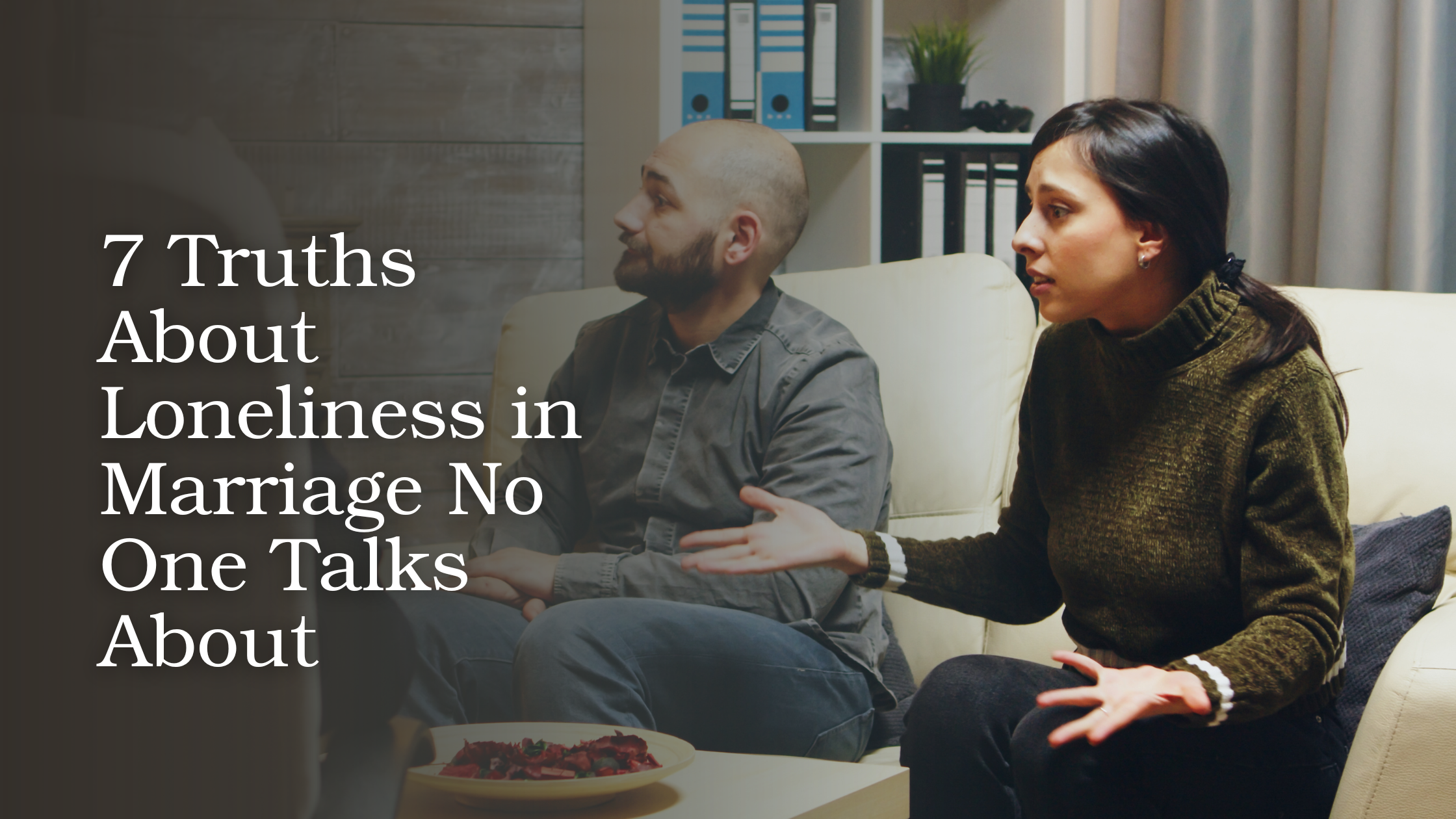
7 Truths About Loneliness in Marriage No One Talks About
Loneliness in marriage is one of the least discussed yet most emotionally painful experiences people face in long term relationships. Society often assumes that marriage automatically provides companionship, emotional safety, and a sense of being understood. When loneliness appears inside a marriage, it can feel confusing, isolating, and even shameful. Many people wonder how they can feel so alone while sharing a life, home, and history with someone else.
What makes marital loneliness particularly difficult is that it is often invisible. From the outside, a couple may appear stable, functional, or even happy. Internally, however, one or both partners may feel emotionally disconnected, unseen, or misunderstood. Because loneliness does not always involve conflict or obvious problems, it is easy to overlook or minimize until it becomes deeply entrenched.
Understanding the realities behind loneliness in marriage is essential. These truths help normalize the experience and open the door to awareness, communication, and healing.
Truth 1: Loneliness in Marriage Is About Emotional Disconnection, Not Physical Presence

One of the most misunderstood aspects of loneliness in marriage is the belief that it only occurs when partners spend little time together. In reality, many people feel lonely even when they share daily routines, responsibilities, and physical space with their spouse.
Emotional connection involves feeling heard, understood, and emotionally safe. When conversations become limited to logistics such as work schedules, finances, or household tasks, emotional intimacy often fades. Partners may talk frequently but still feel disconnected because deeper emotional sharing is missing.
For example, a partner may come home feeling overwhelmed or discouraged but chooses not to share because previous attempts were dismissed or misunderstood. Over time, emotional silence replaces openness, creating a quiet sense of isolation.
Why this truth matters:
Loneliness is not resolved by spending more time together alone. It requires emotional presence, curiosity, and attunement to each other’s inner experiences.
Truth 2: Loneliness Often Develops Slowly Through Small, Repeated Disconnections
Loneliness in marriage rarely begins with a single event. It typically develops through a series of small moments where emotional needs are overlooked, minimized, or unmet. These moments may seem insignificant on their own, but over time they accumulate.
Common contributors include repeated interruptions during conversations, unresolved disagreements, emotional withdrawal after conflict, or feeling unsupported during stressful periods. When partners stop addressing these experiences openly, emotional distance grows quietly.
As this pattern continues, partners may stop expecting emotional closeness from each other. They may rely more on self sufficiency, distractions, or external support, further reducing emotional intimacy within the marriage.
Why this truth matters:
Recognizing gradual emotional drift allows couples to intervene early rather than waiting until the distance feels overwhelming.
Truth 3: Feeling Lonely Does Not Automatically Mean the Marriage Is Failing
Many people interpret loneliness as proof that something is fundamentally wrong with their relationship. This belief often leads to fear, guilt, or avoidance rather than understanding. In reality, loneliness is often a signal of unmet emotional needs rather than a sign of failure.
Life transitions such as parenthood, career changes, health challenges, or prolonged stress can shift emotional dynamics in a marriage. Partners may prioritize survival, responsibilities, or stability over connection without realizing the emotional cost.
Loneliness, in this sense, is information. It highlights areas that need attention, adjustment, or renewed communication rather than indicating that love is absent.
Why this truth matters:
Viewing loneliness as a message rather than a verdict creates space for reflection and repair.
Truth 4: Emotional Self Protection Can Increase Loneliness Over Time
When emotional needs are repeatedly unmet, many people unconsciously protect themselves by withdrawing emotionally. This may involve sharing less, avoiding vulnerability, or minimizing personal needs. While this strategy can reduce immediate discomfort, it often deepens loneliness over time.
Partners who stop expressing emotions may appear calm or independent, but internally they may feel disconnected and unseen. Emotional self protection reduces opportunities for intimacy because vulnerability is essential for connection.
For example, a partner who no longer shares fears or disappointments may feel safer, but the marriage loses emotional depth and closeness.
Why this truth matters:
Reconnection requires emotional openness. Protecting oneself from hurt can also block intimacy.
Truth 5: Loneliness Can Exist Even in Loving and Respectful Marriages
Loneliness is not limited to high conflict or unhappy marriages. Many respectful, caring, and long standing relationships experience emotional distance at some point. Love and loneliness can coexist.
In some marriages, partners avoid emotional conversations to preserve harmony. In others, routines gradually replace intentional connection. Over time, emotional intimacy may fade even though commitment and affection remain.
This type of loneliness is often subtle and difficult to articulate. Partners may say they feel empty, disconnected, or emotionally alone without being able to point to a specific problem.
Why this truth matters:
Acknowledging emotional needs does not negate love. It strengthens the relationship by addressing what is missing.
Truth 6: Unaddressed Loneliness Can Lead to Emotional Withdrawal and Resentment
When loneliness is ignored or minimized, it often transforms into resentment, emotional numbness, or disengagement. Partners may stop initiating connection or expressing needs because they no longer believe it will make a difference.
Over time, emotional withdrawal becomes normalized. Couples may function well practically but feel emotionally distant. Intimacy declines, and emotional support feels unavailable.
This pattern can create a cycle where both partners feel lonely but unsure how to reconnect.
Why this truth matters:
Addressing loneliness early prevents deeper emotional erosion and preserves relational health.
Truth 7: Loneliness Is Often Easier to Address With Structured Support
Talking about loneliness can feel vulnerable and risky. Without guidance, these conversations may lead to defensiveness or misunderstanding. Professional support provides a structured and emotionally safe environment to explore these feelings.
Working with a therapist helps couples identify emotional patterns, improve communication, and rebuild emotional safety. It also helps individuals understand their own needs and emotional responses more clearly.
Dr. Harel Papikian works with individuals and couples in Los Angeles through virtual sessions, helping clients explore emotional disconnection and develop healthier patterns of connection and communication.
Why this truth matters:
Loneliness does not have to be navigated alone. Support can clarify emotions and guide meaningful change.
Common Signs of Loneliness in Marriage
| Sign | What It Often Reflects |
| Feeling emotionally unseen | Lack of emotional validation |
| Avoiding deeper conversations | Fear of misunderstanding |
| Emotional numbness | Prolonged unmet needs |
| Increased irritability | Emotional frustration |
| Loss of intimacy | Disconnection |
Final Thoughts
Loneliness in marriage is deeply human and far more common than most people are willing to admit. It can exist quietly in relationships that appear stable, loving, and committed. Because it often lacks dramatic conflict, loneliness is easy to overlook until it becomes emotionally heavy and persistent.
What makes marital loneliness especially painful is not just the absence of connection, but the belief that one should not feel lonely in a marriage at all. This belief often leads people to silence their feelings, doubt themselves, or assume that nothing can change. In reality, loneliness is often a starting point rather than an ending.
When approached with honesty and understanding, loneliness can open the door to important conversations about emotional needs, expectations, and connection. It can highlight areas where partners have drifted apart not out of neglect or lack of care, but due to stress, routine, or unspoken assumptions. Addressing loneliness does not weaken a marriage. It often strengthens it by restoring emotional awareness and intentional connection.
For individuals and couples who feel stuck or unsure how to navigate these emotions, having structured support can make a meaningful difference. With guidance, loneliness can shift from a silent burden into an opportunity for clarity, reconnection, and growth.

Harel Papikian
Dr. Harel Papikian is a clinical psychologist and couples therapist with more than 15 years of experience. He offers marriage counseling and couples therapy in los Angeles. It help’s couples navigate their relationship challenges and deepen their connection. Our clinic uses a unique ARM method (Awareness, Release, Mastery) to achieve rapid and profound results for our clients. We serve a diverse clientele, including LGBTQ+ and heterosexual couples, addressing issues like communication breakdowns, conflict resolution, intimacy, and trust. You can also get individual therapy sessions for concerns like depression, anxiety, and trauma.
Leave a Reply