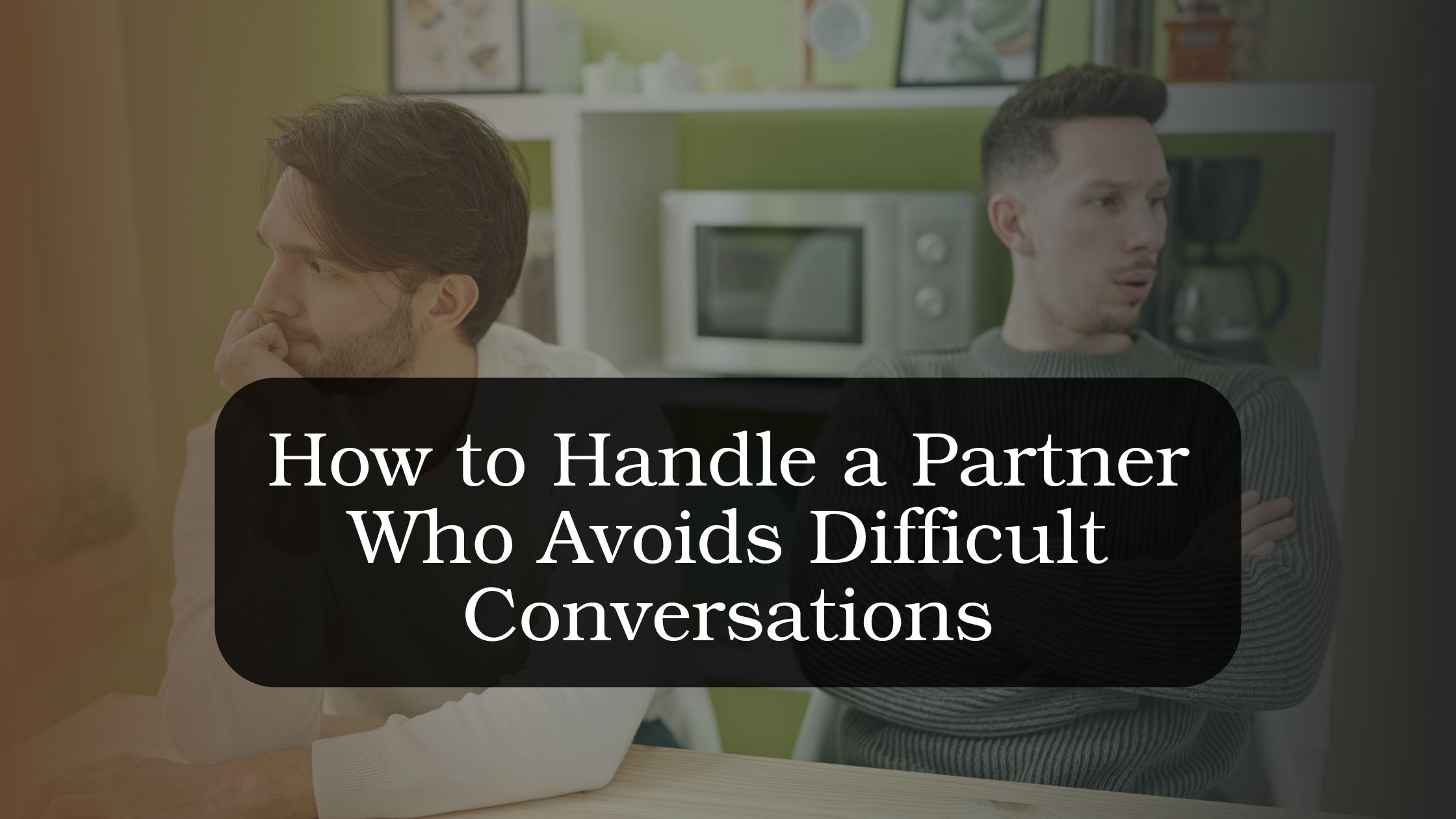
How to Handle a Partner Who Avoids Difficult Conversations
Relationships are built through thousands of conversations. Some are light hearted and easy. Others are uncomfortable, emotional, and sometimes painful. The ability to navigate those difficult conversations is one of the strongest predictors of long-term relationship satisfaction.
But what happens when one partner refuses to engage?
Perhaps every discussion about finances gets postponed. Concerns about intimacy are met with silence. Attempts to address conflict end with one person leaving the room, shutting down, or insisting everything is fine when it clearly is not.
Over time, the issue stops being about the original topic. The real problem becomes the inability to talk about problems at all.
For many couples, this dynamic creates profound loneliness. One partner feels ignored and emotionally abandoned. The other feels overwhelmed, criticized, or trapped. Both individuals become frustrated, yet neither understands why the pattern keeps repeating.
In Los Angeles, where demanding careers, long commutes, financial pressures, and constant digital distractions already strain relationships, communication avoidance can quietly erode connection. A couple may appear functional on the surface while carrying years of unresolved conversations beneath it.
Dr. Harel, a licensed clinical psychologist in Los Angeles with over 16 years of experience, frequently works with couples struggling with this exact pattern. The encouraging news is that avoidance is not necessarily a sign that a relationship is doomed. More often, it is a sign that one or both partners need new tools for handling emotional discomfort.
Understanding the psychology behind avoidance is the first step toward changing it.
Why Some People Avoid Difficult Conversations

One of the most common misconceptions in relationships is that people avoid difficult conversations because they do not care. While that can occasionally be true, it is rarely the full story.
In many cases, avoidance develops as a coping mechanism. People learn how to handle conflict long before they enter romantic relationships. Their childhood experiences often shape how they respond to emotional discomfort as adults.
For example, imagine someone who grew up in a household where disagreements quickly escalated into yelling, criticism, or emotional withdrawal. As a child, conflict felt threatening. The safest response was often to stay quiet, leave the room, or avoid confrontation altogether.
Fast forward twenty years. Now their spouse wants to discuss finances, intimacy, parenting, or emotional connection. Even though the conversation is not dangerous, their nervous system may react as though it is.
Dr. Harel often explains that many avoidant partners are not consciously deciding to shut down. Their brains are attempting to protect them from emotional discomfort.
This distinction is important because the pursuing partner often interprets avoidance personally.
They think:
- “They don’t care.”
- “They aren’t invested in the relationship.”
- “I’m not important enough to listen to.”
Meanwhile, the avoiding partner may be thinking:
- “I don’t know what to say.”
- “This conversation will turn into a fight.”
- “Nothing I say will be good enough.”
Neither partner understands what is happening beneath the surface, and the cycle continues.
The Different Ways Avoidance Shows Up in Relationships
When people think about avoidance, they often imagine someone refusing to speak. In reality, avoidance can take many forms.
Some partners become physically absent. Others remain present but emotionally disengaged.
1. Changing the Subject
One common pattern involves redirecting conversations whenever uncomfortable topics arise.
For example, a wife in Pasadena may try discussing concerns about emotional intimacy, only to find the conversation suddenly shifting toward work schedules, errands, or vacation plans.
The topic changes, but the issue remains unresolved.
2. Constant Delaying
Some individuals repeatedly postpone difficult discussions.
Common phrases include:
- “Can we talk about this later?”
- “I’m exhausted right now.”
- “This isn’t a good time.”
While timing matters, endless postponement often becomes another form of avoidance.
3. Intellectualizing the Problem
In Los Angeles, where many professionals are highly analytical, some partners respond to emotional concerns by focusing exclusively on logic.
Instead of exploring feelings, they attempt to solve the problem immediately.
While problem-solving can be helpful, it often leaves the emotional issue untouched.
4. Emotional Shutdown
Perhaps the most painful form of avoidance occurs when someone becomes emotionally unavailable during conversations.
They may remain physically present but offer:
- One-word answers
- Minimal eye contact
- Limited emotional engagement
The message received by their partner is often, “You’re alone in this conversation.
How Avoidance Impacts the Partner Who Wants to Talk

Many people underestimate how painful communication avoidance can become over time.
The issue is not simply that conversations do not happen.
The issue is what those missed conversations begin to symbolize.
When repeated attempts to communicate are unsuccessful, the pursuing partner often starts questioning:
- Whether their needs matter
- Whether they are valued
- Whether the relationship is emotionally safe
Consider a couple living in Santa Monica. A wife repeatedly tries to discuss feeling disconnected from her husband. Each attempt is met with dismissal, distraction, or withdrawal. Months later, she stops bringing it up. Not because she feels better. Because she no longer believes talking will help. This is often the point where emotional loneliness begins to develop.
Many clients describe feeling more alone inside their marriage than they would feel by themselves. That experience can be deeply painful and often becomes a catalyst for seeking therapy.
The Pursue-Withdraw Cycle That Keeps Couples Stuck
One of the most common dynamics Dr. Harel sees in couples therapy is known as the pursue-withdraw cycle.
The pattern typically unfolds like this:
| Pursuing Partner | Withdrawing Partner |
| Wants discussion | Avoids discussion |
| Pushes harder | Withdraws further |
| Becomes frustrated | Feels overwhelmed |
| Escalates efforts | Shuts down more |
| Feels ignored | Feels attacked |
Both partners are reacting to pain. The pursuing partner seeks connection through conversation. The withdrawing partner seeks safety through avoidance. Unfortunately, each person’s solution intensifies the other’s fear. The more one partner pushes, the more the other retreats. The more one retreats, the harder the other pushes. Without intervention, this cycle can continue for years.
Why Avoidance Is Particularly Dangerous in Long-Term Relationships
Avoidance creates temporary relief. It does not create resolution. Many couples mistakenly assume that if they stop discussing a problem, it will eventually fade away. In reality, most relationship issues become larger when ignored. A small disagreement about finances can become years of resentment. A conversation about intimacy can become emotional disconnection. A concern about trust can become chronic suspicion.
The Snowball Effect of Unresolved Issues
| Initial Issue | What Happens When Avoided |
| Household responsibilities | Resentment builds |
| Financial disagreements | Trust decreases |
| Emotional needs | Distance grows |
| Intimacy concerns | Connection weakens |
| Parenting conflicts | Ongoing tension develops |
By the time many couples enter therapy, they are not discussing one problem. They are carrying years of accumulated hurt.
How to Approach a Partner Who Avoids Difficult Conversations

One of the biggest mistakes people make is trying to solve the issue before creating emotional safety. In many cases, a Power Struggle in Relationship can develop when partners focus on winning an argument rather than creating an environment where both people feel secure enough to engage. If your partner already feels overwhelmed by difficult conversations, increasing pressure usually makes them withdraw further. Instead, focus on creating an environment where engagement feels safer.
For example, rather than saying:
“We need to talk right now.”
Try:
“I’d like us to discuss something important. When would be a good time for you?”
This approach preserves accountability while reducing emotional threat.
Focus on Your Experience Instead of Their Character
Many conversations fail because they begin with criticism.
For example:
“You never listen.”
“You always avoid everything.”
“You don’t care about this relationship.”
Even when those statements reflect genuine frustration, they usually trigger defensiveness.
Instead, focus on your own experience.
Try:
“I’ve been feeling disconnected lately, and I miss feeling close to you.”
This creates space for dialogue rather than debate.
Stay Curious About Their Avoidance
Avoidance often makes more sense once you understand what is driving it.
Questions such as:
- “What makes these conversations difficult for you?”
- “What happens internally when we talk about conflict?”
- “What would make these discussions feel safer?”
can create valuable insight. Curiosity often opens doors that criticism keeps closed.
When Couples Therapy Can Help

Many couples reach a point where they can no longer break the cycle on their own. The same conversations happen repeatedly. The same frustrations emerge. Nothing changes. This is where couples therapy can be incredibly valuable. Dr. Harel, a licensed clinical psychologist in Los Angeles with over 16 years of experience, helps couples understand not just what they are arguing about, but how they are communicating.
Therapy helps partners:
- Identify avoidance patterns
- Understand emotional triggers
- Improve conflict management skills
- Build emotional safety
- Strengthen communication
- Reduce defensiveness
- Increase empathy
Most importantly, therapy creates a structured environment where both partners can feel heard.
Signs It May Be Time to Seek Professional Help
Consider couples therapy if:
- Important issues remain unresolved for months or years
- Conversations consistently end in withdrawal or conflict
- One partner feels emotionally ignored
- Communication feels impossible
- Resentment continues growing
- Emotional intimacy has significantly declined
The earlier couples address avoidance, the easier it tends to be to repair.
Final Thoughts
When a partner avoids difficult conversations, it is easy to assume they do not care. In reality, avoidance is often rooted in fear, overwhelm, learned coping patterns, or emotional discomfort rather than lack of love. In some cases, challenges related to Alexithymia in Relationships may also contribute to difficulty identifying, expressing, or discussing emotions. That does not mean the behavior is healthy.
Over time, avoidance can create loneliness, resentment, misunderstanding, and emotional distance. Conversations that never happen become wounds that never heal. Dr. Harel emphasizes that healthy relationships are not defined by the absence of difficult conversations. They are defined by the ability to have those conversations with honesty, respect, and emotional safety.
If you find yourself constantly pursuing while your partner constantly withdraws, know that this pattern is common and treatable. With greater understanding, intentional communication, and, when needed, professional support, couples can learn to move from avoidance toward connection.
Because lasting relationships are not built on avoiding difficult conversations. They are built on learning how to navigate them together.
Frequently Asked Questions (FAQs)
Yes. Many relationships remain healthy even when one partner is naturally conflict-avoidant. The key is learning alternative ways to discuss concerns rather than avoiding them completely. Productive communication matters more than comfort with conflict.
Yes. Individuals who are highly sensitive to criticism, value harmony, experience social anxiety, or prefer emotional privacy may be more likely to avoid challenging discussions, especially when they fear negative outcomes.
Needing space is temporary and usually followed by re-engagement. Avoidance occurs when discussions are repeatedly postponed, ignored, or never revisited, leaving important issues unresolved over time.
Yes. When important conversations are consistently avoided, emotional closeness often decreases. Over time, this can impact trust, vulnerability, affection, and physical intimacy within the relationship.
While texting can feel safer for some people, important relationship concerns are often best addressed through face-to-face or verbal conversations. Texting may be a starting point, but deeper discussions usually require more direct communication.
Absolutely. When concerns, feelings, and expectations remain unspoken, both partners may make inaccurate assumptions about each other’s thoughts, motives, and level of commitment, leading to unnecessary conflict and confusion.
Yes. Avoidance is often a learned coping strategy rather than a permanent personality trait. With self-awareness, intentional practice, and sometimes professional support, individuals can develop healthier ways of handling difficult conversations and emotional discomfort.

Harel Papikian
Dr. Harel Papikian is a clinical psychologist and couples therapist with more than 15 years of experience. He offers marriage counseling and couples therapy in los Angeles. It help’s couples navigate their relationship challenges and deepen their connection. Our clinic uses a unique ARM method (Awareness, Release, Mastery) to achieve rapid and profound results for our clients. We serve a diverse clientele, including LGBTQ+ and heterosexual couples, addressing issues like communication breakdowns, conflict resolution, intimacy, and trust. You can also get individual therapy sessions for concerns like depression, anxiety, and trauma.
Leave a Reply