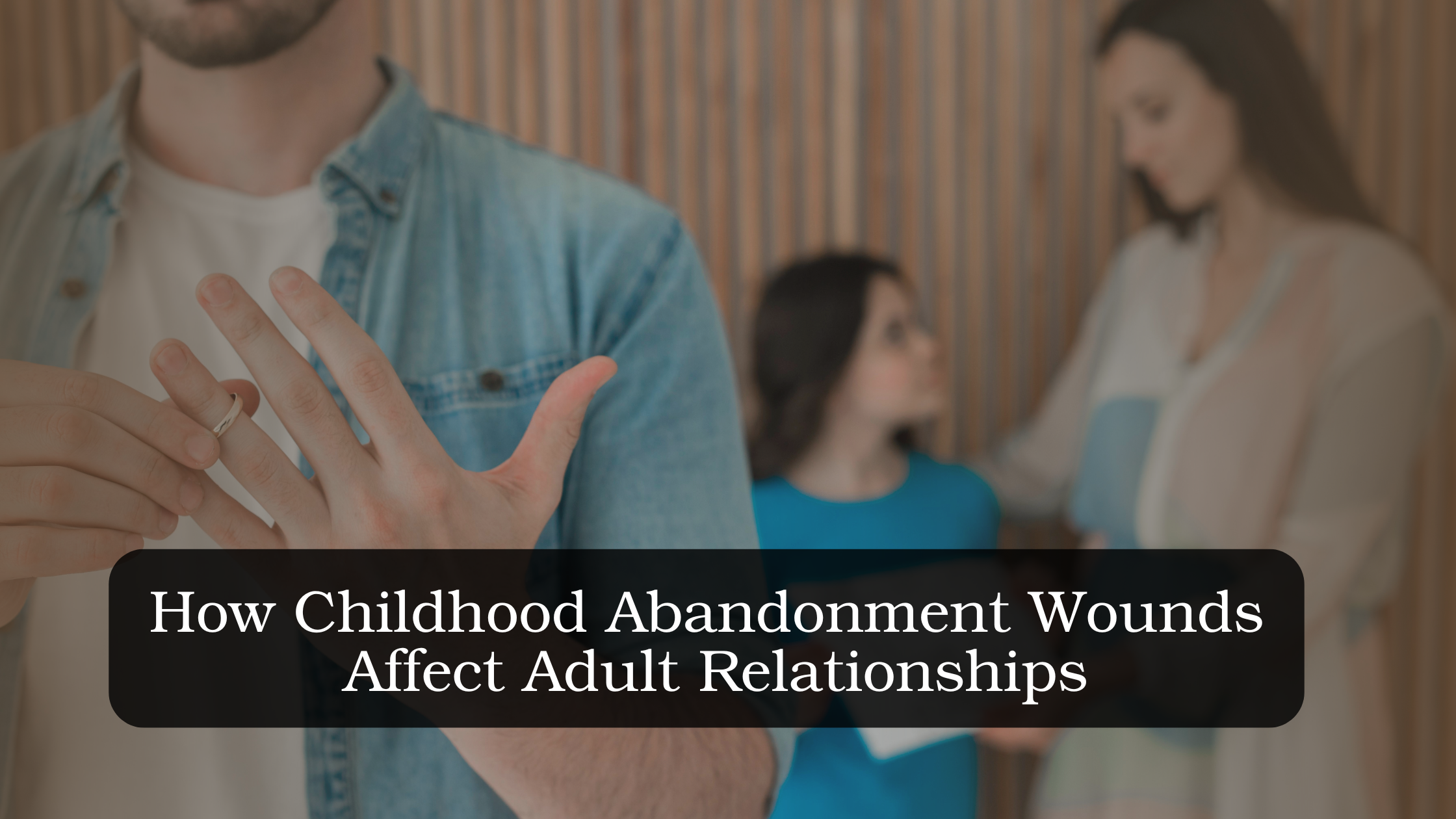
How Childhood Abandonment Wounds Affect Adult Relationships
Childhood experiences can influence how people understand closeness, trust, conflict, and emotional security later in life. When a child experiences the loss, absence, inconsistency, or emotional unavailability of an important caregiver, they may develop fears about whether the people they depend on will remain available. These experiences can continue to shape relationships in adulthood, even when the original circumstances are long past.
An abandonment wound does not mean that someone is permanently damaged or destined to repeat the same relationship patterns. People respond differently to difficult childhood experiences, and many develop secure, fulfilling relationships. However, earlier experiences can influence expectations and emotional reactions, particularly during moments of uncertainty, distance, or conflict.
Understanding these patterns can help explain why an adult may become highly anxious when a partner does not respond, withdraw when a relationship becomes serious, or struggle to trust reassurance. Recognizing the connection between past experiences and present reactions can create an opportunity to develop healthier ways of relating.
What Is a Childhood Abandonment Wound?
An abandonment wound refers to the emotional impact that can result when a child experiences significant or repeated disruptions in their sense of safety and reliable connection with caregivers.
This does not require a parent to physically leave the family. A child may experience abandonment-related insecurity when a caregiver is emotionally unavailable, frequently absent, unpredictable, chronically overwhelmed, or unable to respond consistently to the child’s emotional needs.
Other experiences can include:
- Divorce or separation
- Death of a caregiver
- Repeated changes in caregivers
- Long periods of parental absence
- Foster care or other disruptions in caregiving
- A parent struggling with serious personal difficulties
- Repeated rejection or emotional withdrawal
- Growing up feeling responsible for a caregiver’s emotional wellbeing
The meaning a child makes of these experiences can matter as much as the event itself. A child may conclude, for example, that people leave, that their needs are too much, or that they must work hard to keep others close.
These beliefs are not necessarily conscious. They can become emotional expectations that resurface in adult relationships.
How Childhood Abandonment Can Affect Adult Relationships

Fear of being left
An adult who experienced unreliable caregiving may become particularly sensitive to signs that a partner is pulling away.
A delayed message, change in tone, cancelled plans, or request for space may trigger significant anxiety. The current situation may be relatively minor, but it can activate a much older fear of losing an important relationship.
Seeking frequent reassurance
Reassurance can become a way of trying to restore emotional security.
Someone may repeatedly ask:
“Are you upset with me?”
“Do you still love me?”
“Are you sure we’re okay?”
Reassurance can be healthy in a relationship. The difficulty arises when it provides only temporary relief and increasingly frequent reassurance becomes necessary to manage anxiety.
Difficulty trusting stability
Even when a partner is consistent, someone with abandonment-related fears may find it difficult to believe that the relationship is secure.
They may remain alert for signs that something is about to change. Instead of experiencing stability as reassuring, they may anticipate that it will eventually disappear.
Becoming highly sensitive to distance
Healthy relationships include periods of emotional and physical separation. Partners may need time alone, travel for work, spend time with friends, or simply have days when they are less communicative.
For someone with abandonment-related fears, ordinary distance may feel much more threatening.
A request for space can be interpreted as rejection rather than a normal need for autonomy.
Fear of conflict
Conflict can feel particularly threatening when disagreement is associated with the possibility of losing connection.
Someone may avoid expressing needs, suppress anger, or agree with their partner simply to prevent tension.
Over time, this can make honest communication more difficult.
Pushing people away
Abandonment fears do not always lead to clinginess. Some people respond by becoming emotionally distant first.
Ending a relationship, withdrawing affection, refusing to become vulnerable, or maintaining emotional distance can create a sense of control.
The underlying logic may be:
“If I leave first, I cannot be left.”
Although this can temporarily reduce anxiety, it may also prevent the person from experiencing the security they want.
Abandonment Anxiety Can Create a Relationship Cycle
Abandonment-related fears can sometimes create patterns that unintentionally reinforce themselves.
For example, one partner may become anxious when the other needs space. They seek reassurance repeatedly or increase contact. The other partner feels overwhelmed and withdraws further.
That withdrawal increases the first partner’s anxiety, leading to more pursuit.
The cycle can look like:
Fear of abandonment → increased reassurance-seeking → partner feels pressured → partner withdraws → abandonment fear increases.
Neither person necessarily intends to create this pattern. Both may be responding to their own emotional needs, this is a version of the pursuer-distancer cycle.
Understanding the cycle can be more productive than deciding which partner is responsible for the problem.
How Childhood Abandonment Wounds Can Affect the Partners You Choose
Past experiences can sometimes influence the kinds of relationships a person feels drawn toward.
Someone who grew up with inconsistent emotional availability may find familiar patterns easier to recognize than stable ones. A relationship involving uncertainty, emotional distance, or inconsistent attention may feel intensely compelling.
This connects to patterns explored in why you keep repeating the same relationship problems.
However, if someone repeatedly finds themselves in relationships where they are chasing reassurance or trying to earn emotional availability, exploring the pattern may be useful.
How to Heal Abandonment Wounds in Adult Relationships
Healing does not require erasing childhood experiences. It involves developing a different relationship with the fears and beliefs that may have developed around them.

Recognize your triggers
Notice what situations produce strong reactions.
Is it delayed communication? A disagreement? Your partner spending time away? Uncertainty about the future?
Identifying triggers helps distinguish the present situation from the meaning your mind may be attaching to it.
Pause before reacting
When abandonment anxiety becomes intense, there may be an urge to repeatedly call, demand reassurance, withdraw, or end the relationship.
Creating a pause can help.
Ask:
“What happened?”
“What am I afraid this means?”
“Do I have evidence that my partner is leaving, or am I responding to uncertainty?”
This does not mean ignoring genuine relationship problems. It creates space to respond rather than react automatically.
Communicate the underlying need
Instead of saying:
“You clearly don’t care about me.”
you might say:
“When plans change unexpectedly, I notice that I become anxious about where we stand. I am working on that, but reassurance and clearer communication help me feel more secure.”
This gives a partner information they can actually respond to.
Build security outside the relationship
A partner cannot eliminate every fear of abandonment.
Developing friendships, interests, routines, professional goals, and personal sources of meaning can strengthen a person’s sense of stability.
The goal is not emotional independence from everyone. It is having more than one source of identity and support.
When to Consider Couples Therapy
Consider speaking with a therapist if fears of abandonment repeatedly interfere with relationships, lead to intense reassurance-seeking or withdrawal, or make it difficult to tolerate ordinary distance and uncertainty.
Couples Therapy can also be useful when someone understands intellectually that their current partner is trustworthy but continues to experience strong emotional reactions that feel difficult to control.
The aim is not to eliminate the need for connection. It is to develop a greater sense of security so that closeness does not constantly feel at risk.
How Dr. Harel Approaches Childhood Abandonment Wounds
Dr. Harel can help individuals and couples explore how earlier experiences may be influencing present relationship patterns without assuming that every current difficulty comes from childhood.
Couples Therapy may focus on identifying triggers, understanding emotional reactions, examining expectations about closeness, and developing more effective ways to communicate needs.
For couples, the work can also involve identifying the cycle created when one partner becomes anxious and seeks reassurance while the other responds by withdrawing.
The goal is not to assign blame to parents or partners. It is to understand the pattern well enough that both people have more choices in how they respond.
For individuals, individual therapy may provide space to examine beliefs such as “people always leave” or “I have to earn someone’s love” and consider whether those beliefs accurately describe present relationships.
Final Thoughts
Childhood abandonment experiences can influence how you experience trust, closeness, conflict, and emotional security as an adult. But these experiences do not have to determine how your relationships unfold. With greater awareness, healthier communication, and the right support, it is possible to recognize old patterns without allowing them to control your present relationships.
If you find yourself repeatedly fearing that your partner will leave, seeking constant reassurance, or withdrawing when you feel vulnerable, therapy can help you understand what is happening beneath those reactions. Dr. Harel can help you explore the connection between past experiences and present relationship patterns while developing healthier ways to communicate, build trust, and experience emotional security.
Frequently Asked Questions
Yes. People do not need detailed memories of childhood to notice emotional patterns that developed during that period. However, it is important not to assume that a specific adult difficulty proves that a particular childhood event occurred.
No. Fear of abandonment is not, by itself, a diagnosis. Relationship patterns can have many causes, and a qualified mental health professional can help determine whether a diagnosable condition is present.
A consistent partner can provide a supportive relationship in which trust develops over time. However, a partner cannot be solely responsible for resolving another person’s longstanding fears. Both partners may have roles in creating healthier communication and boundaries.
A present-day event can activate an older emotional expectation. The intensity of the reaction may therefore reflect both what is happening now and what the situation represents to the person. Learning to identify this distinction can reduce automatic reactions.
People can develop much greater emotional security and learn to respond differently to triggers. The goal is not necessarily to never feel afraid of rejection or loss. Healthy relationships still involve vulnerability. The goal is to have more flexibility in how those feelings are managed.
Yes. Fear of rejection or loss can influence friendships, family relationships, and other close connections. Someone may become overly dependent on friends, avoid closeness, or interpret ordinary changes in availability as rejection.
Not every fear of abandonment is an overreaction. If a partner repeatedly disappears, breaks agreements, threatens to leave, or behaves unpredictably, concerns about the relationship may be grounded in current circumstances. Therapy can help distinguish reasonable concerns from reactions primarily driven by earlier experiences.
Yes. Couples therapy can help both partners understand the interaction that develops around those fears. Individual therapy may also be useful for addressing personal experiences and patterns that require more focused attention.

Harel Papikian
Dr. Harel Papikian is a clinical psychologist and couples therapist with more than 15 years of experience. He offers marriage counseling and couples therapy in los Angeles. It help’s couples navigate their relationship challenges and deepen their connection. Our clinic uses a unique ARM method (Awareness, Release, Mastery) to achieve rapid and profound results for our clients. We serve a diverse clientele, including LGBTQ+ and heterosexual couples, addressing issues like communication breakdowns, conflict resolution, intimacy, and trust. You can also get individual therapy sessions for concerns like depression, anxiety, and trauma.
Leave a Reply