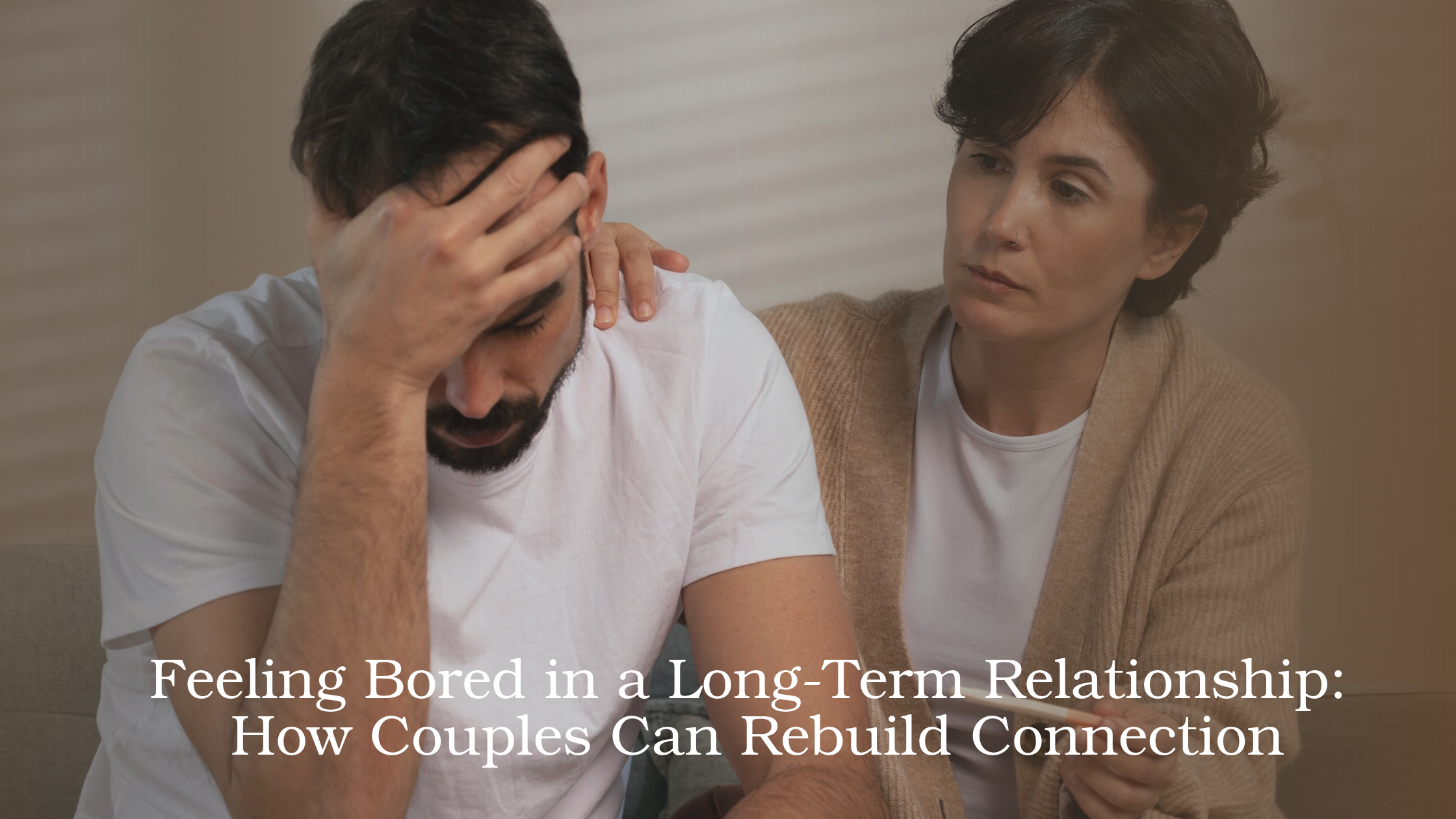
Feeling Bored in a Long-Term Relationship: How Couples Can Rebuild Connection
In a long-term relationship, familiarity can gradually replace the excitement that once came naturally. Conversations may revolve around work, bills, household responsibilities, and daily routines. You might still love your partner but find yourselves spending less meaningful time together, feeling less curious about each other, or struggling to remember the last time you did something new as a couple.
Feeling bored in a relationship does not automatically mean that love has disappeared. Sometimes, it reflects the comfort of established routines. In other cases, boredom can signal emotional distance, unresolved conflict, or a lack of shared experiences. Understanding the difference can help couples decide what needs to change.
Rebuilding connection does not always require dramatic gestures or major relationship decisions. Often, it begins with small changes in how partners communicate, spend time together, and respond to each other’s needs.
Why Do Couples Feel Bored in Long-Term Relationships?
Several factors can contribute to relationship boredom, even when both partners care deeply about each other.

1. Routines Take Over
Work schedules, parenting, errands, and household responsibilities can leave little room for spontaneity. Couples may spend plenty of time together without feeling emotionally connected because most interactions focus on practical tasks.
2. Conversations Become Predictable
Partners who have been together for years may assume they already know everything about each other, which is why curiosity matters in healthy relationships. Conversations can become repetitive, leaving little room to discuss changing interests, personal goals, or new experiences.
3. Emotional Intimacy Declines
When partners stop sharing their concerns, hopes, and vulnerabilities, they may begin to feel .more like housemates than romantic partners, which is how couples grow apart without cheating or fighting. Physical proximity does not necessarily create emotional closeness.
4. Unresolved Problems Remain Unaddressed
Sometimes, what appears to be boredom is actually disappointment or resentment. Repeated arguments, unmet needs, or feeling unappreciated can make partners less interested in spending quality time together, a pattern covered in how resentment builds in a relationship.
Is Relationship Boredom Normal, or Is It a Warning Sign?
Some predictability is a natural part of long-term relationships. Familiar routines can create stability, trust, and comfort. You do not need constant excitement to maintain a satisfying partnership.
However, it is worth paying attention when boredom becomes persistent or is accompanied by emotional withdrawal, frequent irritation, reduced affection, or reluctance to spend time together.
Ask yourself whether you miss the excitement of doing new things together or whether you feel disconnected from your partner as a person. The first may call for more shared experiences, while the second may require deeper conversations about intimacy, communication, or unresolved concerns.
How Couples Can Rebuild Connection
1. Make Time for Meaningful Conversations
Set aside time to talk without distractions from phones, work, or household responsibilities. Instead of discussing only what needs to be done, ask questions that encourage you to understand each other more deeply.
You might discuss what you have been looking forward to, what has been stressful lately, or what you would like to experience together. Listen with curiosity rather than assuming you already know the answers.
2. Try Something New Together
Novel experiences can interrupt repetitive routines and create opportunities for shared enjoyment. You could take a class, explore a new part of town, learn a skill, or plan a day trip.
The activity itself does not need to be extraordinary. What matters is creating opportunities to experience something together rather than automatically following familiar patterns.
3. Bring Back Small Gestures of Affection
Connection often grows through ordinary moments. A thoughtful message, a genuine compliment, a hug, or asking about your partner’s day can communicate attention and care.
If affection has declined, discuss what feels comfortable and meaningful to each of you. Small, consistent gestures can help rebuild closeness, as outlined in relationship maintenance: what healthy couples do regularly.
4. Maintain Individual Interests
Spending every available moment together is not necessary for a strong relationship. Pursuing individual hobbies, friendships, and goals can give each partner new experiences to share.
Maintaining a sense of individuality can also help prevent the relationship from becoming the only source of personal fulfilment. The aim is to balance shared experiences with opportunities for independent growth. a balance explored in healthy independence vs. emotional distance.
5. Talk Honestly About What Is Missing
If you feel bored, try to identify what you want more of. Perhaps you miss meaningful conversations, physical affection, humour, or feeling appreciated.
Explain your experience without blaming your partner. For example, you might say, “I miss having time when we can enjoy each other’s company without worrying about everything else.” This opens the door to collaboration rather than defensiveness.
How Couples Therapy Can Help With Relationship Boredom
When attempts to reconnect do not lead to lasting change, couples therapy can help partners understand what is contributing to the distance.
A therapist can help couples identify communication patterns, discuss unmet needs, and address resentment that may be hidden beneath routine interactions. Therapy can also provide a structured space to explore differences in how partners experience intimacy, affection, and quality time.
For some couples, the main challenge is finding practical ways to reconnect. For others, boredom reflects deeper concerns about trust, emotional availability, or the direction of the relationship. Understanding these differences can help partners decide what changes are most important.
How Dr. Harel Helps Couples Rebuild Connection
Dr. Harel’s relationship-focused work helps couples explore recurring patterns that may contribute to emotional distance and dissatisfaction. Through online couples counselling for partners in Los Angeles, he helps couples examine their communication, understand each other’s needs, and identify ways to create a more meaningful connection.
His approach may incorporate the ARM method (Awareness, Release, Mastery) and Neuro-Linguistic Programming (NLP), depending on the couple’s concerns and therapeutic goals. The focus is on increasing awareness of relationship patterns and helping partners develop more constructive ways to communicate and respond to each other.
Rebuilding Connection Starts With Small Changes
Feeling bored in a long-term relationship does not have to be the end of emotional closeness. By making time for meaningful conversations, exploring new experiences, and addressing unmet needs, couples can begin to reconnect.
If boredom has developed into persistent distance or recurring conflict, couples counselling may help you understand the patterns involved and find a way forward. Dr. Harel offers online couples counselling for partners in Los Angeles, California.
Book a Free Phone Consultation to discuss your relationship concerns and explore whether counselling may be helpful for you.
Frequently Asked Questions
Yes. Familiarity and routine are common in long-term relationships. Persistent boredom, particularly when accompanied by emotional distance or resentment, may indicate that the relationship needs more attention.
Many couples can rebuild connection by improving communication, introducing shared experiences, and addressing unmet needs. Progress depends on the concerns involved and both partners’ willingness to participate.
There is no universal schedule. What matters is finding regular opportunities for meaningful interaction that fit both partners’ needs and responsibilities.
Not necessarily. Boredom can reflect routine, stress, or reduced emotional engagement rather than an absence of love. Exploring what feels missing can help clarify the situation.

Harel Papikian
Dr. Harel Papikian is a clinical psychologist and couples therapist with more than 15 years of experience. He offers marriage counseling and couples therapy in los Angeles. It help’s couples navigate their relationship challenges and deepen their connection. Our clinic uses a unique ARM method (Awareness, Release, Mastery) to achieve rapid and profound results for our clients. We serve a diverse clientele, including LGBTQ+ and heterosexual couples, addressing issues like communication breakdowns, conflict resolution, intimacy, and trust. You can also get individual therapy sessions for concerns like depression, anxiety, and trauma.
Leave a Reply