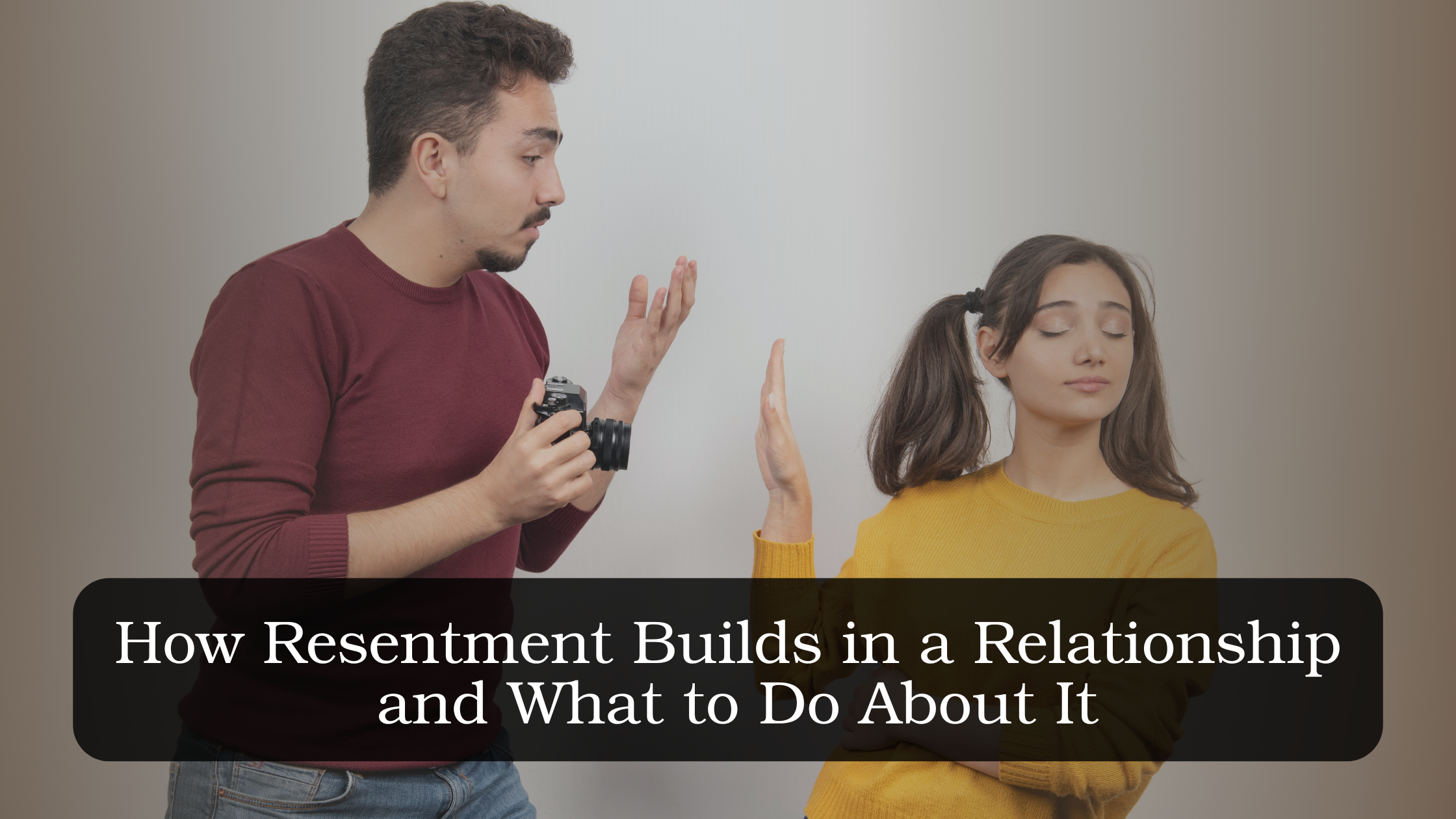
How Resentment Builds in a Relationship and What to Do About It
Resentment rarely develops because of one major disagreement. More often, it grows through a series of smaller experiences that never feel fully resolved. A partner may repeatedly feel ignored, unappreciated, unsupported, or misunderstood. Each incident may seem manageable on its own, but when similar experiences continue without meaningful repair, frustration can accumulate.
Over time, resentment can change more than the way couples communicate. It can affect affection, trust, sexual intimacy, and the assumptions partners make about each other’s intentions. A simple request may sound like criticism, while an ordinary mistake may bring up years of accumulated hurt.
Recognizing resentment early gives couples an opportunity to address what is actually happening rather than continuing to argue about individual incidents. The goal is not to determine who has contributed more to the problem, but to understand the pattern and begin changing it.
What Is Resentment in a Relationship?
Resentment is a lingering sense of hurt, frustration, anger, or unfairness that remains after an issue has not been adequately addressed.
You might forgive your partner for forgetting something, but still feel that the larger issue was never taken seriously. Over time, those unresolved feelings can influence how you respond to your partner.
Resentment may sound like:
- “I’m always the one who has to handle everything.”
- “You never really listen.”
- “Why should I keep asking?”
- “You don’t appreciate what I do.”
- “I’ve already given up so much.”
- “It doesn’t matter what I say.”
The concern is not simply having these thoughts occasionally. It is when they become a persistent way of experiencing the relationship.
How Does Resentment Begin?
Resentment often starts with a relatively ordinary disappointment.
One partner repeatedly cancels plans. Household responsibilities feel uneven. One person feels responsible for initiating affection or important conversations. Another may feel that their concerns are constantly criticized. A partner might repeatedly dismiss an issue instead of discussing it.
Any one event may be repairable.
Repetition is what often changes the emotional meaning.
“You were late again” can gradually become “You don’t respect my time.”
“You forgot” can become “I can’t depend on you.”
“You didn’t help” can become “I’m on my own in this relationship.”
The original incident becomes less important than what the person believes the repeated pattern says about their relationship.

How Unspoken Expectations Contribute to Resentment
Partners do not always enter a relationship with the same assumptions about what being a partner means.
One person may expect household responsibilities to be divided equally. The other may believe they should be divided according to work schedules. One partner may want frequent communication during the day, while the other sees occasional messages as completely normal.
Neither expectation is automatically unreasonable.
The problem develops when expectations remain unspoken and are treated as obvious. When a partner repeatedly fails to meet an expectation they did not know existed, disappointment can eventually turn into resentment.
Talking explicitly about these things can prevent assumptions from becoming recurring sources of conflict the same territory covered in invisible relationship expectations that create conflict.
Why Keeping Score Can Make Resentment Worse
Once resentment develops, couples can start keeping an internal record of who contributes more.
“I cooked three times.”
“I drove the last four times.”
“I apologized first.”
“I always initiate.”
“I paid for dinner.”
Although these observations may point toward a legitimate imbalance, scorekeeping rarely resolves it. Instead, each partner becomes focused on proving their contribution rather than understanding what the relationship needs.
A more productive question is:
“Does the way we are sharing responsibilities and effort feel fair to both of us, and what needs to change?”
Fairness does not always mean doing exactly the same things. It means creating an arrangement that both partners understand and can genuinely sustain.
How Resentment Can Show Up Without Anger
Resentment can be obvious, but it can also become quiet.
It may appear as:
- Emotional withdrawal
- Sarcasm or irritability
- Passive-aggressive behavior
- Reduced affection
- Avoidance of difficult conversations
- Loss of sexual interest
- Frequent criticism
- Indifference toward the relationship
Someone may seem calm because they have stopped expressing what they feel.
That can make resentment particularly difficult to recognize. A partner who has stopped complaining may not necessarily be satisfied. They may have simply stopped believing that speaking up will lead to change.
Why Couples Stop Talking About Unresolved Problems
Repeated disappointment can eventually create hopelessness.
A person may think, “I’ve already explained this,” or “What’s the point of bringing it up again?”
When one partner stops communicating, the other may interpret the absence of complaints as evidence that things are fine. The underlying problem remains unresolved.
This creates a cycle:
Problem → attempted conversation → little or no change → disappointment → withdrawal → less communication → greater resentment.
Breaking this cycle requires more than encouraging the couple to communicate more. They need to understand why previous conversations did not produce meaningful change.
How Resentment Affects Emotional Intimacy
Emotional intimacy depends partly on feeling that your partner is someone you can turn toward rather than someone you have to protect yourself from.
Resentment can gradually interfere with that sense of connection.
A forgotten task may no longer feel like a simple oversight. It may be interpreted as selfishness. A disagreement may become evidence that your partner does not understand you. A missed opportunity for connection may reinforce the belief that your needs do not matter.
This is why simply planning more dates or increasing physical affection may not resolve a relationship affected by significant resentment. The underlying hurt may need attention first.
How to Start Addressing Resentment in Your Relationship
Before confronting your partner, try identifying what the resentment is actually about.
Ask yourself:
- What am I most hurt by?
- What do I wish my partner understood?
- What expectation have I never clearly communicated?
- Is this frustration about something recent or something that has been building for years?
- Have I clearly asked for what I need?
- What part of this pattern can I take responsibility for?
These questions do not invalidate your feelings. They help distinguish the immediate trigger from the larger issue.
Talk About the Pattern, Not Just the Latest Incident
“You never help me” invites an argument about whether your partner has ever helped.
A description of the recurring experience creates a different conversation:
“I’ve been feeling overwhelmed because I often feel responsible for managing the household, and I’m starting to feel alone in that responsibility.”
The second approach gives your partner more information about the problem you are trying to solve.
Take Responsibility for Your Contribution
Taking responsibility does not mean accepting all the blame.
Sometimes both partners participate in a cycle. One partner avoids difficult conversations, while the other becomes increasingly critical. One withdraws when conflict starts, while the other pursues the conversation more intensely.
Each person can ask, “What am I doing that keeps this recurring relationship pattern going?”
That question is often more useful than determining who started it.

How Consistent Actions Can Help Rebuild Trust
An apology can matter, but resentment usually does not disappear because someone says, “I’m sorry.”
If the resentment developed because household responsibilities were repeatedly neglected, meaningful repair may involve consistently taking responsibility. If emotional disconnection was the problem, repair may require creating regular opportunities for genuine conversation. If criticism has damaged the relationship, both partners may need to develop different ways of expressing frustration.
The important factor is consistency.
A dramatic promise followed by the same behavior rarely changes the underlying experience. Small changes repeated over time can be much more meaningful.
Can Resentment Be Repaired?
In many relationships, resentment can be addressed, but repair usually requires more than deciding to “move on.”
Partners may need to acknowledge what happened, understand why it became significant, communicate needs more clearly, change recurring behaviors, redistribute responsibilities, repair trust, and learn healthier ways to handle future disagreements.
Both partners also need to be willing to participate in the process.
You cannot always control whether your partner acknowledges your experience or changes their behavior. You can, however, become clearer about what you feel, what you need, what you are willing to accept, and what you can change in your own responses.
When Couples Therapy May Help
Couples therapy may be worth considering when resentment has become difficult to resolve without outside support.
It can be particularly useful when:
- The same arguments continue without resolution.
- One or both partners feel chronically unappreciated.
- Conversations regularly become defensive or hostile.
- Emotional or physical intimacy has declined.
- The relationship feels more like a partnership for logistics than a close connection.
- One partner has stopped trying to communicate.
- Past hurts repeatedly enter current disagreements.
- Separation is being considered because of accumulated resentment.
Couples do not have to wait until their relationship reaches a crisis. Therapy can also be useful when partners recognize a pattern but are struggling to change it on their own.
How Dr. Harel Can Help With Relationship Resentment
Dr. Harel Papikian is a licensed clinical psychologist in Los Angeles with more than 16 years of experience working with individuals and couples.
When resentment has become established, the visible argument is often only part of the problem. Dr. Harel can help couples examine the recurring patterns underneath the conflict, including unmet emotional needs, expectations, communication habits, unresolved hurts, and ways each partner responds when they feel criticized, ignored, or disconnected.
Rather than focusing only on who is right, Dr. Harel’s ARM Method can help partners understand the cycle they have become caught in.
For couples who have repeatedly tried to resolve the same issue without lasting improvement, having a structured setting for these conversations can make it easier to address difficult subjects without immediately returning to blame or defensiveness.
Moving Forward Without Keeping Score
Healthy relationships are not free from disappointment.
Partners will forget things, misunderstand each other, become distracted, make mistakes, and occasionally fail to meet each other’s needs. What matters is what happens afterward.
Can you discuss the problem?
Can you listen without immediately defending yourself?
Can you acknowledge the impact of your behavior?
Can you make a meaningful change?
Can you repair the connection?
Resentment becomes more entrenched when disappointments repeatedly go unresolved. It becomes more manageable when couples learn to address problems before they accumulate into a larger story about the relationship.
If resentment has already affected your connection, that does not automatically mean the relationship is beyond repair. It may mean that the current way of handling conflict is no longer working.
With honest communication, consistent behavioral changes, and appropriate professional support when needed, couples can begin addressing the hurt beneath the resentment and create a different pattern for moving forward.
Frequently Asked Questions
There is no single cause. Resentment can develop from repeated unmet needs, perceived unfairness, unresolved conflict, lack of appreciation, poor communication, or expectations that have never been clearly discussed.
Persistent resentment can seriously affect communication, trust, affection, and emotional intimacy. However, recognizing the pattern and addressing its underlying causes can create opportunities for repair.
You may notice frequent irritation, emotional withdrawal, keeping score, repeatedly thinking about past hurts, reduced affection, or a tendency to interpret your partner’s actions negatively.
Honest communication is important, but describing specific behaviors and emotional experiences is usually more productive than simply labeling your partner as the problem.
Yes. Some couples avoid conflict rather than resolve it. When concerns are repeatedly suppressed, resentment can accumulate without frequent arguments.
There is no fixed timeline. Resentment that has developed over months or years may require sustained communication, behavioral changes, and sometimes professional support.
A sincere apology can be an important part of repair, but lasting change usually requires behavior to change as well. Consistency helps demonstrate that the underlying concern is being taken seriously.
You can still communicate your experience clearly and identify the behavior or pattern that concerns you. If conversations repeatedly become stuck or your concerns are dismissed, couples therapy can provide a structured setting for addressing the problem.
Yes. Couples therapy can help partners identify recurring patterns, explore unresolved hurts, communicate needs more clearly, and work on rebuilding connection.
Dr. Harel can help couples examine the patterns contributing to resentment, understand unresolved emotional issues, improve communication, and develop healthier ways of responding to conflict and each other’s needs.

Harel Papikian
Dr. Harel Papikian is a clinical psychologist and couples therapist with more than 15 years of experience. He offers marriage counseling and couples therapy in los Angeles. It help’s couples navigate their relationship challenges and deepen their connection. Our clinic uses a unique ARM method (Awareness, Release, Mastery) to achieve rapid and profound results for our clients. We serve a diverse clientele, including LGBTQ+ and heterosexual couples, addressing issues like communication breakdowns, conflict resolution, intimacy, and trust. You can also get individual therapy sessions for concerns like depression, anxiety, and trauma.
Pingback: Why Couples Stop Being Intimate and How Couples Therapy Addresses It - westhollywoodcouples.com