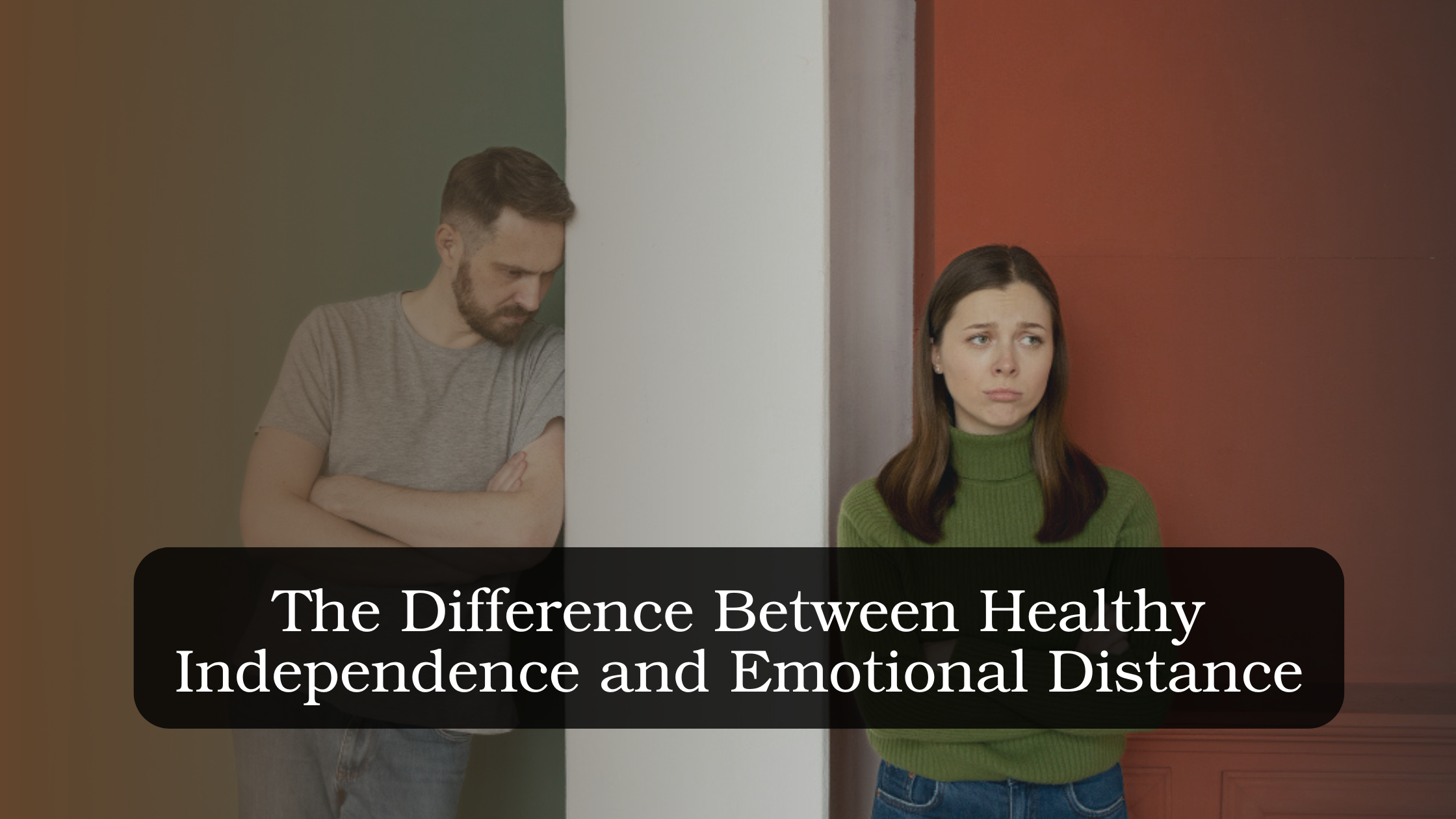
The Difference Between Healthy Independence and Emotional Distance
Relationship conflict can grow from expectations that neither partner has expressed. One person may feel hurt because their partner did not call, offer reassurance, or respond as expected, while the other has no idea anything was wrong. The emotional reaction can seem disproportionate, but often the event is only the surface.
In his work with individuals and couples across Los Angeles, Dr. Harel, a licensed clinical psychologist with more than 16 years of experience, often sees these moments shaped by invisible expectations: private ideas about what love, care, support, and partnership should look like.
The difficulty is not having expectations. It is treating expectations as relationship rules without realizing it. When that happens, disappointment can become resentment, and misunderstandings can begin to feel like evidence that something is fundamentally wrong..
What Healthy Independence Looks Like in a Relationship
Healthy independence means having a strong sense of self while remaining emotionally available to a partner. It allows both people to maintain friendships, interests, routines, and personal goals while continuing to invest in the relationship.
An independent partner can spend time alone, manage stress, pursue personal interests, and make individual decisions without emotionally disconnecting from their partner.
Just as importantly, they can communicate their need for space and return to connection afterward. Healthy independence communicates something like, “I need some space, but I am still connected to you.”
That ability to remain connected while being separate is what makes independence different from detachment.

What Emotional Distance Looks Like in a Relationship
Emotional distance involves a more consistent withdrawal from emotional engagement. A partner may avoid vulnerable conversations, share only practical information, or repeatedly disengage when conflict or emotional intimacy arises.
Over time, the relationship may begin to feel more functional than intimate. Couples may continue managing responsibilities, making plans, and sharing a home while having fewer meaningful conversations or moments of emotional connection.
The issue, therefore, is not simply how much time partners spend apart. It is whether emotional availability and meaningful connection are gradually disappearing.
The Difference Between Space and Withdrawal
One of the clearest distinctions is what happens after someone takes space.
Healthy independence generally allows for a pattern of connection, separation, and reconnection. Emotional distance can create separation without a meaningful return to emotional engagement.
| Healthy Independence | Emotional Distance |
| Temporary need for space | Ongoing withdrawal |
| Communicates the need for space | Avoids emotional conversations |
| Returns to connection | Rarely reconnects |
| Maintains emotional availability | Limits vulnerability |
| Supports intimacy | Gradually weakens intimacy |
This distinction can be especially important during conflict. Taking time to calm down may protect a relationship from escalation. Repeatedly using distance to avoid repair, however, can leave the other partner feeling abandoned. which is why fair fighting rules for couples matter even during a cooling-off period.
Why Emotional Distance Develops Gradually
Emotional distance rarely appears overnight. It can develop after repeated conflict, criticism, disappointment, stress, or experiences in which vulnerability did not feel safe.
A person may initially withdraw as a way of coping with emotional pressure. If that response repeatedly provides relief, it can become a familiar way of managing difficult emotions.
Eventually, what began as a coping strategy can become part of the relationship itself.
The withdrawal may no longer be consciously intended to hurt the other person. Yet its effect can still be significant: conversations become shorter, vulnerability decreases, and partners stop turning toward each other in moments when connection is most needed.
How Independence Can Strengthen a Relationship
Healthy independence gives partners room to grow individually without making the relationship less important.
Personal interests, friendships, careers, and time alone can allow each person to maintain a sense of identity and return to the relationship with greater emotional capacity.
This matters because intimacy does not require constant togetherness. A relationship can be deeply connected while still allowing each person room to breathe.
The goal is not to eliminate separation. It is to create enough individuality for both partners to feel fulfilled while maintaining a relationship that remains emotionally meaningful.
How Emotional Distance Affects Couples
Emotional distance often creates problems gradually rather than through one dramatic event. Partners may communicate less, share fewer feelings, or stop turning toward each other for support.
One person may begin feeling lonely despite being physically close to their partner. The other may not fully recognize how disconnected the relationship has become.
This difference in awareness can make the problem particularly difficult. The partner experiencing loneliness may feel increasingly rejected, while the more distant partner may believe that nothing is seriously wrong.
Over time, the pattern can contribute to resentment, reduced intimacy, and the feeling that the relationship is functioning rather than truly connecting.
Why Independence Can Be Misunderstood
Someone who values independence may see themselves as calm, self-sufficient, rational, or low-maintenance. They may genuinely believe that giving their partner space is a healthy way of respecting autonomy.
Their partner may experience the same behavior as indifference or rejection.
Neither interpretation necessarily tells the whole story.
This difference in perception is important because couples can become trapped debating whether a behavior is “healthy independence” or “emotional distance,” when the more useful question is what the behavior is doing to the relationship.
If one person feels consistently shut out, the emotional impact deserves attention even when withdrawal was never intended as rejection.

Signs Independence May Have Become Avoidance
Needing space is not inherently concerning. It becomes more significant when it consistently prevents emotional engagement or relationship repair.
Potential signs include:
- repeatedly using “I need space” to avoid important conversations;
- refusing to revisit unresolved issues;
- becoming uncomfortable whenever vulnerability is required;
- withdrawing whenever emotional needs are expressed; ,( instead of practicing being a better listener in the moment.)
- rarely initiating emotional connection after taking time apart.
When these patterns become persistent, the issue may no longer be independence. The relationship may need greater emotional availability and a different way of handling disconnection.
Rebuilding Emotional Connection Without Losing Independence
Once couples understand the difference between healthy space and emotional withdrawal, they can begin creating clearer patterns of connection.
This may involve explaining what “space” actually means, agreeing on when to reconnect, sharing feelings in smaller and more manageable ways, and creating regular opportunities for emotional connection.
A partner might need an hour alone after an argument. That can be healthy when the other person knows the relationship has not been abandoned and there is an intention to return to the conversation.
Similarly, a partner who needs more connection can communicate that need without treating independence itself as rejection.
Small, consistent moments of responsiveness can make emotional connection feel safer again. a process closely related to coregulation between partners.
How Couples Therapy Can Help
It can be difficult for couples to determine whether they are dealing with healthy independence, emotional avoidance, or a combination of both.
Therapy can provide a structured environment in which both partners can examine the pattern without immediately assigning blame. In Dr. Harel’s work, this can mean understanding why one partner withdraws, why the other pursues connection, and how those responses reinforce each other.
The focus is not on eliminating individuality. It is on helping couples develop a relationship where independence does not require emotional disconnection the kind of work couples therapy can support even outside a crisis.
How Dr. Harel Approaches This Dynamic
In his Los Angeles practice, Dr. Harel looks beyond the visible behavior to understand what is driving the pattern between partners.
Rather than assuming that the more independent partner is simply avoidant or that the more connected partner is overly dependent, his approach considers the emotional experience of both people. The goal is to understand what happens internally when one partner moves closer and the other pulls away.
His work may explore:
- what each partner experiences as closeness or distance;
- whether taking space is being used for healthy regulation or emotional avoidance;
- what makes vulnerability difficult for either partner;
- how previous experiences influence current patterns;
- how each person interprets the other’s attempts to connect or withdraw;
- how partners can create space without losing emotional contact.
Dr. Harel’s ARM Method—Awareness, Release, and Mastery—supports this broader process by helping individuals and couples recognize relationship patterns, work through unresolved emotional experiences, and develop healthier ways of responding to one another.
The aim is not to make an independent partner more dependent or a more connection-oriented partner less emotionally engaged. It is to help both people develop a relationship in which autonomy and intimacy can coexist.
Final Thoughts
Healthy independence allows partners to maintain their individuality while remaining emotionally connected. Emotional distance, by contrast, gradually reduces the sense of being emotionally known, supported, and available to one another.
The goal is not constant togetherness or eliminating time apart. A healthy relationship allows both people to have separate lives while still knowing they can turn toward each other when connection matters.
The difference between space and distance is ultimately found in what happens to the relationship around that space and often in the emotional regulation each partner brings back to it.
A partner can step away and still remain emotionally present.
That is where healthy independence ends and emotional distance begins.
Frequently Asked Questions
Yes. Time apart can support individuality and allow partners to recharge, provided it remains balanced with meaningful emotional connection.
They can explain specifically what they need, reassure their partner about the relationship, and establish when they will reconnect.
Both experiences can be valid. The focus should be on identifying what emotional connection is missing rather than debating the label.
Yes. Stress, grief, career pressure, parenting demands, or major life changes can temporarily reduce emotional availability without indicating lasting relationship problems.
Not necessarily. Alone time becomes concerning when it consistently replaces emotional engagement or prevents vulnerability, communication, and relationship repair.
Yes. Partners rarely have identical needs. Healthy relationships involve negotiating those differences while respecting both individuality and emotional connection.
Yes. Some couples avoid conflict by avoiding difficult conversations altogether. A lack of arguments does not necessarily mean emotional closeness.
Therapy may help when partners repeatedly struggle to reconnect, feel lonely despite being together, or cannot discuss emotional needs without withdrawing or becoming defensive.

Harel Papikian
Dr. Harel Papikian is a clinical psychologist and couples therapist with more than 15 years of experience. He offers marriage counseling and couples therapy in los Angeles. It help’s couples navigate their relationship challenges and deepen their connection. Our clinic uses a unique ARM method (Awareness, Release, Mastery) to achieve rapid and profound results for our clients. We serve a diverse clientele, including LGBTQ+ and heterosexual couples, addressing issues like communication breakdowns, conflict resolution, intimacy, and trust. You can also get individual therapy sessions for concerns like depression, anxiety, and trauma.
Pingback: What Is Emotional Avoidance and How Does It Slowly Destroy Relationships?