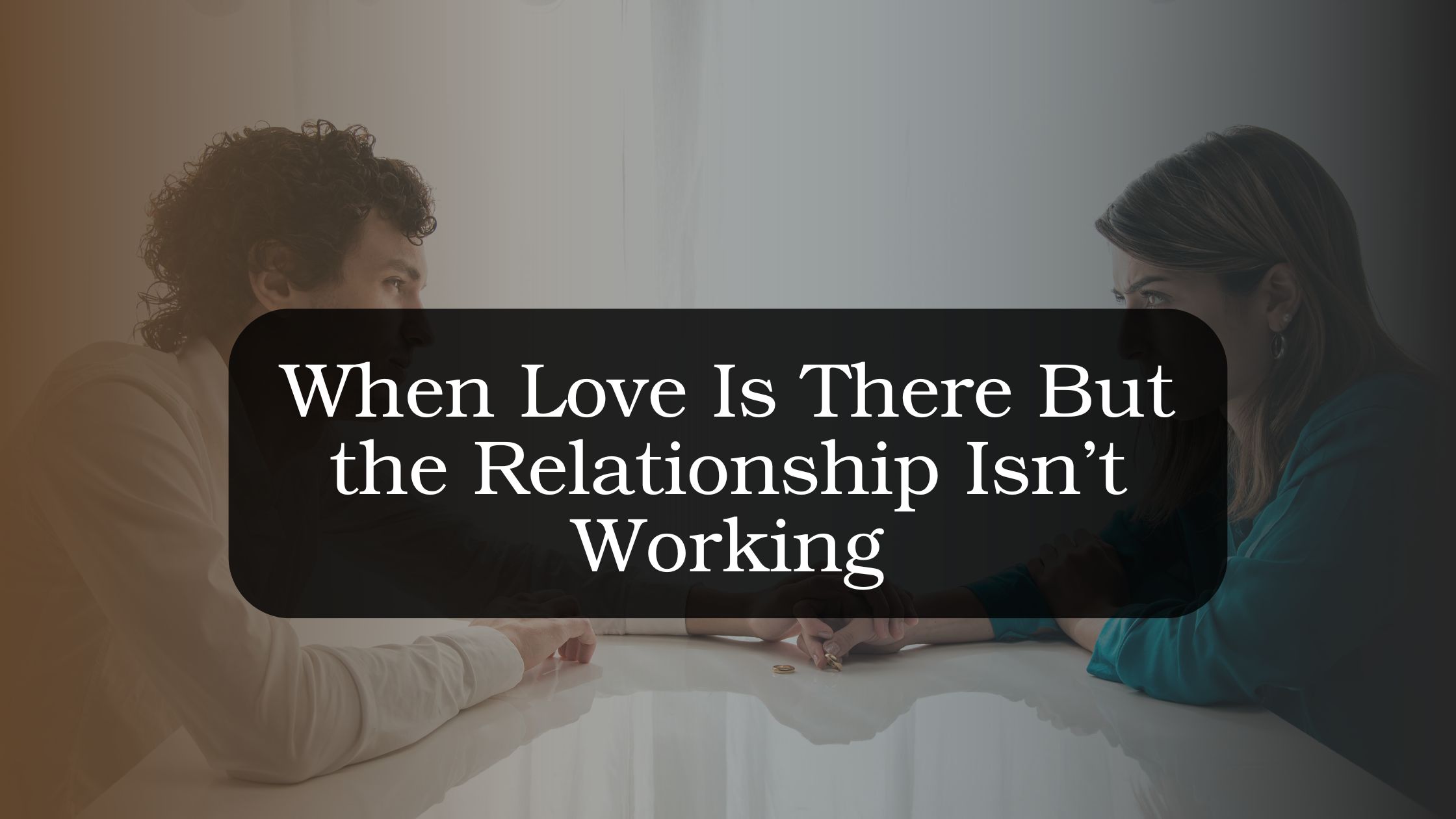
When Love Is There But the Relationship Isn’t Working
Love is supposed to be enough. That’s what most people believe when they enter a relationship. If two people care deeply about each other, everything else should fall into place. But many couples eventually face a painful and confusing reality: you can love someone deeply and still struggle to make the relationship work. This is one of the reasons many partners eventually explore couples therapy to better understand the challenges affecting their relationship.
It’s one of the hardest emotional contradictions to sit with. There is no lack of care, no absence of attachment, and yet something feels consistently off. Conversations turn into conflict. Needs go unmet. Effort feels uneven. And over time, love starts to feel heavy instead of supportive.
In Los Angeles, where relationships are often shaped by demanding careers, evolving identities, and constant external pressure, this disconnect can become even more pronounced. Two people may be committed, loyal, and emotionally invested, but still feel disconnected in daily life.
Dr. Harel, a licensed clinical psychologist in Los Angeles with over 16 years of experience, often works with couples in exactly this space. The issue is rarely the absence of love. It is the presence of unresolved patterns, unmet needs, and incompatible ways of relating.
Understanding why love alone is not always enough is the first step toward clarity.
Why Love Alone Doesn’t Sustain a Relationship

Love creates connection, but relationships require structure, effort, and emotional skills to function. Without these, even strong feelings can become strained.
A relationship depends on:
- Communication
- Emotional regulation
- Mutual effort
- Shared values
- Conflict resolution
For example, a couple in Santa Monica may genuinely care about each other but constantly argue about time, priorities, and expectations. The love is real, but the system of the relationship is unstable.
Dr.Harel explains that love brings people together, but compatibility and emotional skills determine whether they can stay together in a healthy way.
Common Signs Love Exists but the Relationship Is Struggling

Many couples in this situation describe feeling emotionally torn. They want the relationship to work but feel stuck.
Common signs include:
- Frequent unresolved arguments
- Feeling misunderstood despite trying to communicate
- Emotional closeness followed by repeated conflict
- Effort that feels one-sided at times
- Ongoing frustration despite genuine care
- Questioning the relationship even while loving the person
For instance, in Pasadena, a couple may share deep affection and history but repeatedly struggle with communication breakdowns. Each argument feels like starting over. This creates emotional exhaustion.
Mismatched Needs and Expectations
Love does not automatically mean both partners feel fulfilled.
One partner may need:
- Frequent emotional reassurance
- Quality time
- Open communication
The other may express love through:
- Practical support
- Independence
- Low emotional intensity
In West Hollywood, a partner who values emotional closeness may feel neglected when their spouse prioritizes work or personal space. Meanwhile, the other partner may feel overwhelmed by constant emotional demands. Both individuals love each other, but their needs are misaligned. Without understanding these differences, frustration grows, often contributing to Unresolved Issues in Relationship that become harder to address over time.
Communication Breakdown Despite Good Intentions
Many couples assume that trying to talk more will fix issues. However, without the right communication style, conversations can make things worse.
Patterns may include:
- Defensiveness
- Interrupting
- Misinterpreting tone
- Escalating quickly
- Avoiding difficult topics
For example, a couple in Brentwood may attempt to discuss finances but end up arguing about respect and effort instead. The real issue never gets resolved.
Dr.Harel often highlights that communication is not just about talking. It is about how emotions are managed during the conversation.
Emotional Burnout and Relationship Fatigue
Over time, repeated unresolved issues can lead to burnout.
Even if love remains, partners may feel:
- Tired of having the same arguments
- Emotionally drained
- Less motivated to try
- Disconnected from positive feelings
In Manhattan Beach, a couple who once enjoyed spending time together may start avoiding each other simply to avoid conflict. This does not mean love is gone. It means the relationship has become emotionally exhausting.
The Role of Timing and Life Circumstances
Sometimes the relationship is not failing because of incompatibility, but because of timing and stress.
In Los Angeles, common stressors include:
- Career instability
- Long working hours
- Financial pressure
- Parenting responsibilities
- Social expectations
A couple may love each other deeply but lack the emotional capacity to nurture the relationship during stressful periods. Without intentional effort, external stress begins to replace connection.
Can Love Be Enough With Effort?
Not all struggling relationships need to end. Many can improve significantly when both partners are willing to work on the underlying patterns.
Repair is possible when:
- Both partners are open to self-reflection
- There is willingness to change behavior
- Communication improves over time
- Emotional safety can be rebuilt
For example, a couple in Santa Monica struggling with recurring conflict may learn to regulate emotions and communicate more effectively. Over time, the relationship becomes more stable. Love becomes easier to experience when the relationship functions better.
When Love Is Not Enough
Sometimes, despite love, the relationship may not be sustainable.
This may happen when:
- Core values are incompatible
- One partner is unwilling to change
- Emotional needs remain consistently unmet
- Conflict becomes damaging or toxic
- Trust has been broken without repair
In these cases, staying together may prolong pain rather than resolve it. Dr. Harel emphasizes that choosing to step away from a relationship does not mean love was not real. It means the relationship was not healthy or sustainable.
What You Can Do If You Feel Stuck

1. Shift From Blame to Understanding
Instead of asking “Who is at fault?” ask:
- What patterns keep repeating?
- What needs are not being met?
- How do we respond during conflict?
This creates clarity rather than defensiveness.
2. Have Honest Conversations About Needs
Clearly express what you need in the relationship.
For example:
“I need more emotional connection during the week”
“I need space after work before discussing serious topics”
Clarity reduces misunderstanding.
3. Evaluate Effort on Both Sides
A relationship requires mutual investment.
Ask:
- Are both partners trying to improve?
- Is there openness to change?
- Is effort consistent?
One-sided effort is not sustainable long-term.
4. Consider Professional Guidance
If the relationship feels stuck, therapy can provide structure.
Dr. Harel, a licensed clinical psychologist in Los Angeles with over 16 years of experience, helps couples:
- Identify recurring patterns
- Improve communication
- Clarify compatibility
- Rebuild emotional safety
- Decide the future of the relationship
Therapy is not only about saving relationships. It is about understanding them clearly.
A Practical Comparison
| Aspect | Love Present | Relationship Not Working |
| Emotional Care | Strong | Inconsistent expression |
| Communication | Attempted | Ineffective |
| Conflict | Frequent | Unresolved |
| Effort | Exists | Uneven or misdirected |
| Satisfaction | Decreasing | Frustration increasing |
This table highlights how love and relationship health can diverge.
Final Thoughts
Loving someone and being able to build a healthy relationship with them are not always the same thing. Love is powerful, but it does not automatically solve communication gaps, emotional wounds, or incompatibility. In some cases, challenges related to Alexithymia in Relationships can further complicate emotional understanding and connection between partners.
In Los Angeles, where life adds layers of pressure to relationships, this distinction becomes even more important. Many couples stay together because of love, even when the relationship itself is no longer functioning in a healthy way.
Dr. Harel emphasizes that the goal is not just to preserve love, but to create a relationship where that love can thrive.
If both partners are willing to grow, many relationships can transform. If not, choosing clarity over confusion can be an act of emotional strength. Because ultimately, love should feel supportive, not exhausting.
Frequently Asked Questions (FAQs)
Yes. Partners may share strong feelings for each other while having fundamentally different approaches to communication, intimacy, decision-making, or conflict. These differences can create ongoing challenges even when love is genuine.
Temporary problems are often linked to specific stressors such as work pressure, financial strain, or life transitions. Long-term problems tend to persist across different situations and continue despite repeated efforts to address them.
Yes. When one or both partners develop greater self-awareness, emotional maturity, and healthier relationship habits, the overall dynamic can improve significantly. Personal growth often influences relationship outcomes.
Not necessarily. While love is important, long-term relationship satisfaction also depends on trust, respect, emotional safety, shared goals, and healthy communication. Love alone cannot compensate for chronic dysfunction.
Yes. Some individuals remain in struggling relationships because they fear loneliness, uncertainty, or starting over. This can make it difficult to objectively evaluate whether the relationship is meeting their emotional needs.
One indicator is whether both partners continue adapting to each other’s evolving needs, goals, and life circumstances. Growth together typically involves mutual support, while growing apart often involves increasing emotional distance and separate priorities.
Yes. Some couples realize that although the relationship is no longer sustainable, they can still value each other, appreciate the role they played in one another’s lives, and separate with mutual respect rather than resentment.

Harel Papikian
Dr. Harel Papikian is a clinical psychologist and couples therapist with more than 15 years of experience. He offers marriage counseling and couples therapy in los Angeles. It help’s couples navigate their relationship challenges and deepen their connection. Our clinic uses a unique ARM method (Awareness, Release, Mastery) to achieve rapid and profound results for our clients. We serve a diverse clientele, including LGBTQ+ and heterosexual couples, addressing issues like communication breakdowns, conflict resolution, intimacy, and trust. You can also get individual therapy sessions for concerns like depression, anxiety, and trauma.
Leave a Reply