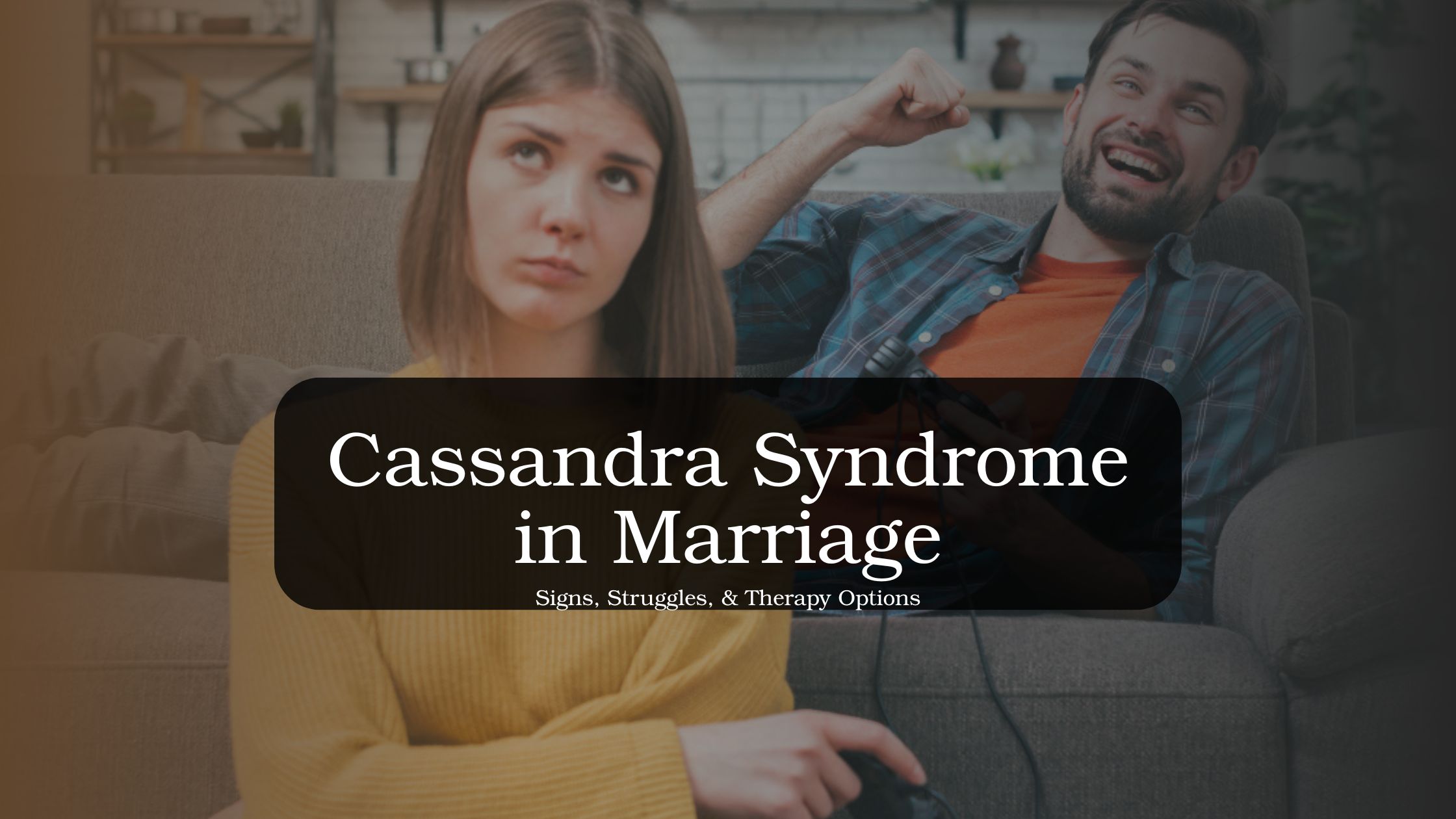
Cassandra Syndrome in Marriage: Signs, Struggles, & Therapy Options
You explain. You clarify. You repeat yourself in different ways, hoping this time it will land.
But it doesn’t.
Instead, you’re told you’re overreacting, misunderstanding, or making things more complicated than they are. Over time, something shifts. You stop trying to explain as much. Not because the issue is resolved, but because you no longer expect to be understood. This experience is often described as Cassandra Syndrome in relationships. It is not an official clinical diagnosis, but a pattern many individuals, especially in marriages where one partner may have differences in emotional processing or communication, deeply relate to. The core experience is feeling persistently unheard, invalidated, and emotionally invisible. In many cases, couples therapy can help identify these patterns and create healthier ways of communicating and connecting.
Dr. Harel, a licensed clinical psychologist in Los Angeles with over 16 years of experience, works with couples navigating exactly this dynamic. Understanding the pattern is the first step toward breaking it.
What Is Cassandra Syndrome in Marriage?

Cassandra Syndrome refers to a relational dynamic where one partner repeatedly feels that their concerns, perceptions, or emotional experiences are dismissed or not believed.
This can look like:
- Feeling like your words are not taken seriously
- Being told you are “too sensitive” or “overthinking”
- Having your concerns minimized or ignored
- Repeating the same issue without resolution
- Feeling emotionally alone in the relationship
For example, in a couple living in Santa Monica, one partner may express ongoing stress about emotional disconnection. The other partner may respond with logic, dismissal, or avoidance instead of emotional engagement. Over time, the first partner begins to feel invisible. The key issue is not disagreement. It is lack of validation.
Common Signs of Cassandra Syndrome

Recognizing the Pattern Early
This dynamic can be subtle but deeply impactful. Common signs include:
- Repeating the same concerns without resolution
- Feeling dismissed during conversations
- Being labeled as “too emotional” or “too intense”
- Lack of empathy from your partner
- Feeling isolated even within the relationship
- Questioning your own perception of reality
In Pasadena, a partner may begin to doubt themselves after repeated dismissive responses, wondering if they are indeed overreacting. This self-doubt is one of the most harmful effects of this pattern.
Why This Dynamic Develops
1. It Is Often About Differences, Not Intent
Cassandra Syndrome is rarely about one partner intentionally ignoring the other. It often emerges from differences in emotional processing, communication style, or neurological functioning.
2. Differences in Communication Style
One partner may prioritize logic and problem-solving. The other may seek emotional validation and connection.
3. Emotional Awareness Gaps
Some individuals struggle to identify or respond to emotional cues effectively.
4. Chronic Stress and Distraction
In Los Angeles, busy lifestyles and digital distractions can reduce emotional presence.
5. Neurodivergence in Some Cases
In certain relationships, especially where one partner may be on the autism spectrum, differences in social communication and emotional interpretation can contribute to this dynamic.
Dr. Harel emphasizes that understanding the underlying cause is essential for effective intervention.
The Emotional Impact on the Affected Partner

Living in a State of Invalidation
The partner experiencing this pattern often faces:
- Chronic frustration
- Emotional loneliness
- Decreased self-confidence
- Anxiety and self-doubt
- Feeling unseen or unheard
Over time, they may:
- Stop expressing concerns
- Withdraw emotionally
- Feel disconnected from the relationship
In Manhattan Beach, a partner described feeling “present but not acknowledged,” highlighting the emotional toll of this experience.
The Impact on the Relationship
How the Dynamic Affects Both Partners
| Area | Impact |
| Communication | Becomes repetitive and ineffective |
| Emotional Connection | Weakens significantly |
| Trust | Declines due to lack of validation |
| Conflict | Remains unresolved |
| Satisfaction | Decreases for both partners |
The partner who feels unheard becomes increasingly distressed. The other partner may feel confused or criticized, not fully understanding the impact of their responses. This creates a cycle of misunderstanding that can contribute to Unresolved Issues in Relationship, making it even harder for both partners to feel understood and connected.
Can Cassandra Syndrome Be Addressed?
Yes, With Awareness and Structured Effort
Improvement is possible when both partners are willing to understand and adjust.
Key elements include:
- Recognizing the pattern
- Validating emotional experiences
- Improving communication strategies
- Developing empathy
- Creating structured conversations
For example, a couple in Santa Monica began using guided communication techniques where one partner spoke while the other summarized before responding. This reduced misunderstanding significantly.
Therapy Options for Cassandra Syndrome

Because this pattern involves deep communication and emotional dynamics, therapy is often highly beneficial.
Dr. Harel, a licensed clinical psychologist in Los Angeles with over 16 years of experience, works with couples to:
- Identify communication gaps
- Teach validation techniques
- Improve emotional awareness
- Address underlying differences
- Reduce repetitive conflict cycles
Therapy provides a structured space where both partners can feel heard.
What Therapy Focuses On
In therapy, couples often work on:
1. Validation Skills
Learning to acknowledge emotions without immediately correcting or dismissing them.
2. Active Listening
Focusing fully on what the partner is saying rather than preparing a response.
3. Emotional Translation
Helping partners understand each other’s communication styles.
4. Reducing Defensive Patterns
Replacing dismissal with curiosity.
For example:
Instead of:
“You’re overreacting”
Shift to:
“I may not fully understand, but I want to hear more about how you feel.”
This simple shift can significantly change the interaction.
Practical Steps You Can Try Now
1. For the Partner Who Feels Unheard
- Use clear, specific language
- Express needs directly
- Avoid over-explaining repeatedly
- Set boundaries around dismissive responses
2. For the Partner Who Struggles to Respond
- Practice listening without interrupting
- Reflect what you heard before responding
- Focus on emotion, not just facts
- Avoid dismissive language
These steps may feel small, but they build trust over time.
When to Seek Therapy
Consider therapy if:
- Conversations feel repetitive and unresolved
- One partner feels consistently invalidated
- Emotional distance is increasing
- Frustration is turning into resentment
- Self-doubt is becoming significant
Early intervention can prevent long-term damage.
Final Thoughts
Cassandra Syndrome in marriage is not about one partner being right and the other being wrong. It is about a breakdown in emotional recognition and validation. In some cases, challenges related to Alexithymia in Relationships may contribute to difficulties in recognizing, expressing, or responding to emotional needs.
In Los Angeles, where life often pulls attention outward, it becomes even more important to intentionally create space for emotional connection within relationships.
Dr. Harel emphasizes that feeling heard is one of the most fundamental emotional needs in a relationship. When that need is not met, even strong relationships can begin to feel unstable.
The encouraging reality is that this pattern can be changed. With awareness, communication, and the right support, couples can move from repeated misunderstanding to genuine connection.
Because at the heart of every healthy relationship is not just love, but the experience of being seen, heard, and understood.
Frequently Asked Questions (FAQs)
Yes. A relationship can have love, commitment, and good intentions while still struggling with chronic feelings of invalidation. The issue is often not a lack of care but a gap in how partners recognize and respond to each other’s emotional experiences.
Most couples experience occasional misunderstandings that are resolved through discussion. Cassandra Syndrome involves a persistent pattern where one partner repeatedly feels unheard or disbelieved despite ongoing attempts to communicate their concerns.
Yes. Feeling emotionally unseen or invalidated can reduce feelings of safety, closeness, and trust, which may eventually affect physical affection and intimacy between partners.
No. The pattern can emerge in dating relationships, engagements, newer marriages, and long-term partnerships. It often becomes more noticeable as communication patterns become established over time.
Yes. Different family values, cultural expectations, and beliefs about emotional expression can influence how partners communicate, validate feelings, and respond to emotional needs.
Emotional intelligence helps partners recognize emotions, respond with empathy, and communicate effectively. Higher emotional awareness often reduces the likelihood of repeated invalidation and misunderstanding.

Harel Papikian
Dr. Harel Papikian is a clinical psychologist and couples therapist with more than 15 years of experience. He offers marriage counseling and couples therapy in los Angeles. It help’s couples navigate their relationship challenges and deepen their connection. Our clinic uses a unique ARM method (Awareness, Release, Mastery) to achieve rapid and profound results for our clients. We serve a diverse clientele, including LGBTQ+ and heterosexual couples, addressing issues like communication breakdowns, conflict resolution, intimacy, and trust. You can also get individual therapy sessions for concerns like depression, anxiety, and trauma.
Leave a Reply