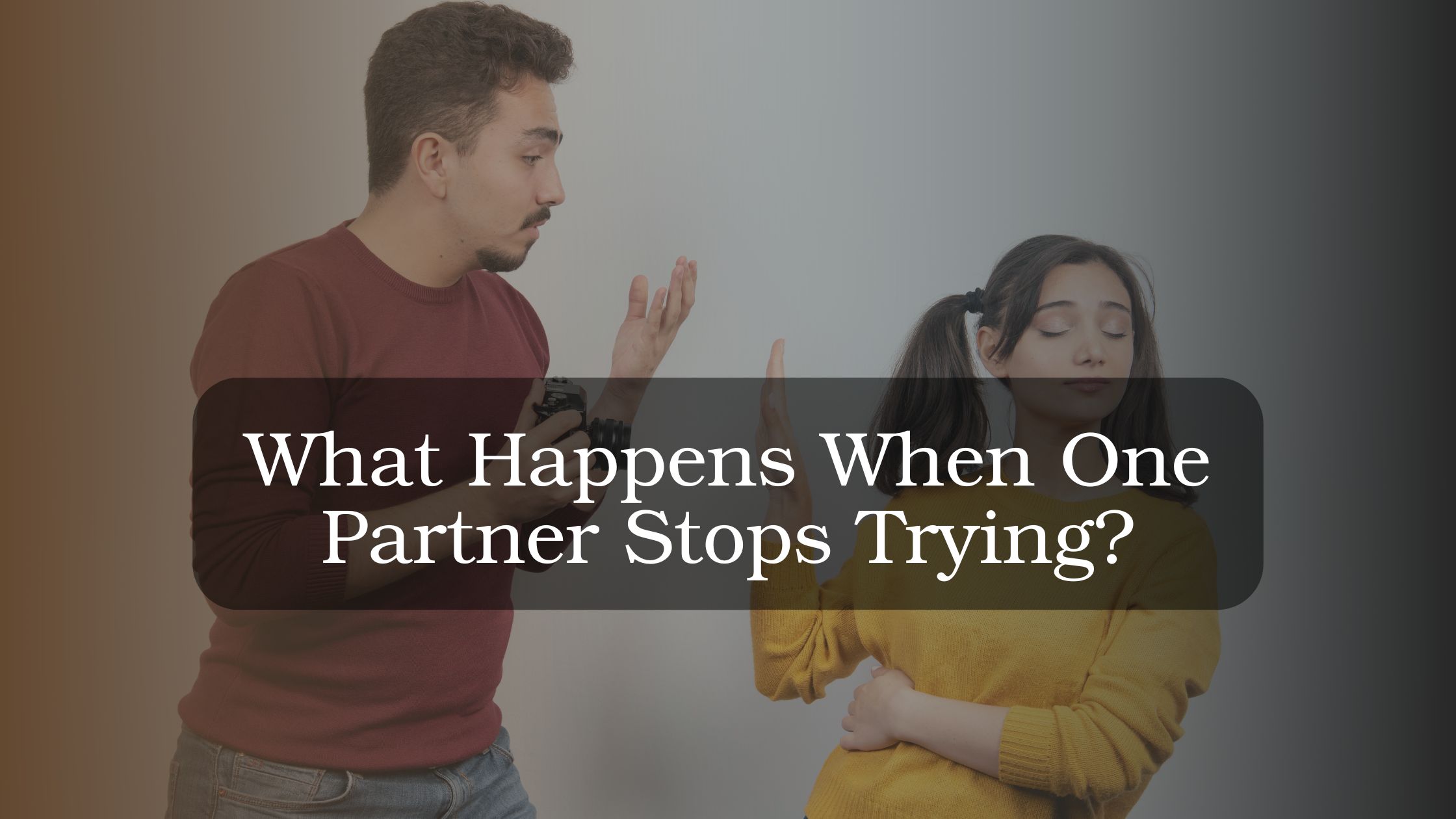
What Happens When One Partner Stops Trying?
Few relationship experiences feel as painful and confusing as this: realizing that your partner has emotionally checked out. When one person stops trying, the relationship begins to shift in subtle but significant ways. Conversations feel forced, effort becomes one-sided, and emotional connection slowly fades.
In Los Angeles, where demanding careers, long commutes, financial pressure, and social expectations often take priority, it is not uncommon for one partner to become disengaged over time. What begins as stress or burnout can evolve into emotional withdrawal if left unaddressed.
Dr. Harel, a licensed clinical psychologist in Los Angeles with over 16 years of experience, explains that relationships rarely collapse suddenly. More often, they deteriorate gradually when effort, attention, and emotional investment become uneven.
Understanding what happens when one partner stops trying can help you respond with clarity instead of panic.
What Does “Stopping Trying” Actually Look Like?

It Is More Than Just Being Busy
It is important to distinguish between temporary stress and consistent disengagement.
A partner who has stopped trying may:
- Avoid meaningful conversations
- Stop initiating plans or affection
- Show little interest in resolving conflict
- Become emotionally unavailable
- Dismiss concerns or minimize issues
- Invest energy elsewhere such as work, friends, or hobbies
For example, a couple in Santa Monica may once have prioritized weekly date nights. Over time, one partner stops making plans, cancels frequently, and shows little interest in reconnecting. The absence of effort becomes more noticeable than any specific argument. Similar patterns can also create significant challenges during Healing After Infidelity, where consistent effort is often necessary to rebuild trust and connection. The key pattern is consistency. Occasional distance is normal. Chronic disengagement signals deeper issues.
Why Does One Partner Stop Trying?
Emotional Burnout
One of the most common reasons is emotional exhaustion. If a partner feels that repeated efforts have gone unnoticed or unresolved, they may gradually give up.
For instance, in Pasadena, a husband who spent years trying to address communication issues eventually stopped initiating conversations after feeling dismissed. His withdrawal was not indifference. It was burnout.
Accumulated Resentment
Unresolved resentment can quietly erode motivation.
If a partner feels:
- Unappreciated
- Criticized
- Unsupported
- Emotionally neglected
They may begin to disengage as a form of self-protection.
Loss of Emotional Connection
Over time, couples may drift apart if they stop nurturing intimacy. In fast-paced Los Angeles lifestyles, partners may prioritize career growth or parenting responsibilities, unintentionally neglecting emotional connection. Without intentional effort, emotional distance becomes the default, which is one of the common concerns addressed in couples therapy in LA.
Avoidance of Conflict
Some individuals stop trying because they want to avoid arguments altogether.
If every conversation turns into conflict, disengagement can feel like the safer option.
However, avoiding conflict does not resolve issues. It freezes them in place.
What Happens to the Relationship?

The Pursue-Withdraw Cycle
When one partner withdraws, the other often compensates by trying harder. This creates a cycle:
- One partner pulls away
- The other pursues connection
- The withdrawing partner feels pressured
- Withdrawal increases
For example, in Brentwood, a wife began initiating more conversations when her husband became distant. He felt overwhelmed and withdrew further, reinforcing her anxiety.
This cycle intensifies emotional distance.
Increased Insecurity
The partner still trying often experiences:
- Self-doubt
- Anxiety
- Fear of abandonment
- Overanalysis of behavior
Questions like “What am I doing wrong?” or “Do they still love me?” become common.
Communication Breakdown
When one partner disengages, meaningful communication declines.
Conversations become:
- Surface-level
- Task-focused
- Avoidant
Important issues remain unresolved, leading to emotional stagnation.
Gradual Emotional Detachment
Over time, both partners may begin to detach.
The partner who initially tried may eventually stop as well, leading to parallel lives rather than a shared relationship.
What You Should Not Do?
Do Not Chase Excessively
While it is natural to want to fix the relationship, over-pursuing can increase pressure.
Constantly asking:
- “Why are you like this?”
- “Do you still care?”
- “Why won’t you talk to me?”
Can push the withdrawing partner further away.
Do Not Ignore the Problem
On the other hand, pretending everything is fine allows the distance to deepen.
Avoidance does not create reconnection.
What You Can Do Instead
1. Address the Pattern Calmly
Choose a non-confrontational moment and say:
“I’ve noticed we feel more distant lately, and I want to understand what’s happening.”
Focus on the pattern rather than blaming the person.
2. Ask Open-Ended Questions
- “Do you feel disconnected from me?”
- “Is there something that’s been bothering you?”
- “Do you feel like your efforts haven’t been recognized?”
Listening without interruption is critical.
3. Reflect on Relationship Dynamics
Consider:
- Have there been unresolved conflicts?
- Has appreciation decreased?
- Has life stress increased significantly?
Understanding context helps shift from blame to awareness.
4. Reduce Pressure and Create Space
Sometimes stepping back slightly can reduce defensiveness.
This does not mean emotional withdrawal. It means avoiding constant confrontation while remaining open and available.
5. Rebuild Connection Through Small Actions
Instead of large emotional conversations, start with small, low-pressure interactions:
- Shared meals
- Short walks
- Light conversations
- Positive affirmations
In Manhattan Beach, a couple began reconnecting through daily evening walks without discussing heavy topics. Gradually, emotional openness returned.
6. Set Boundaries Around Emotional Neglect
If disengagement becomes prolonged, it is important to communicate your needs clearly.
“I understand you may need space, but I also need connection in this relationship. We need to find a way to address this.”
Boundaries protect your emotional well-being.
When to Consider Professional Help

If attempts to reconnect are unsuccessful, therapy can provide structure.
Dr. Harel, a licensed clinical psychologist in Los Angeles with over 16 years of experience, works with couples experiencing disengagement and emotional withdrawal.
Therapy helps:
- Identify underlying resentment
- Break the pursue-withdraw cycle
- Improve communication
- Rebuild emotional safety
- Clarify whether both partners are willing to invest
In many cases, withdrawal is reversible when addressed early.
When One Partner Truly Stops Trying
Recognizing the Hard Reality
If a partner shows:
- No interest in communication
- No willingness to change
- Persistent emotional absence
- Indifference toward the relationship
It may indicate a deeper level of detachment.
At this stage, the focus shifts from fixing the relationship alone to evaluating its future realistically.
Final Thoughts
When one partner stops trying, the relationship does not end immediately. It slowly weakens through disconnection, silence, and unmet needs. In Los Angeles, where external pressures can easily overshadow relational priorities, couples must be intentional about maintaining effort and connection. Dr. Harel emphasizes that relationships require ongoing investment from both partners. One person cannot sustain a marriage alone. In many cases, these patterns become some of the earliest Signs Your Marriage Needs More Quality Time Together. If you notice disengagement, respond with awareness, calm communication, and clear boundaries. Early action can restore connection. Ignoring the pattern allows distance to grow.
Whether the outcome is reconnection or clarity about next steps, addressing the issue directly is the most important step toward emotional truth and long-term well-being.
Frequently Asked Questions (FAQs)
Yes, recovery is possible if the disengaged partner is willing to acknowledge the distance and participate in rebuilding trust, communication, and emotional connection. The longer the disengagement lasts, however, the more effort is typically required.
Common early signs include reduced curiosity about your life, less enthusiasm for shared activities, decreased responsiveness, and a noticeable decline in emotional engagement before complete withdrawal occurs.
Yes. Events such as career changes, becoming parents, financial setbacks, health challenges, or relocating can create stress that affects a partner’s ability to stay emotionally engaged.
Healthy space is usually temporary and communicated openly. Giving up is often characterized by ongoing emotional distance, lack of effort, avoidance of relationship discussions, and little interest in improving the connection.
It can. Excessive focus on phones, social media, gaming, or online interactions may reduce quality time and emotional presence, making partners feel ignored or disconnected over time.
Absolutely. Relationships sometimes decline gradually when both partners become focused on routines, responsibilities, or external pressures. Neither person intentionally withdraws, but mutual neglect of the relationship leads to growing emotional distance.

Harel Papikian
Dr. Harel Papikian is a clinical psychologist and couples therapist with more than 15 years of experience. He offers marriage counseling and couples therapy in los Angeles. It help’s couples navigate their relationship challenges and deepen their connection. Our clinic uses a unique ARM method (Awareness, Release, Mastery) to achieve rapid and profound results for our clients. We serve a diverse clientele, including LGBTQ+ and heterosexual couples, addressing issues like communication breakdowns, conflict resolution, intimacy, and trust. You can also get individual therapy sessions for concerns like depression, anxiety, and trauma.
Leave a Reply