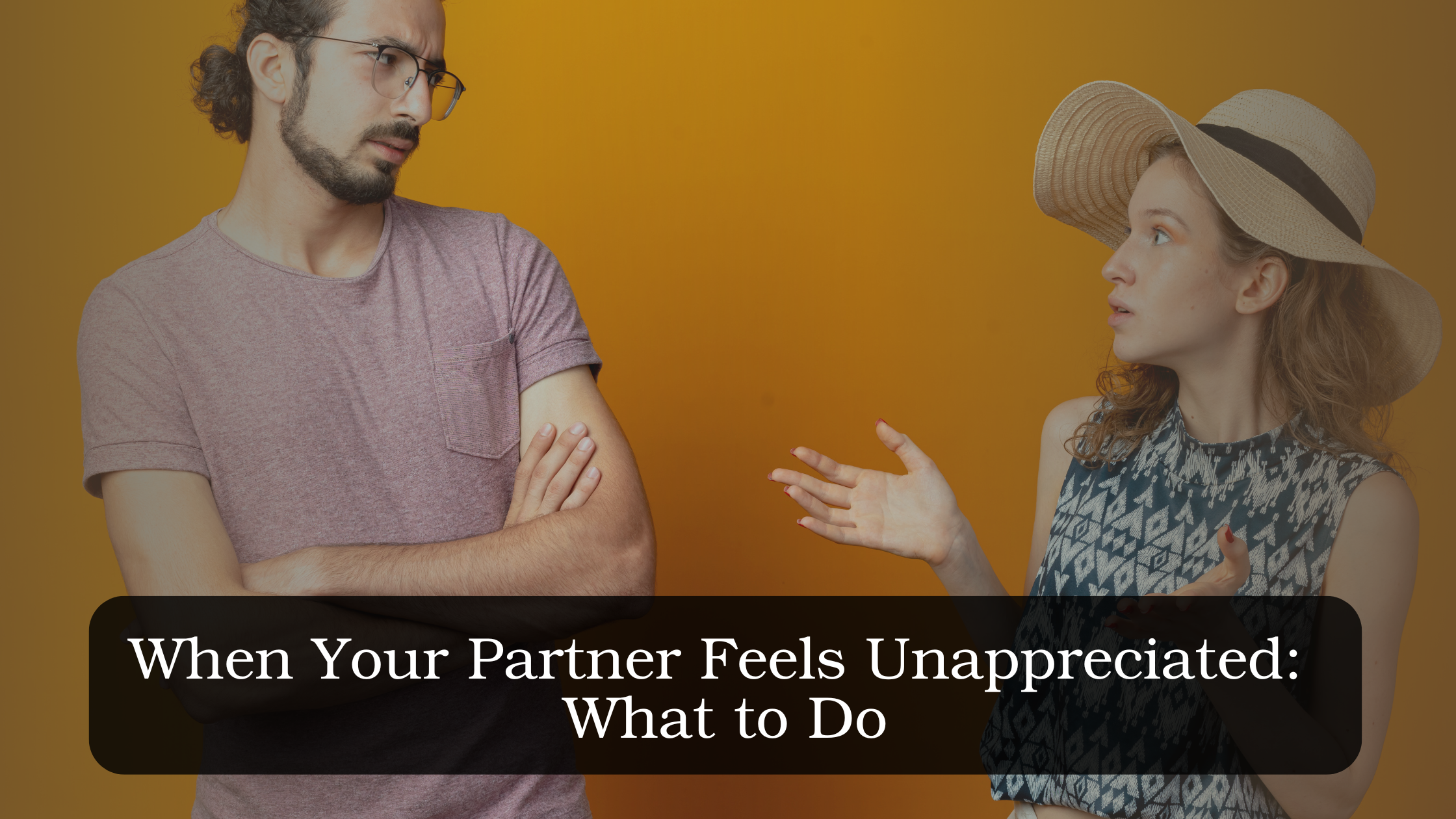
When Your Partner Feels Unappreciated: What to Do
A partner who feels unappreciated may not always say, “I don’t feel valued.” It may appear as irritation, withdrawal, repeated complaints, or comments such as, “You don’t notice anything I do.” You may care about your partner and still struggle to understand why they feel overlooked.
Feeling unappreciated is rarely about one forgotten thank-you. It often develops through repeated experiences within a long-term relationship in which someone feels their effort, support, sacrifices, or emotional contribution have become invisible. Over time, this can affect affection, communication, and trust.
Appreciation can become more visible and intentional. Noticing your partner’s contributions and understanding what makes them feel valued can help change the pattern.
What Does It Mean to Feel Unappreciated?
Feeling unappreciated does not necessarily mean your partner believes you never say thank you. They may feel that their efforts have become expected rather than noticed.
Perhaps they manage household responsibilities, support you emotionally, organize family plans, contribute financially, or regularly make compromises. You may assume they know you value those things. They may experience your silence differently.
You may think, “Of course I appreciate everything they do.” Your partner may think, “If you appreciate it, why don’t you show me?” That difference between internal appreciation and experienced appreciation can become a source of tension.
How to Respond When Your Partner Feels Unappreciated

Look Beyond the Complaint
If your partner says, “You never appreciate me,” your first instinct may be to defend yourself.
“That’s not true.” “I do plenty for you.” “You never appreciate me either.”
Instead, ask:
“What have I been missing?” “When do you feel most unappreciated?” “What would help you feel more valued?”
The complaint may be expressing a need to feel seen rather than simply demanding more compliments.
Don’t Compete Over Who Does More
Appreciation conversations can quickly become arguments about contribution.
“I work all day.” “I take care of the house.” “I handle the children.” “I do more around here.”
Relationships are not spreadsheets. Partners can contribute in different ways, and many forms of effort cannot be measured against each other.
Rather than asking who does more, ask whether both people feel seen and supported. The objective is to identify where each feels overlooked.
Ask What Appreciation Looks Like
People experience appreciation differently. One person may value verbal recognition. Another may feel appreciated when their partner takes something off their plate. Someone else may value uninterrupted time, affection, encouragement, or thoughtful gestures.
Instead of guessing, ask:
“What makes you feel appreciated by me?” “What do I do that makes you feel valued?” “What do you wish I noticed more often?”
The answer may be simple. They may want you to notice ordinary things.
Be Specific and Don’t Wait for Special Occasions
“Thanks for everything” is pleasant, but specific appreciation shows that you noticed the effort.
Instead of “Thanks for helping,” try: “I noticed you handled dinner and the kids tonight even though you were exhausted. I really appreciate that.”
Instead of reserving appreciation for birthdays or anniversaries, notice everyday contributions. Thank your partner for making coffee, acknowledge the effort behind a family plan, or tell them you enjoyed spending time together.
Consistent appreciation can change the emotional atmosphere of a relationship one of the core ideas behind simple ways to show respect and strengthen a relationship.
Pay Attention to Invisible Work
Some relationship responsibilities happen mentally and are easy to overlook. One partner may remember appointments, family events, household supplies, or social commitments that everyone else assumes will simply be handled.
Ask yourself: “Who remembers the details?” “Who initiates plans?” “Who notices what needs to be done?” These questions can reveal an imbalance.
Appreciation Should Go Both Ways
If your partner feels unappreciated, that does not automatically mean you are the only person who needs to change.
Sometimes both partners have stopped noticing each other’s efforts. Each person may privately think, “I do so much, and nobody notices.”
Breaking that cycle may require both partners to become more intentional about recognizing what the other contributes.
What If Your Partner Is Never Satisfied?
Sometimes a partner may continue feeling unappreciated despite genuine efforts to acknowledge them. The issue may involve deeper resentment, unmet needs, expectations, or longstanding relationship patterns.
You can acknowledge the feeling without accepting an unfair characterization of yourself:
“I understand that you’ve been feeling unappreciated, and I want to understand why. I also want us to talk about what both of us need rather than assuming one person is entirely responsible.”

When Appreciation Problems Become Resentment
When someone repeatedly feels that their efforts are invisible, resentment can develop. They may think, “Why should I keep trying?” or “I’m always the one making an effort.”
Eventually, they may stop communicating their needs and emotionally withdraw the same territory covered in how resentment builds in a relationship.
How Dr. Harel Can Help
Dr. Harel Papikian is a licensed clinical psychologist in Los Angeles with more than 16 years of experience working with individuals and couples.
When couples repeatedly struggle with feeling unseen or unappreciated, the issue may extend beyond saying “thank you” more often.Dr. Harel’s ARM Method can help partners explore communication patterns, emotional needs, expectations, and recurring relationship dynamics.
couples Therapy can help couples understand why an effort that feels obvious or meaningful to one partner may go unnoticed by the other. The work can focus on the pattern between them and create more productive ways to communicate needs and respond to each other.
Create a Culture of Appreciation
Look at the overall emotional environment of the relationship. Do you notice each other’s efforts? Do you express gratitude? Do you ask how the other person is doing? Do you assume your partner knows you appreciate them, or do you actually tell them?
You do not need excessive praise. Appreciation becomes meaningful when it is genuine and visible Relationships are strengthened by ordinary moments like these the same idea behind building your emotional bank account.
Frequently Asked Questions
You may experience appreciation internally without expressing it in a way your partner recognizes. Asking what makes them feel valued can help bridge that difference.
Try not to immediately defend yourself. Ask what specifically makes them feel overlooked and listen before explaining your perspective.
Verbal appreciation can help, but people may also feel valued through attention, practical support, affection, encouragement, and recognition of specific efforts.
Repeated complaints may indicate that the underlying concern still feels unresolved. Listen for the emotional need beneath the complaint.
Yes. Repeatedly feeling that your efforts are invisible can contribute to frustration, withdrawal, and resentment.
Your feelings matter too. Instead of competing, discuss how both partners can make appreciation consistent.
Notice your partner’s efforts, express specific gratitude, offer practical help, listen without distractions, initiate affection, or make time for something you both enjoy. Small, genuine actions can communicate that you notice and value your partner.

Harel Papikian
Dr. Harel Papikian is a clinical psychologist and couples therapist with more than 15 years of experience. He offers marriage counseling and couples therapy in los Angeles. It help’s couples navigate their relationship challenges and deepen their connection. Our clinic uses a unique ARM method (Awareness, Release, Mastery) to achieve rapid and profound results for our clients. We serve a diverse clientele, including LGBTQ+ and heterosexual couples, addressing issues like communication breakdowns, conflict resolution, intimacy, and trust. You can also get individual therapy sessions for concerns like depression, anxiety, and trauma.
Leave a Reply