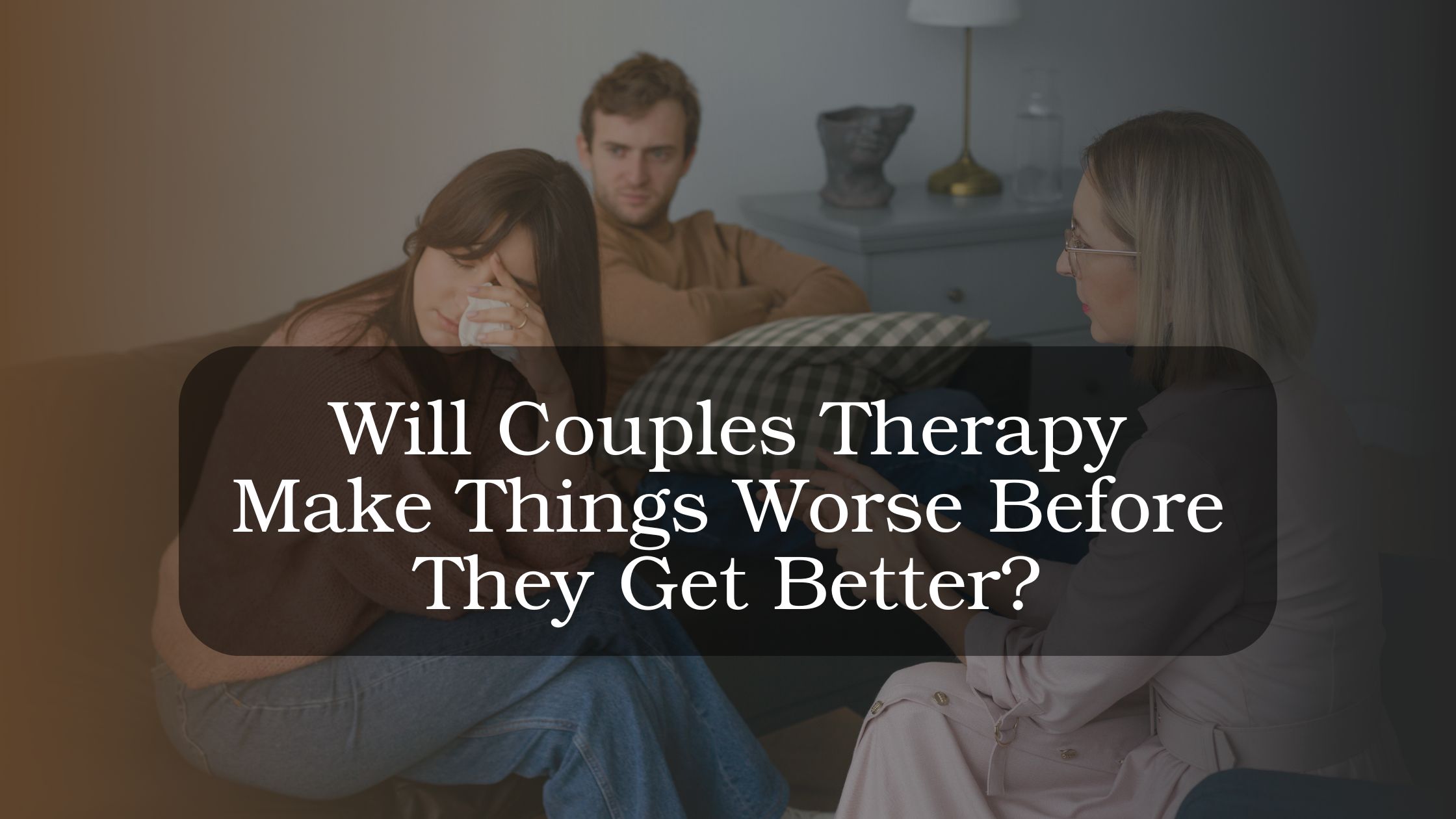
Will Couples Therapy Make Things Worse Before They Get Better?
Starting couples therapy is a big step. For many couples, it comes after months or even years of tension, miscommunication, or emotional distance. There is often hope, but also fear.
One of the most common concerns couples have is this:
“What if therapy makes things worse?”
It is a valid question. And the honest answer is nuanced.
Sometimes, couples therapy can feel harder before it feels better. But that does not mean it is harming your relationship. In many cases, it is a sign that real work is finally happening.
Dr. Harel, a licensed clinical psychologist in Los Angeles with over 16 years of experience working with couples, often explains that therapy does not create problems. It reveals and organizes what is already there. When those hidden layers come to the surface, it can feel intense before it becomes healing.
Let’s explore why this happens, what is normal, what is not, and how to navigate this phase effectively.
Why Does Couples Therapy Feel Worse Initially?

You Are Finally Talking About What Was Avoided for So Long!
Many couples come to therapy after long periods of avoidance. Difficult topics such as resentment, unmet needs, emotional disconnection, or even betrayal are often pushed aside in daily life to keep things functional. In therapy, those topics are no longer avoided.
For example, a couple in Santa Monica may have spent years avoiding conversations about emotional intimacy. The relationship functioned on routine, parenting, and logistics.
Once therapy begins, the therapist may ask direct questions like:
- “When did you start feeling disconnected?”
- “What do you feel is missing in this relationship?”
Suddenly, emotions that were buried begin to surface.
This can feel overwhelming. But it is not new pain. It is previously unexpressed pain becoming visible.
Emotional Honesty Feels Uncomfortable at First
Therapy requires a level of honesty that many couples are not used to.
Instead of saying:
“We’re fine, just busy,”
You begin to say:
“I feel alone in this marriage.”
That shift can feel intense.
In Los Angeles, where many couples maintain high-functioning lifestyles and external success, emotional vulnerability is often underdeveloped. Therapy challenges that pattern. Discomfort is not a sign of failure. It is often a sign of emotional honesty.
Old Patterns Are Being Disrupted
Every couple develops patterns over time:
- One partner pursues, the other withdraws
- One criticizes, the other becomes defensive
- One avoids, the other escalates
These patterns feel familiar, even if they are unhealthy. Therapy interrupts these cycles.
For example, in a Brentwood couple, the wife would pursue conversations aggressively while the husband shut down. In therapy, the therapist slowed down the interaction and asked the wife to express vulnerability instead of frustration. This initially made both uncomfortable because it disrupted their usual dynamic. Similar patterns are often discussed when couples explore the Cost of Couples Therapy in Los Angeles and whether therapy can create meaningful long-term change in their relationship.
Change often feels destabilizing before it becomes stabilizing.
What “Worse” Actually Looks Like in Therapy?

Not all discomfort is harmful. It is important to distinguish between productive discomfort and negative deterioration.
Normal, Temporary Challenges
You might experience:
- More frequent emotional conversations
- Increased awareness of unresolved issues
- Feeling temporarily overwhelmed
- Revisiting past conflicts
- Emotional fatigue after sessions
For example, a couple in Pasadena reported feeling “drained” after sessions because they were discussing topics they had avoided for years. However, over time, their communication improved significantly.
This type of discomfort is part of the process.
When Therapy May Actually Be Unhelpful
There are cases where therapy may feel worse for the wrong reasons:
- The therapist appears biased
- Sessions lack structure and escalate into arguments
- One partner feels consistently attacked or unheard
- There is no emotional safety
- Progress feels stagnant over time
In such situations, the issue may be the therapeutic fit, not therapy itself.
Dr. Harel emphasizes that effective couples therapy should feel challenging but contained. There should always be a sense of guidance and structure.
Why Relationship Often Improve After the Difficult Phase?

Awareness Leads to Change
Before therapy, many couples operate on autopilot. They react without understanding their patterns.
Therapy introduces awareness:
- “I shut down when I feel criticized.”
- “I raise my voice when I feel ignored.”
Once patterns are identified, they can be changed.
Emotional Safety Begins to Rebuild
As difficult conversations are handled with guidance, trust begins to grow. For example, a couple in Manhattan Beach dealing with repeated arguments about finances began learning structured communication techniques in therapy. Initially, discussions felt tense. Over time, they were able to talk calmly without escalation. For couples researching How to Find Therapist in Los Angeles, this process highlights the importance of working with a professional who can create emotional safety and structure during difficult conversations. Safety is not built by avoiding conflict. It is built by handling conflict differently.
You Learn Practical Tools
Therapy is not just about talking. It involves learning:
- How to communicate without blame
- How to regulate emotions during conflict
- How to listen actively
- How to repair after disagreements
These tools create long-term stability.
In Los Angeles, where external stressors such as career pressure, traffic, and financial demands are constant, these skills become essential.
Case Scenario
A couple in West Hollywood sought therapy due to constant arguments about time spent together.
- The husband worked in entertainment with unpredictable hours
- The wife worked remotely and felt neglected
Before therapy, arguments sounded like:
“You’re never around.”
“You don’t understand my work.”
In therapy, deeper emotions emerged:
- She felt unimportant and lonely
- He felt pressured and unappreciated
Initially, sessions became more emotional. Both partners reported feeling worse because unresolved feelings were surfacing.
However, within weeks:
- They began expressing needs instead of accusations
- They scheduled intentional time together
- Arguments reduced significantly
The temporary discomfort led to meaningful change.
How You Can Navigate the “Hard Phase” of Therapy?

Adjust Your Expectations
Therapy is not instant relief. It is a process.
Expect:
- Emotional discomfort
- New insights
- Gradual change
Stay Consistent
Many couples drop out of therapy when it feels hardest. This is often when progress is beginning.
Consistency allows patterns to shift.
Communicate With Your Therapist
If sessions feel overwhelming, say so.
A good therapist will:
- Adjust pacing
- Provide structure
- Ensure emotional safety
Practice Skills Outside Sessions
Therapy works best when applied in daily life.
For example, a couple in Beverly Hills practiced “pause and respond” techniques during arguments at home. This reinforced what they learned in sessions.
Focus on the Process, Not Just Immediate Comfort
Short-term discomfort can lead to long-term connection.
Avoid evaluating therapy based on how you feel immediately after a session. Look at patterns over time.
Therapist’s Perspective
Dr. Harel, a licensed clinical psychologist in Los Angeles with over 16 years of experience, often reassures couples that feeling temporarily worse is not uncommon.
However, he emphasizes three important markers of healthy therapy:
- Both partners feel heard
- Sessions are structured and guided
- There is gradual movement toward understanding and change
If these are present, temporary discomfort is usually part of progress.
Final Thoughts
Couples therapy can sometimes feel harder before it feels better. Not because it is damaging your relationship, but because it is uncovering what has been hidden. In Los Angeles, where couples often manage high stress while maintaining outward stability, therapy becomes a space where real emotions finally emerge. Understanding What to Expect in Couples Therapy can help couples recognize the difference between harmful conflict and productive discomfort.
When guided properly, therapy helps couples:
- Communicate more effectively
- Understand each other deeply
- Rebuild emotional safety
- Strengthen long-term connection
If you are in that phase where things feel intense, it does not necessarily mean therapy is failing. In many cases, these are actually early Signs of Couples Therapy is Working, because it may mean that, for the first time, you are truly addressing what matters. And that is often where real change begins.
Frequently Asked Questions (FAQs)
The timeline varies for every couple. Some people notice small improvements after a few sessions, while deeper relationship changes may take several months. Progress often depends on how long the issues have existed, how willing both partners are to participate, and how consistently they apply what they learn outside therapy.
Yes, this can happen temporarily. Therapy often brings unresolved emotions and hidden frustrations to the surface. Couples may become more emotionally aware before they fully learn healthier communication skills. The key is whether conflicts gradually become more productive and respectful over time.
Therapy is generally more effective when both partners are engaged, but change can still begin even if one person starts more motivated than the other. Sometimes one partner becomes more open after seeing that therapy is not about blame, but about understanding patterns and improving the relationship.
Not necessarily. Emotional exhaustion can be a normal part of processing difficult conversations. However, therapy should still feel safe and constructive overall. If sessions constantly feel harmful, hopeless, or emotionally unsafe, it may be important to discuss concerns with the therapist or evaluate whether the therapeutic approach is the right fit.
Yes. Many couples enter therapy focused on surface-level arguments, only to discover deeper issues underneath, such as emotional neglect, unresolved resentment, trust problems, or unmet emotional needs. This deeper awareness can feel uncomfortable initially, but it often creates opportunities for meaningful change.
After an intense session, it helps to avoid immediately continuing the argument at home. Instead, couples should give themselves time to process emotions calmly. Simple actions such as taking a walk, reflecting individually, or discussing one insight from the session can help prevent emotional overload and support healthier communication.

Harel Papikian
Dr. Harel Papikian is a clinical psychologist and couples therapist with more than 15 years of experience. He offers marriage counseling and couples therapy in los Angeles. It help’s couples navigate their relationship challenges and deepen their connection. Our clinic uses a unique ARM method (Awareness, Release, Mastery) to achieve rapid and profound results for our clients. We serve a diverse clientele, including LGBTQ+ and heterosexual couples, addressing issues like communication breakdowns, conflict resolution, intimacy, and trust. You can also get individual therapy sessions for concerns like depression, anxiety, and trauma.
Leave a Reply