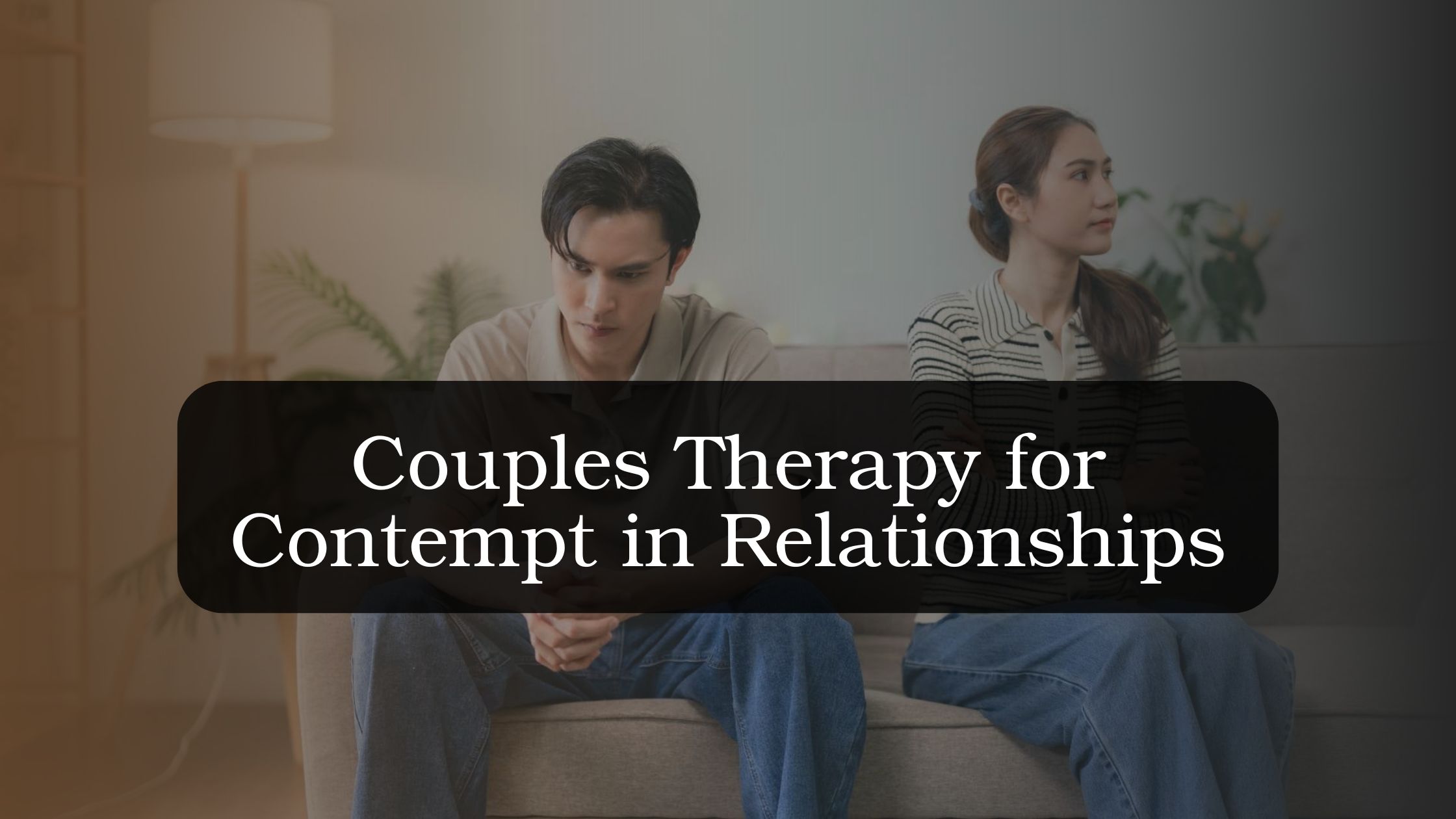
Couples Therapy for Contempt in Relationships
Contempt rarely enters a relationship loudly. It often appears quietly through sarcasm, impatience, or subtle disrespect. Over time, it changes how partners communicate, interpret each other’s actions, and feel about the relationship.
You may still share a home, responsibilities, and care for each other, yet something feels off. Conversations become tense, and small interactions carry emotional weight. The sense of “we’re in this together” gradually shifts to ongoing frustration.
This is often where contempt takes root.
In high-pressure environments, stress from work, finances, and daily demands can erode emotional patience. When unmanaged, frustration can turn into criticism, and criticism can harden into contempt. This is often one of the reasons couples therapy becomes valuable, helping partners address negative patterns before they cause deeper damage to the relationship.
Contempt is particularly damaging because it goes beyond addressing behavior—it attacks a person’s sense of worth. Recognizing these patterns early and seeking support is essential to protecting and rebuilding a healthy, respectful connection.
What Is Contempt in a Relationship?
Contempt goes beyond irritation or disagreement. It reflects a deeper attitude where one partner begins to see themselves as superior to the other. Instead of addressing a specific issue, contempt communicates, “There is something wrong with you.”
This can show up in subtle and overt ways:
- Sarcasm that undermines rather than lightens the mood
- Eye rolling or dismissive body language
- Mocking tone or mimicking
- Name-calling or belittling comments
- Dismissing emotions as exaggerated or irrelevant
- Speaking with condescension
For example, in a couple living in Santa Monica, one partner may respond to a concern about emotional distance by saying, “You always need so much attention,” instead of engaging with the concern. Over time, this repeated dismissal creates emotional injury.
Contempt shifts the focus from solving problems to attacking identity. That is what makes it particularly damaging.
Why Contempt Is So Harmful to Relationships?

Healthy relationships depend on emotional safety. Partners need to feel respected, valued, and understood, even during conflict. Contempt removes that safety.
When contempt is present, the emotional environment changes in several ways:
- Partners become defensive rather than open
- Vulnerability decreases because it feels unsafe
- Communication becomes guarded or hostile
- Emotional intimacy declines significantly
- Resentment builds on both sides
Consider a couple in Brentwood where one partner frequently uses sarcasm during disagreements. The other partner may initially try to explain their feelings, but after repeated dismissive responses, they begin to withdraw. This pattern can contribute to Unresolved Issues in Relationship dynamics, where important concerns remain unaddressed and emotional distance continues to grow. Eventually, silence replaces communication.
Contempt does not just create conflict. It changes the emotional tone of the entire relationship.
How Contempt Develops Over Time
Contempt is rarely present at the beginning of a relationship. It develops gradually through repeated negative experiences that go unresolved.
Several contributing factors are common:
a. Accumulated Resentment
When issues are not addressed effectively, they build up over time. Small frustrations that are ignored or minimized can turn into larger emotional grievances.
b. Repeated Miscommunication
If partners consistently feel misunderstood or unheard, they may begin to assume negative intent. This assumption can lead to judgment.
c. Perceived Imbalance
If one partner feels they are contributing more, whether emotionally, financially, or practically, they may develop a sense of superiority or frustration.
d. Chronic External Stress
In Los Angeles, factors such as demanding jobs, financial pressure, and lifestyle expectations can reduce emotional capacity. When stress is high, patience is low, making negative patterns more likely.
For instance, in Pasadena, a couple may start with disagreements about household responsibilities. Over time, one partner begins to feel the other is unreliable, leading to dismissive comments. What started as frustration becomes contempt.
Signs That Contempt Has Entered Your Relationship

Recognizing contempt early is crucial because it becomes harder to reverse as it deepens.
Common signs include:
- Frequent sarcasm during serious conversations
- Dismissive gestures such as eye rolling
- Speaking to your partner with irritation or condescension
- Focusing on character flaws rather than specific behaviors
- Feeling superior or “more right” than your partner
- Lack of empathy during emotional moments
In Manhattan Beach, a couple noticed that their conversations often included subtle jabs and dismissive humor. While it initially seemed harmless, it gradually created emotional distance. In some cases, challenges related to Alexithymia in Relationships can make it even harder for partners to recognize the emotional impact of these interactions, further contributing to disconnection.
If these patterns feel familiar, it is important to address them before they become ingrained.
The Emotional and Psychological Impact of Contempt
Contempt does not affect just one person. It impacts both individuals and the relationship as a whole.
For the partner experiencing contempt:
- Decreased self-esteem
- Increased emotional withdrawal
- Anxiety or sadness
- Feeling unvalued or rejected
For the partner expressing contempt:
- Reinforced negative perceptions
- Reduced empathy
- Growing emotional distance
- Difficulty reconnecting
| Impact Area | Effect of Contempt |
| Communication | Becomes defensive or hostile |
| Intimacy | Declines significantly |
| Trust | Weakens over time |
| Emotional Safety | Disappears |
| Relationship Satisfaction | Decreases |
Over time, contempt can make partners feel like adversaries rather than allies.
Can Contempt Be Repaired?
Contempt is serious, but it is not always permanent. Many couples are able to repair their relationship when they recognize the pattern and commit to change.
Repair becomes possible when:
- Both partners acknowledge the issue
- There is willingness to take responsibility
- Communication patterns are addressed
- Emotional safety is rebuilt gradually
However, ignoring contempt allows it to deepen, making repair more difficult over time.
How Couples Therapy Helps Address Contempt

Couples therapy is particularly effective for addressing contempt because it provides a neutral and guided environment.
Dr. Harel Papikian, a licensed clinical psychologist in Los Angeles with over 16 years of experience, works with couples to:
- Identify patterns of contempt and their triggers
- Understand the underlying emotions driving the behavior
- Replace judgment with empathy
- Develop healthier communication strategies
- Rebuild emotional safety
Therapy focuses not only on stopping harmful behaviors but also on restoring the emotional connection that has been damaged.
Core Therapeutic Shifts That Reduce Contempt
From Criticism to Emotional Expression
Instead of attacking character, partners learn to express feelings.
For example:
“You’re so irresponsible” becomes
“I feel overwhelmed when responsibilities are not shared.”
This shift reduces defensiveness and invites collaboration.
From Superiority to Mutual Respect
Therapy helps partners recognize the impact of seeing themselves as “better” or “more right.”
Respect is rebuilt by acknowledging each other’s perspectives and contributions.
From Reactivity to Emotional Regulation
Learning to pause before responding is critical.
Dr. Harel often teaches couples how to identify emotional triggers and regulate their responses before engaging in conversation.
From Distance to Intentional Connection
Rebuilding connection requires consistent effort:
- Daily check-ins
- Expressing appreciation
- Spending intentional time together
Small actions, repeated consistently, restore emotional closeness.
Practical Example of Change
| Situation | Contempt Response | Healthy Response |
| Missed task | “You never do anything right” | “I felt stressed when this was missed. Can we figure out a better system?” |
| Emotional concern | “You’re too sensitive” | “I didn’t realize this affected you. Help me understand” |
These changes may seem simple, but they significantly alter the emotional experience of the relationship.
When to Seek Therapy Immediately
Consider professional support if:
- Contempt is frequent or intense
- Communication feels hostile or disrespectful
- Emotional safety is low
- One or both partners feel consistently hurt
- Attempts to improve have not worked
In Los Angeles, where stress can accelerate negative patterns, early intervention can prevent long-term damage.
Final Thoughts
Contempt is one of the most damaging patterns in a relationship because it quietly erodes respect, connection, and emotional safety. It shifts partners from being supportive allies to critical observers of each other’s flaws. Dr. Harel Papikian, a licensed clinical psychologist in Los Angeles with over 16 years of experience, emphasizes that relationships do not break because of conflict alone. They break when respect is replaced with judgment. The encouraging reality is that contempt can be addressed. With awareness, consistent effort, and the right therapeutic support, couples can replace patterns of disrespect with understanding and rebuild the foundation of their relationship. Because at the core of every lasting relationship is not the absence of conflict, but the presence of respect. And when respect is restored, connection has the opportunity to grow again in a healthier, more sustainable way. However, if contempt remains persistent despite repeated efforts to repair the relationship, it may prompt important conversations about When to Walk Away from Relationship patterns that continue to undermine emotional well-being.
Frequently Asked Questions (FAQs)
Yes. Contempt is not always expressed through frequent arguments. It can appear through subtle behaviors such as dismissiveness, lack of appreciation, emotional coldness, or passive-aggressive comments, even in relationships that seem calm on the surface.
Yes. Anger is a normal emotion that can be expressed constructively. Contempt is different because it communicates disrespect, superiority, and a lack of regard for a partner’s value, which can cause deeper emotional harm over time.
In some cases, yes. Constant digital distractions, public criticism, comparison to other couples, or replacing face-to-face communication with online interactions can increase emotional distance and contribute to negative perceptions of a partner.
Rebuilding respect requires consistent actions over time, including acknowledging positive qualities, expressing gratitude, showing empathy, honoring boundaries, and making a conscious effort to speak and act with consideration.
Yes. Children often observe and absorb relationship dynamics. Ongoing contempt between parents can influence a child’s sense of emotional security and shape their expectations about communication and relationships later in life.
Yes. Individual therapy can help a person understand their reactions, improve emotional regulation, develop healthier communication habits, and make informed decisions about how to respond to unhealthy relationship patterns.
Occasional disrespect may occur during moments of stress or conflict and is usually followed by accountability and repair. Contempt becomes a pattern when disrespect, mockery, dismissal, or superiority repeatedly appear and begin defining the overall tone of the relationship.

Harel Papikian
Dr. Harel Papikian is a clinical psychologist and couples therapist with more than 15 years of experience. He offers marriage counseling and couples therapy in los Angeles. It help’s couples navigate their relationship challenges and deepen their connection. Our clinic uses a unique ARM method (Awareness, Release, Mastery) to achieve rapid and profound results for our clients. We serve a diverse clientele, including LGBTQ+ and heterosexual couples, addressing issues like communication breakdowns, conflict resolution, intimacy, and trust. You can also get individual therapy sessions for concerns like depression, anxiety, and trauma.
Leave a Reply