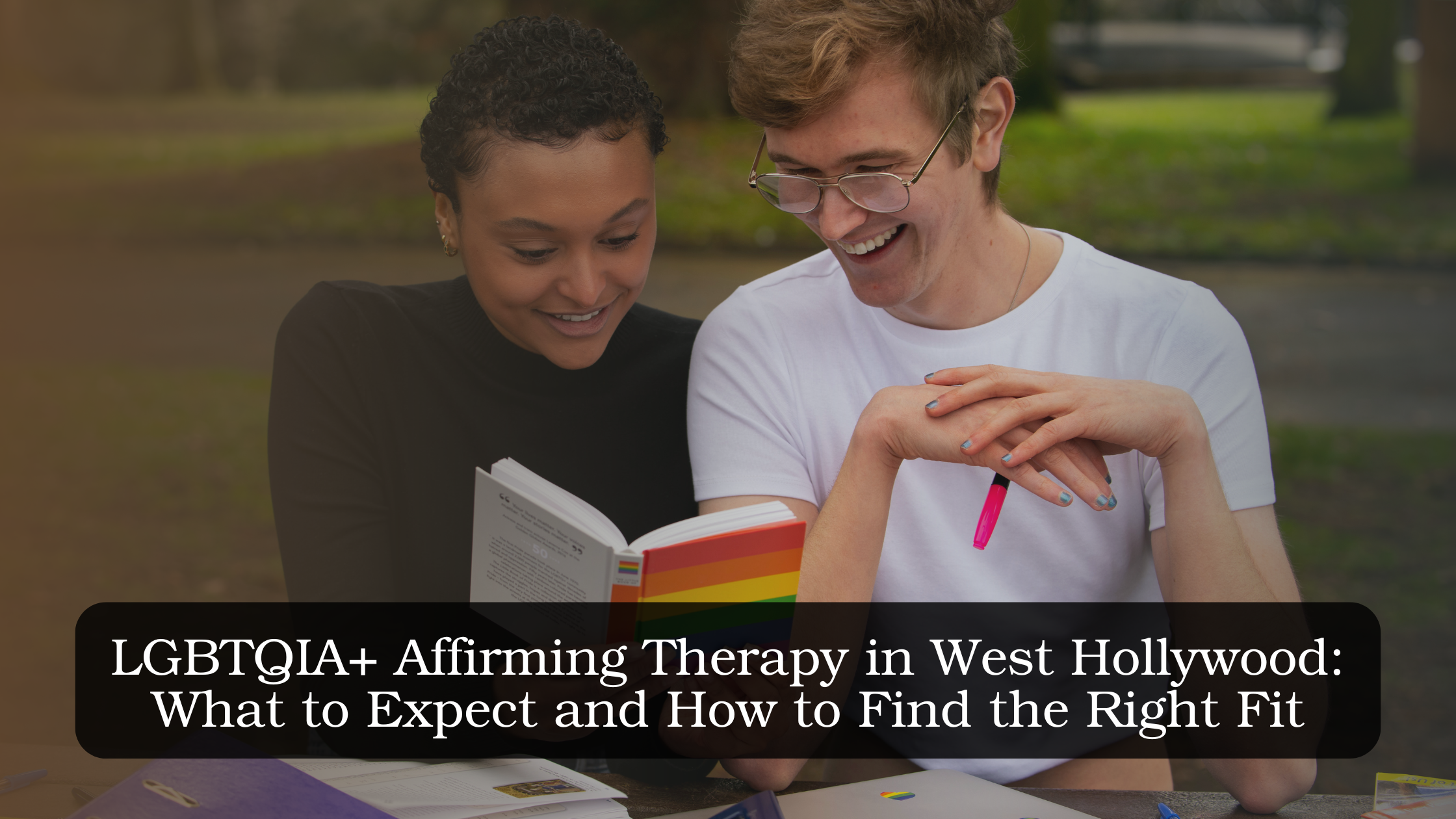
LGBTQIA+ Affirming Therapy in West Hollywood: What to Expect and How to Find the Right Fit
Living in West Hollywood can provide a sense of visibility and community that many LGBTQIA+ individuals may not have experienced elsewhere. Pride events, LGBTQIA+-owned businesses, and inclusive social spaces can make it easier to feel seen and connected. Yet community acceptance does not automatically erase personal struggles or difficult experiences from the past.
Some individuals continue to navigate family rejection, discrimination, religious shame, bullying, or years spent hiding important parts of themselves. Others may simply want a therapist who understands their identity while helping them address anxiety, relationships, grief, self-esteem, or personal growth without making assumptions.
LGBTQIA+ affirming therapy provides that space. It allows people to discuss what matters to them with a therapist who respects their identity and understands the experiences that may shape their emotional well-being. Finding the right fit is about more than acceptance; it is about feeling genuinely understood.
What Is LGBTQIA+ Affirming Therapy?
LGBTQIA+ affirming therapy involves creating a therapeutic environment where sexual orientation and gender identity are respected rather than judged, questioned, or treated as problems.
An affirming therapist understands that LGBTQIA+ individuals have different experiences. Your identity may be central to what brings you to therapy, or it may have very little to do with your current concerns.
You might seek therapy because of:
- Anxiety or depression
- Relationship difficulties
- Family conflict
- Work-related stress
- Grief or loss
- Low self-esteem
- Difficulty setting boundaries
- Personal growth
An affirming therapist can address these concerns without assuming that your identity is the source of them.

Why Can LGBTQIA+ Experiences Affect Mental Health?
Mental health develops within relationships, families, communities, and social environments. For some LGBTQIA+ individuals, growing up may have involved messages that certain aspects of themselves needed to be hidden, questioned, or changed.
These experiences can influence how someone thinks about safety, trust, vulnerability, and belonging.
For example:
| Earlier Experience | Possible Emotional Impact |
| Family rejection | Difficulty trusting relationships |
| Religious shame | Guilt or internal conflict |
| Bullying or exclusion | Low self-esteem or social anxiety |
| Concealing identity | Fear of vulnerability |
| Fear of judgment | Difficulty feeling emotionally safe |
These experiences do not mean that LGBTQIA+ individuals are inherently more vulnerable or that everyone will experience mental health difficulties. Many develop strong resilience and supportive relationships.
Therapy can simply help someone understand whether earlier experiences are still affecting how they think, feel, or relate to others today.
Why Does West Hollywood’s LGBTQIA+ Community Matter?
For many people, West Hollywood can represent freedom, visibility, and belonging.
It may be a place where someone feels comfortable expressing affection, meeting people with similar experiences, or participating in LGBTQIA+ communities without feeling the need to hide.
That visibility can be meaningful.
However, living in an affirming environment does not automatically resolve experiences from the past. Someone may feel comfortable in their community while still struggling with family rejection. Another person may have supportive friends but find emotional vulnerability difficult because of earlier experiences.
Both realities can exist at the same time.
Therapy can provide a private space to explore that difference between feeling accepted externally and feeling comfortable internally.
What Can You Expect During LGBTQIA+ Affirming Therapy?
Early sessions usually focus on understanding what brings you to therapy and what you hope to accomplish.
Your therapist may ask about your current concerns, relationships, family background, significant experiences, stressors, and personal goals.
You might discuss:
- What you are currently struggling with
- Important relationships in your life
- Family dynamics
- Experiences of rejection or discrimination
- Your support system
- Identity-related experiences
- Changes you would like to make
You do not have to discuss anything before you feel ready.
If your primary concern is anxiety or work stress, therapy does not need to revolve around your identity. If coming out, family acceptance, self-acceptance, or identity-related experiences are affecting you, you should also feel comfortable bringing those subjects into the conversation.
Over time, therapy can help you recognize emotional patterns and develop healthier ways of responding to difficult situations.
How Can LGBTQIA+ Affirming Therapy Help With Relationships?
LGBTQIA+ individuals and couples can experience many of the same relationship concerns as anyone else, including communication difficulties, recurring conflict, trust issues, intimacy concerns, and different expectations the same fair fighting rules that help any couple resolve conflict apply here too.
There can also be additional experiences influencing the relationship.
Partners may have different levels of family acceptance. One person may be comfortable being open about their relationship while the other remains concerned about judgment. Previous rejection or discrimination may also affect vulnerability.
For example, one partner may interpret hesitation as a lack of commitment, while the other may be protecting themselves because of previous experiences a dynamic that benefits from approaching disagreement with curiosity rather than assumption.
Affirming therapy can help couples slow these patterns down and understand what is happening beneath the disagreement often by identifying the recurring relationship pattern driving it.

How Do You Know if a Therapist Is the Right Fit?
A therapist describing themselves as LGBTQIA+-friendly is a useful starting point, but the therapeutic relationship matters just as much.
You should feel able to discuss your life without worrying that your therapist will stereotype you or make assumptions.
An affirming therapist listens with curiosity and respect. They recognize that LGBTQIA+ individuals have different identities, values, family experiences, relationships, and goals.
You might ask yourself:
Can I talk openly about my relationships?
Do I feel like I have to educate my therapist about my identity?
Does my therapist listen instead of assuming?
Do I feel respected when discussing difficult subjects?
Therapy can involve emotional discomfort, but that is different from feeling judged or dismissed.
Dr. Harel’s Approach to LGBTQIA+ Affirming Therapy
In his Los Angeles practice, Dr. Harel Papikian works with LGBTQIA+ individuals and couples around relationship concerns, emotional patterns, identity-related experiences, and personal growth.
His approach begins with understanding each person’s individual experience rather than making assumptions based on sexual orientation or gender identity.
Therapy may involve:
- Exploring experiences that have shaped self-perception
- Understanding emotional patterns within relationships
- Processing rejection, shame, or difficult past experiences
- Developing healthier boundaries
- Improving communication and emotional connection
- Building greater self-understanding
For couples, therapy may also explore how differences in family acceptance, coming-out experiences, visibility, or previous relationships influence communication.
The goal is not to tell clients how they should experience their identity. Instead, therapy provides space to explore what identity means to each person and how their experiences may influence their emotional life and relationships.
Final Thoughts
LGBTQIA+ affirming therapy is about creating a space where you can discuss your life without anticipating judgment, misunderstanding, or pressure to explain who you are.
West Hollywood can offer visibility and community, but therapy provides a different kind of support: a private space to explore emotional experiences, relationships, identity, and personal growth.
The right therapist will not assume what your identity means to you. They will take time to understand your individual experiences and create an environment where you can be honest about what you are going through.
Frequently Asked Questions
An LGBTQIA+-friendly therapist may be accepting and respectful. Affirming therapy generally involves a deeper understanding of LGBTQIA+ experiences and creates space to discuss identity without judgment or assumptions.
No. You can seek therapy for anxiety, relationships, work stress, grief, self-esteem, or personal growth. Your identity does not have to be the focus of therapy.
Yes. Therapy can help couples work through communication difficulties, trust concerns, intimacy issues, recurring conflict, and family-related stress while considering identity-related experiences when relevant.
Look for someone with relevant experience who listens without assumptions, respects your identity and relationships, and allows you to establish your own goals. Feeling comfortable and respected is also important.
It is okay to look for another therapist. A strong therapeutic relationship requires trust and respect. If you consistently feel judged, misunderstood, or unable to discuss important parts of your life, another therapist may be a better fit.
Yes. Therapy can provide a space to process feelings related to rejection, grief, anger, guilt, or complicated family relationships and explore boundaries that feel appropriate for you.

Harel Papikian
Dr. Harel Papikian is a clinical psychologist and couples therapist with more than 15 years of experience. He offers marriage counseling and couples therapy in los Angeles. It help’s couples navigate their relationship challenges and deepen their connection. Our clinic uses a unique ARM method (Awareness, Release, Mastery) to achieve rapid and profound results for our clients. We serve a diverse clientele, including LGBTQ+ and heterosexual couples, addressing issues like communication breakdowns, conflict resolution, intimacy, and trust. You can also get individual therapy sessions for concerns like depression, anxiety, and trauma.
Leave a Reply