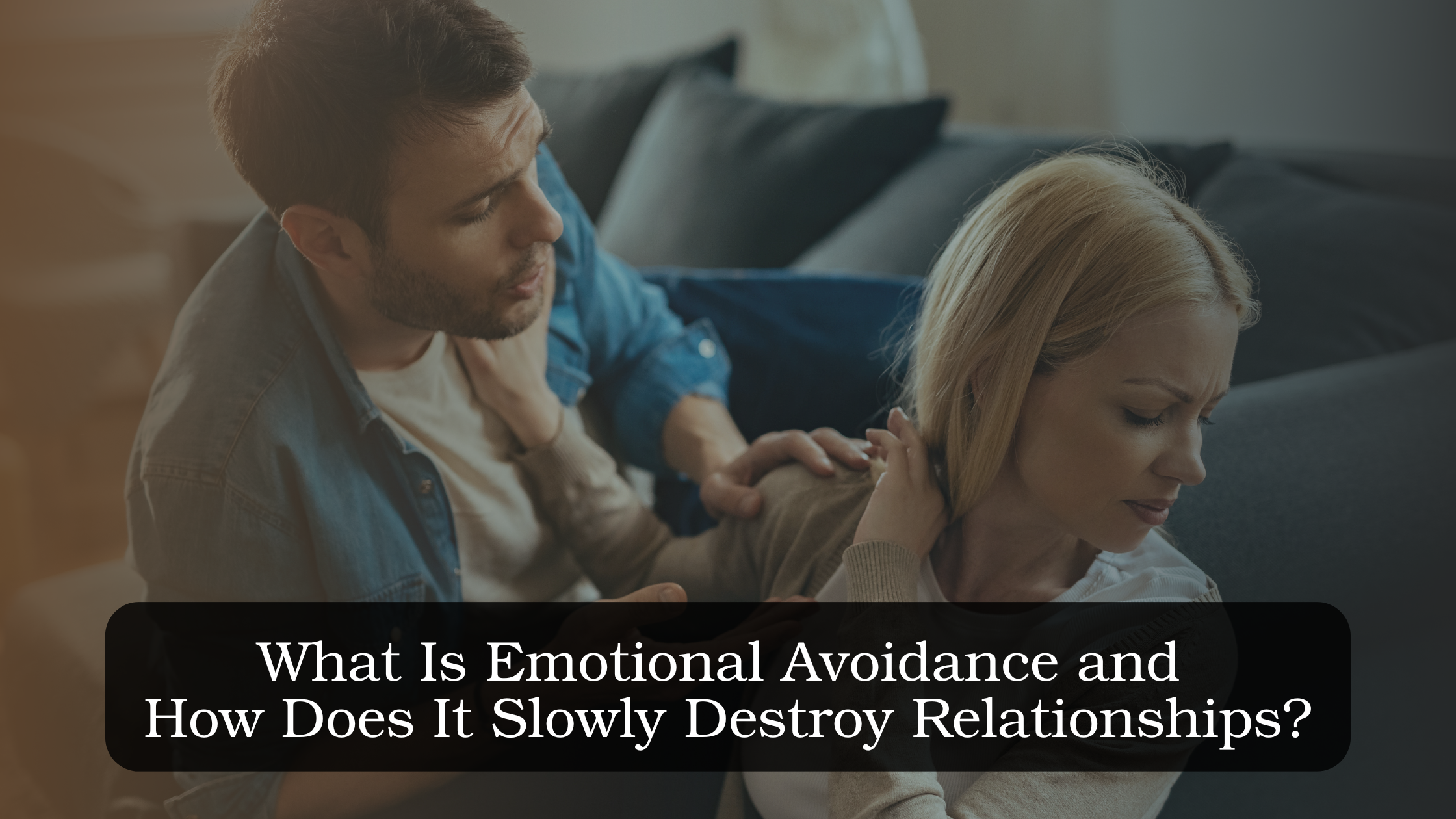
What Is Emotional Avoidance and How Does It Slowly Destroy Relationships?
When people think about relationship problems, they often think about arguments, infidelity, financial disagreements, or communication breakdowns. Emotional avoidance is much less obvious. There may be no major confrontation or obvious crisis. Instead, one or both partners gradually stop discussing what they feel, postpone difficult conversations, or withdraw when emotional topics arise.
At first, avoidance can feel like a way to keep the peace. A conversation is postponed, an argument is avoided, and everyone gets some temporary relief. But unresolved feelings rarely disappear simply because they are not discussed. Over time, they can become resentment, loneliness, or emotional distance.
Dr. Harel, a licensed clinical psychologist in Los Angeles with over 16 years of experience, often helps couples understand the patterns behind emotional disconnection and recurring conflict. Recognizing emotional avoidance early can help couples address problems before silence becomes a substitute for connection.
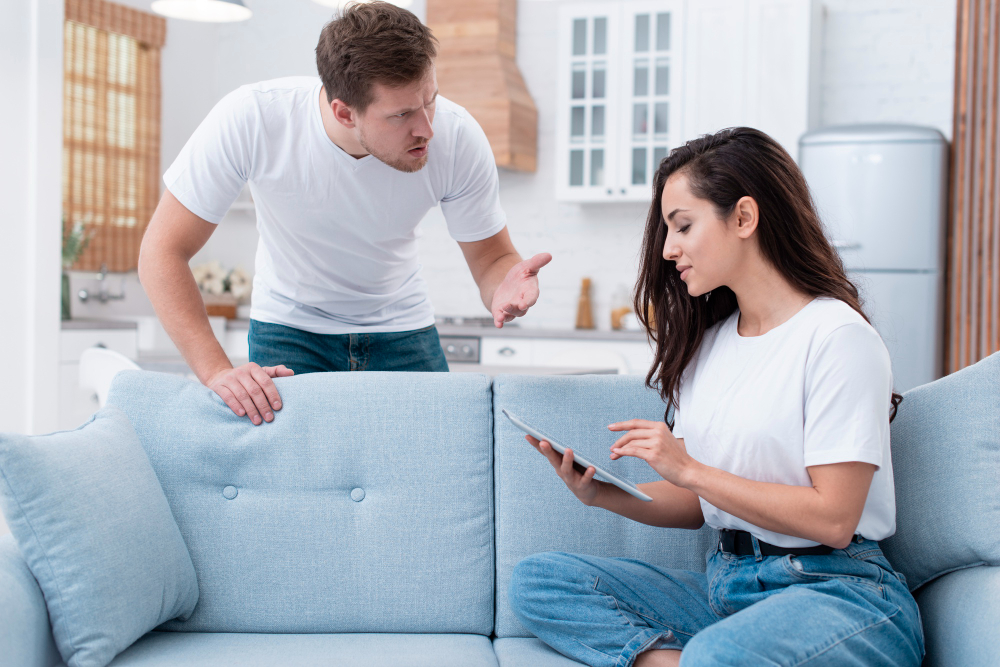
What Is Emotional Avoidance?
Emotional avoidance occurs when someone consistently avoids uncomfortable emotions, vulnerability, or conversations rather than engaging with them.
Avoidance can be obvious, such as refusing to discuss a disagreement. It can also be subtle, such as changing the subject, making jokes, becoming excessively busy, or saying “I’m fine” when something is clearly bothering you.
Common examples include:
- Shutting down during conflict
- Changing the subject when conversations become personal
- Minimizing feelings by saying “It’s not a big deal”
- Avoiding vulnerable conversations
- Using work, hobbies, or distractions to escape emotional discomfort
- Withdrawing after an argument without returning to the issue
- Avoiding conversations about intimacy or relationship concerns
Emotional avoidance is not always intentional. People may develop these patterns because they learned early in life that emotions were uncomfortable, unsafe, or unwelcome.
Understanding where avoidance comes from can help explain the behavior, but it does not eliminate its effect on a relationship.
What Is the Difference Between Healthy Space and Emotional Avoidance?
Taking space during conflict is not necessarily unhealthy.
Sometimes partners need time to calm down before they can have a productive conversation. Stepping away temporarily can prevent an argument from becoming more damaging.
The difference is whether the person eventually returns to the issue.
| Healthy Emotional Space | Emotional Avoidance |
| Takes a temporary break | Permanently avoids the topic |
| Allows emotions to settle | Uses distance to escape emotions |
| Returns to the conversation | Never addresses the issue |
| Creates room for reflection | Prevents resolution |
| Can support connection | Gradually weakens connection |
For example, telling your partner, “I’m too upset to talk right now. Can we discuss this tonight?” creates space while maintaining connection.
Walking away and refusing to ever discuss what happened creates a very different dynamic.
Healthy relationships allow people to take emotional space.
They also require partners to eventually re-engage the same distinction explored in the difference between healthy independence and emotional distance.
Why Is Emotional Avoidance So Difficult to Recognize?
Emotional avoidance can be difficult to identify because it often looks like calmness.
A couple may not argue frequently. They may have a stable home, manage responsibilities, spend time together, and appear perfectly fine to family and friends.
But underneath that stability, important conversations may no longer be happening.
Someone may stop mentioning that they feel lonely because previous attempts to discuss it went nowhere.
Another partner may avoid bringing up dissatisfaction because they are afraid of starting another argument.
Over time, both people may become less emotionally expressive.
The relationship feels quieter.
But quieter does not always mean healthier.
This is especially relevant for couples managing demanding careers, parenting responsibilities, long commutes, and busy schedules in Los Angeles. It can be easy to tell yourself that there will be time to talk later.
The problem is that “later” can become months or years.
How Emotional Avoidance Slowly Damages Intimacy
Emotional intimacy requires some degree of openness and vulnerability.
Partners need to feel that they can express concerns, disappointments, fears, and needs without being consistently dismissed or ignored.
When avoidance becomes a pattern, this openness begins to disappear.
Consider a couple in Pasadena. One partner repeatedly says they feel disconnected and would like more quality time together. The other responds by explaining how busy work has been or suggesting practical solutions.
The concern never really gets discussed.
Eventually, the first partner stops bringing it up.
From the outside, the couple may appear to have fewer problems.
Internally, however, one partner may have simply stopped expecting emotional needs to be understood.
This is one of the most damaging effects of avoidance.
The relationship can remain functional while intimacy gradually disappears.
Why Emotional Avoidance Can Create More Conflict
Many people avoid emotional conversations because they are trying to prevent conflict.
Unfortunately, avoidance can eventually create the very conflict someone was trying to escape.
When concerns remain unresolved, frustration accumulates.
A small disappointment becomes part of a larger pattern. Repeatedly feeling unheard can turn into resentment. Unspoken needs can become loneliness.
Eventually, the issue may return with much greater emotional intensity.
One partner may say:
“I’ve been unhappy about this for years.”
The other may respond:
“Why didn’t you tell me?”
Sometimes the concern was communicated repeatedly. It simply never resulted in meaningful engagement.
Avoidance can therefore delay conflict without actually resolving the problem.
How Emotional Avoidance Affects the Other Partner
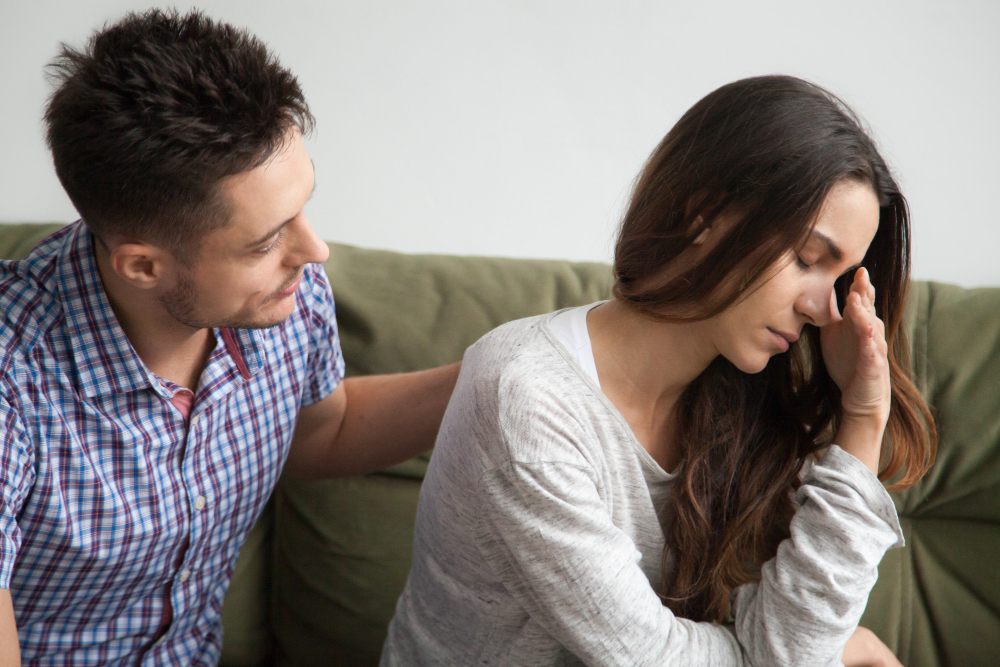
The person being avoided can experience significant emotional consequences.
They may begin feeling:
- Ignored
- Unimportant
- Lonely
- Unheard
- Rejected
- Frustrated
- Resentful
One of the most painful experiences can be being physically close to someone while feeling emotionally alone.
This can also create a cycle between partners.
One person wants more connection and begins asking more questions, seeking reassurance, or repeatedly bringing up concerns.
The other feels pressured and withdraws further.
The first partner then becomes even more anxious and pursues connection more strongly.
The cycle can look like this:
One partner pursues → the other withdraws → the first partner pursues harder → the second partner withdraws further.
This is a clear example of the pursuer-distancer cycle.
Neither person may intend to create this pattern.
Yet both can end up feeling misunderstood.
Common Signs Emotional Avoidance Is Affecting Your Relationship
Because emotional avoidance is often subtle, it can help to look at the relationship as a whole.
Common signs include:
- Important conversations repeatedly remain unresolved
- One or both partners shut down during conflict
- Emotional concerns are dismissed or minimized
- Vulnerable conversations feel unusual or uncomfortable
- Partners rarely discuss deeper feelings
- The relationship feels increasingly transactional
- Resentment continues building beneath the surface
- One partner has stopped expressing their needs ( sometimes without realizing it a pattern connected to broader relationship patterns that keep repeating.)
- Partners feel lonely despite spending time together
One particularly important sign is that there is less conflict because someone has stopped trying to address problems.
A lack of arguments does not automatically mean a healthy relationship.
Sometimes it means one or both partners have emotionally disengaged.
Why Does Emotional Avoidance Develop?
Avoidance patterns often begin before the current relationship.
For some people, emotions were criticized while growing up. Others experienced conflict as unpredictable or unsafe. Some learned that asking for emotional support would result in rejection or dismissal.
These experiences can influence adult relationships.
| Earlier Experience | Possible Adult Pattern |
| Emotions were criticized | Difficulty expressing feelings |
| Conflict felt unsafe | Avoiding difficult conversations |
| Vulnerability was discouraged | Discomfort with intimacy |
| Feelings were dismissed | Minimizing emotional needs |
| Caregivers were emotionally unavailable | Difficulty with closeness |
These patterns are often unconscious.
A person may not be deliberately withholding emotional connection. They may simply be using a strategy that once helped them feel protected. A dynamic often traced back to how childhood experiences shape adult relationships.
Understanding the origin of avoidance can create compassion, but it does not mean the pattern should remain unchanged.
Questions That Can Help You Recognize Emotional Avoidance
Emotional avoidance is not always easy to recognize, especially when it has become part of a couple’s normal routine. You may not think of yourself or your partner as “avoiding” emotions. Instead, you may simply notice that certain conversations never seem to happen or that difficult feelings are repeatedly pushed aside.
It may help to step back and look at the patterns in your relationship. Ask yourself:
- Do difficult conversations repeatedly get postponed?
- Do I or my partner shut down when emotions become uncomfortable?
- Have I stopped bringing up certain concerns because I do not expect anything to change?
- Do we spend time together without feeling emotionally connected?
- When we argue, do we actually resolve the issue or simply wait for the tension to disappear?
- Am I using work, technology, hobbies, or other distractions to avoid emotional discomfort?
These questions are not about determining who is at fault. They are about recognizing the pattern.
Sometimes one partner is more avoidant. Sometimes both partners contribute to the cycle in different ways.
How Couples Therapy Can Help With Emotional Avoidance
When couples are caught in emotional avoidance, it can be difficult to change the pattern on their own.
They may know they are disconnected but struggle to understand why conversations repeatedly fail.
Therapy creates an opportunity to slow the cycle down and examine what happens between partners.
Instead of focusing only on the latest disagreement, therapy can explore:
- How each partner responds to emotional discomfort
- What happens before and after conflict
- Communication and attachment patterns
- Individual fears around vulnerability
- Unresolved relationship injuries
- Emotional needs that are not being expressed
- Behaviors that reinforce withdrawal or pursuit
The goal is not to force either partner to become emotionally expressive overnight.
It is to create enough safety for both people to remain engaged when difficult feelings arise.
Dr. Harel’s Approach to Emotional Avoidance
In his Los Angeles practice, Dr. Harel Papikian works with individuals and couples experiencing emotional disconnection, recurring conflict, communication difficulties, and relationship dissatisfaction.
His approach looks beyond the immediate argument to understand the pattern underneath it.
This may involve exploring how past experiences influence present reactions, how each partner contributes to recurring cycles, and what happens when one person seeks connection while the other withdraws.
The goal is not to identify one partner as “the problem.”
It is to understand the interaction well enough to determine what needs to change.
Depending on the situation, couples therapy may be appropriate, while individual therapy can also be useful when personal emotional patterns significantly contribute to avoidance.
Final Thoughts
Emotional avoidance rarely damages a relationship all at once.
It happens through small moments: a conversation that is postponed, a feeling that is dismissed, an argument that is never resolved, or a partner who eventually stops asking to be heard.
Over time, these moments can create emotional distance even when the relationship continues functioning on the surface.
The goal is not to eliminate difficult emotions or avoid every disagreement.
Healthy relationships require something more realistic: the ability to remain connected while difficult emotions are present.
When couples can move from “Let’s not talk about this” toward “This is uncomfortable, but we need to understand what is happening,” they create an opportunity for greater intimacy, trust, and emotional connection.
Frequently Asked Questions
Consider whether you regularly change the subject, shut down, stay busy, minimize feelings, or avoid returning to difficult conversations. If important emotional topics repeatedly remain unresolved, avoidance may be part of the pattern.
Not necessarily. Taking a break can be healthy when you communicate that you need time to calm down and intend to return to the conversation. It becomes avoidance when the issue is repeatedly abandoned.
It can seriously damage emotional intimacy and trust when it becomes a persistent pattern. Unresolved concerns can gradually lead to loneliness, resentment, and emotional disengagement.
They may feel overwhelmed, uncomfortable with vulnerability, afraid of conflict, or have learned earlier in life to cope with emotions by withdrawing. Understanding the reason can help, but the impact on the relationship still needs to be addressed.
Yes. Avoidance is often a learned coping pattern. With awareness and consistent practice, people can learn healthier ways to tolerate uncomfortable emotions, communicate needs, and remain engaged during difficult conversations.
Yes. Couples therapy can help partners understand the cycle between withdrawal and pursuit, identify emotional triggers, and practice healthier ways of communicating. Individual therapy may also be appropriate when personal experiences contribute significantly to avoidance.

Harel Papikian
Dr. Harel Papikian is a clinical psychologist and couples therapist with more than 15 years of experience. He offers marriage counseling and couples therapy in los Angeles. It help’s couples navigate their relationship challenges and deepen their connection. Our clinic uses a unique ARM method (Awareness, Release, Mastery) to achieve rapid and profound results for our clients. We serve a diverse clientele, including LGBTQ+ and heterosexual couples, addressing issues like communication breakdowns, conflict resolution, intimacy, and trust. You can also get individual therapy sessions for concerns like depression, anxiety, and trauma.
Pingback: Can Couples Therapy Work If One Partner Is Emotionally Checked Out?