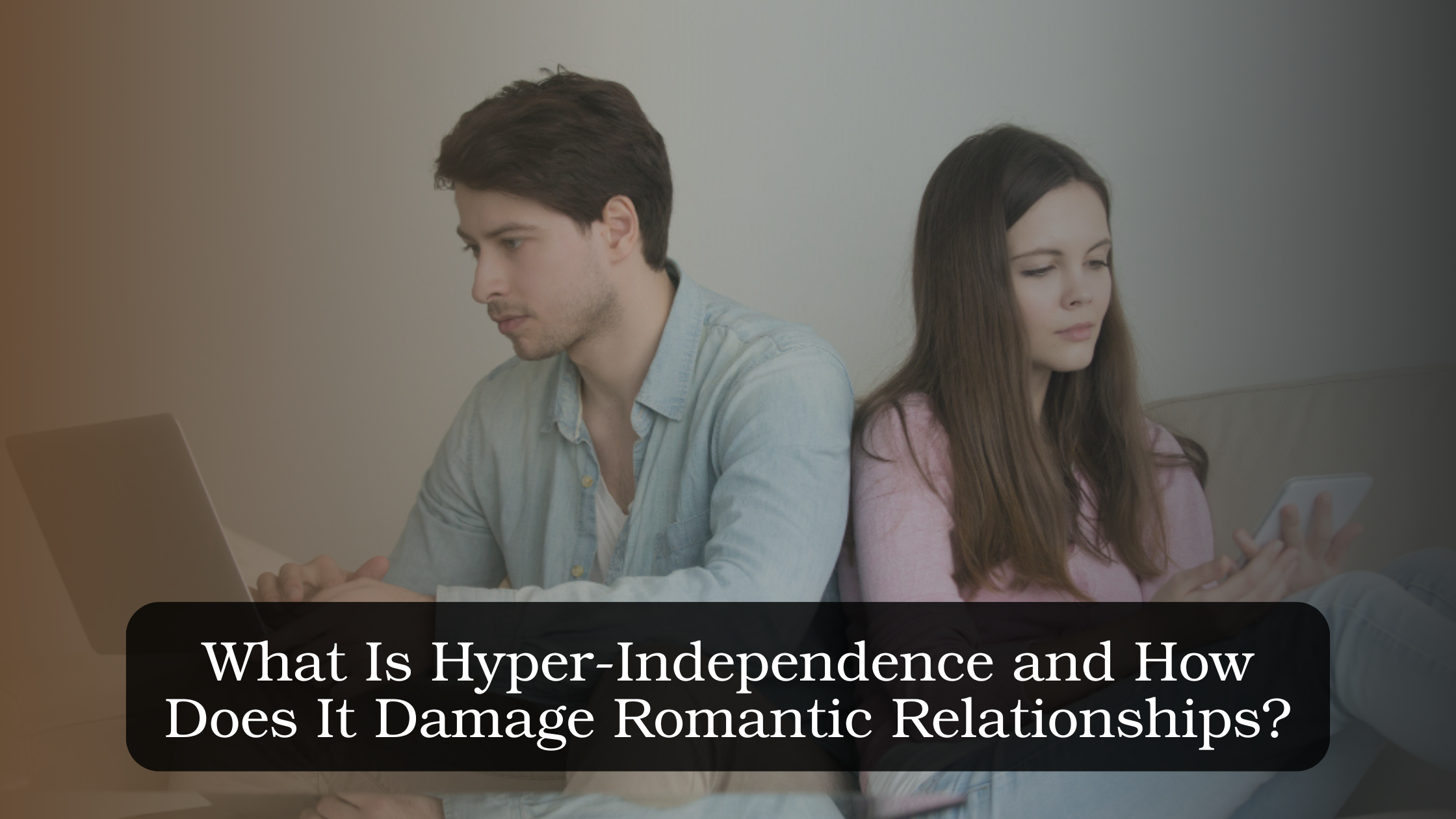
What Is Hyper-Independence and How Does It Damage Romantic Relationships?
Independence is often viewed as a strength in relationships. Being capable, confident, and comfortable handling life on your own can support personal identity. A partnership does not require two people to give up their individuality; it allows both partners to remain independent while supporting one another.
However, healthy independence is different from hyper-independence. Hyper-independence is a protective pattern in which someone feels they must handle everything alone, avoid relying on others, and hide emotional needs. What looks like confidence from the outside can make vulnerability, trust, and emotional closeness difficult.
In Los Angeles, where ambition and self-sufficiency are valued, hyper-independence can easily be mistaken for emotional strength. In his work with individuals and couples, Dr. Harel helps clients understand the difference and develop healthier ways to balance autonomy with connection. the kind of work couples therapy can support even outside a crisis.
What Is Hyper-Independence?
Hyper-independence is a pattern of believing that relying on other people is unsafe, uncomfortable, or unnecessary. Instead of seeing support as a normal part of close relationships, a hyper-independent person may feel responsible for handling almost everything alone.
This differs from simply being capable or valuing personal space. Healthy independence leaves room for connection, while hyper-independence can make vulnerability feel threatening.
A hyper-independent person may:
- Avoid asking for help, even when overwhelmed.
- Feel uncomfortable receiving emotional support.
- Hide stress, sadness, or disappointment.
- Solve problems alone before telling their partner.
- Minimize their emotional needs.
- Feel guilty about depending on someone.
From the outside, these behaviors can look like strength. Internally, they can create pressure because needing others feels like weakness.

Where Does Hyper-Independence Come From?
Hyper-independence often develops as a protective response to earlier experiences. A person may have learned that depending on others leads to disappointment, criticism, rejection, or being ignored.
Common experiences include:
- Having emotionally unavailable caregivers.
- Being expected to become responsible too early.
- Growing up in an unpredictable environment.
- Experiencing inconsistent emotional support.
- Learning that vulnerability was dismissed or criticized.
- Being made to feel like a burden when asking for help.
Imagine a child who repeatedly hears, “Handle it yourself,” whenever they are upset. Over time, they may learn that expressing needs is unsafe. As an adult, that lesson can become, “I should never need anyone.”
That protective strategy can later interfere with intimacy. one of many ways childhood experiences shape adult relationships.
Difference between Healthy Independence vs. Hyper-Independence
Healthy independence and hyper-independence may look similar at first, but the difference is flexibility.
| Healthy Independence | Hyper-Independence |
| Comfortable asking for help | Avoids help whenever possible |
| Values personal space | Uses distance to avoid vulnerability |
| Shares responsibilities | Believes everything must be handled alone |
| Communicates emotional needs | Hides or minimizes needs |
| Trusts others appropriately | Finds trusting others difficult |
A healthy independent person can say, “I can handle this,” but can also say, “I could use your help.” Hyper-independence makes the second statement harder.
How Hyper-Independence Affects Romantic Relationships
Romantic relationships depend on mutual support. Partners do not need to become dependent on each other; both should feel able to give and receive care.
When one partner handles everything alone, the other may feel excluded.
They may wonder:
- “Why won’t they let me help?”
- “Do they actually trust me?”
- “Why don’t they tell me what is bothering them?”
- “Do they even need me?”
Consider a couple in Los Angeles. One partner is under pressure at work but repeatedly says everything is fine. They work longer hours, withdraw emotionally, and try to solve the problem alone.
Eventually, the other partner may stop asking. The hyper-independent person may then feel lonely or misunderstood, while their partner feels shut out.
Neither person necessarily wants distance, but the pattern creates it often resembling the pursuer-distancer cycle in slow motion.
Why Does Vulnerability Feel So Uncomfortable?
For someone who is hyper-independent, vulnerability can feel like risk rather than connection.
Opening up may trigger thoughts such as:
- “I’ll become a burden.”
- “They’ll think less of me.”
- “They’ll disappoint me.”
- “I should be able to handle this myself.”
These reactions may happen automatically. The person may be responding to an old belief about emotional safety.
Avoiding vulnerability, however, also prevents closeness. If you never tell your partner what you need, they have fewer opportunities to show that they can support you.
Signs Hyper-Independence May Be Affecting Your Relationship
Hyper-independence can be difficult to recognize because it often looks like competence.
Some signs include:
- You rarely ask for practical or emotional support.
- You become uncomfortable when someone offers help.
- You keep difficult emotions private.
- You solve problems before discussing them.
- You feel responsible for carrying everything yourself.
- You worry that expressing needs will make you seem needy.
- Your partner describes you as distant or difficult to read.
- You find receiving care harder than giving it.
These behaviors do not automatically mean hyper-independence. The concern is when self-reliance becomes rigid and gets in the way of closeness.
The Hidden Cost of “I Don’t Need Anyone”
The belief that “I don’t need anyone” can feel protective because it reduces the risk of disappointment. But it can also prevent a partner from experiencing the trust that comes from being allowed to help.
Over time, hyper-independence may contribute to:
| Pattern | Possible Relationship Impact |
| Emotional self-reliance | Reduced intimacy |
| Avoiding vulnerability | Less trust and openness |
| Refusing support | Partner feels excluded |
| Hiding emotions | Superficial communication |
| Carrying everything alone | Greater stress and loneliness |
The relationship can begin to feel like two people living parallel livesthe same territory covered in what emotional avoidance does to relationships.
How to Develop Healthier Interdependence
The goal is not to become dependent on your partner for everything. Healthy relationships involve interdependence: both people maintain their individuality while feeling safe enough to rely on each other.
Start with small steps:
- Ask for help with something simple.
- Tell your partner when you are having a difficult day.
- Accept support without immediately trying to repay it.
- Share a concern before it becomes overwhelming.
- Notice what you feel when someone takes care of you.
- Practice saying, “I could use some help.”
For example, instead of waiting until you are overwhelmed, you might tell your partner, “Work has been a lot this week. I don’t need you to fix it, but I’d like to talk about it.”
Learning to receive support can be just as important as learning to offer it.

Working With Dr. Harel to Build Healthier Relationship Patterns
Recognizing hyper-independence is an important first step, but changing deeply established patterns can take time. Therapy can provide a space to understand these patterns and develop healthier ways of relating.
In his Los Angeles practice, Dr. Harel works with individuals and couples experiencing emotional distance, communication difficulties, and challenges with intimacy.
With the right support, individuals can learn to:
- Recognize the beliefs driving hyper-independence.
- Become more comfortable expressing emotional needs.
- Accept support without feeling weak or dependent.
- Communicate openly before problems become overwhelming.
- Build trust while maintaining healthy individuality.
The goal is not to eliminate independence. It is to create a healthier balance between autonomy and connection. the kind of work couples therapy can support even outside a crisis.
Final Thoughts
Being independent is a strength.
Believing you must handle every challenge alone can become a barrier to intimacy.
Hyper-independence often develops as a protective response to disappointment, rejection, inconsistency, or emotional pain. While self-reliance may once have helped someone feel safe, it can eventually make it harder to experience the closeness they want.
Healthy relationships do not require two people who never need each other. They require people who can stand on their own while feeling safe enough to lean on each other.
Asking for support and allowing a partner to show up for you are not signs of weakness. They are part of building trust and emotional security.
For individuals and couples in Los Angeles, recognizing hyper-independence can be a first step toward connection.
Frequently Asked Questions
No. Hyper-independence is generally considered a coping pattern rather than a diagnosis. It can affect relationships when self-reliance becomes rigid.
It can create problems when emotional distance prevents partners from supporting one another. It does not automatically mean a relationship will fail.
No. Healthy independence allows autonomy while accepting support. Hyper-independence makes relying on others feel uncomfortable or unsafe.
Consider whether you avoid asking for help, hide emotions, feel uncomfortable receiving care, or believe you should solve every problem alone. If these patterns interfere with closeness, therapy may help.
Yes. Therapy can help you understand where the pattern developed and practice communicating needs, accepting support, and building trust without giving up independence.
Avoid forcing vulnerability or criticizing self-reliance. Respect their autonomy while consistently showing that support is available. Emotional safety can make connection easier over time.

Harel Papikian
Dr. Harel Papikian is a clinical psychologist and couples therapist with more than 15 years of experience. He offers marriage counseling and couples therapy in los Angeles. It help’s couples navigate their relationship challenges and deepen their connection. Our clinic uses a unique ARM method (Awareness, Release, Mastery) to achieve rapid and profound results for our clients. We serve a diverse clientele, including LGBTQ+ and heterosexual couples, addressing issues like communication breakdowns, conflict resolution, intimacy, and trust. You can also get individual therapy sessions for concerns like depression, anxiety, and trauma.
Leave a Reply