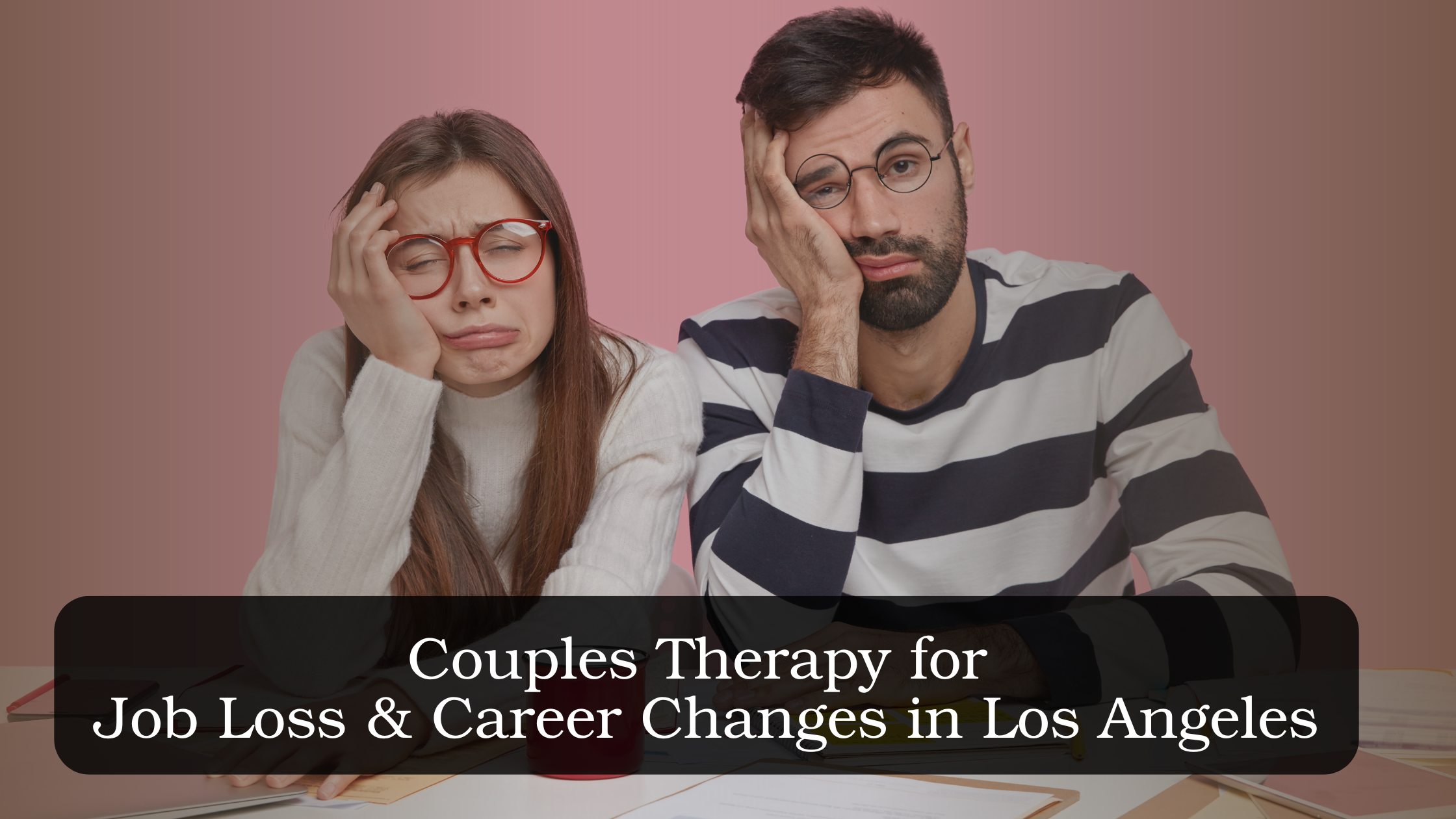
Couples Therapy for Job Loss & Career Changes in Los Angeles
A job loss or major career change can affect far more than someone’s professional life. It can change a couple’s finances, routines, responsibilities, confidence, future plans, and sense of stability. For couples in Los Angeles, where work can be closely tied to lifestyle, identity, and long-term goals, an unexpected layoff, business setback, career transition, or decision to change direction can place significant pressure on the relationship.
When one partner loses a job, both partners may suddenly have to reconsider spending, household responsibilities, childcare, savings, and plans for the future. Even couples with a strong relationship can find themselves arguing more often or feeling emotionally distant during a prolonged period of uncertainty.
A voluntary career change can create similar challenges. Starting a business, changing industries, returning to school, reducing work hours, or pursuing a different professional path may be personally meaningful while still creating financial and emotional uncertainty within the relationship.
Couples therapy provides a space to address the relationship impact of these changes together, rather than allowing career stress to gradually become a source of resentment, conflict, or disconnection.
How Job Loss Can Affect a Relationship
Losing a job can bring anxiety, frustration, shame, anger, grief, and uncertainty. The partner who has been laid off may worry about finding another position, maintaining their professional identity, or continuing to contribute financially.
The other partner may be thinking about mortgage or rent payments, childcare, healthcare, savings, debt, or maintaining the household’s financial stability. They may suddenly feel pressure to become the primary provider.
These reactions can coexist without either partner being wrong. The difficulty often develops when partners respond to the situation differently.
One person may need reassurance and emotional support, while the other immediately focuses on applications, interviews, finances, and practical solutions. Questions intended as concern can feel like criticism. Attempts to offer solutions can be experienced as pressure.
Couples Therapy can help couples understand these different responses and communicate without turning understandable stress into personal conflict.

When Financial Stress Becomes Relationship Stress
Money is often one of the first areas affected by unemployment or a major career transition.
Couples may need to discuss:
- Reducing expenses
- Using savings
- Delaying major purchases
- Managing debt
- Changing housing plans
- Taking on additional work
- Adjusting childcare arrangements
- Revisiting retirement plans
- Reconsidering long-term goals
These discussions are rarely only about numbers.Money can represent security, independence, freedom, responsibility, or control the same emotional weight explored in how financial stress affects a relationship.
One partner may prioritize protecting savings, while the other may believe spending is necessary to maintain normalcy. Without productive communication, financial decisions can quickly become arguments about responsibility or trust.
Couples therapy does not replace financial planning. Instead, it can help partners separate the practical financial problem from the emotional conflict surrounding it.
When the Job Search Takes Over the Relationship
After a job loss, the search for employment can become the center of daily life.
Conversations may repeatedly return to applications, interviews, recruiters, résumés, networking, and responses from potential employers. The partner who keeps asking about progress may be motivated by financial anxiety. The person looking for work may already feel overwhelmed or ashamed and experience those questions as pressure.
Over time, both partners can become frustrated.
Creating some structure around career discussions can help. Couples may agree on when they will discuss finances or the job search while protecting other parts of the day for normal relationship conversations and activities.
How Career Identity Can Affect Emotional Intimacy
For many people, work is an important part of identity.
A sudden professional setback can raise difficult questions:
- Who am I if I am no longer doing this work?
- Will I be able to return to the career I had?
- Does my partner still respect me?
- Have I fallen behind?
- What happens if my next career is completely different?
These concerns can affect emotional intimacy. Someone experiencing professional uncertainty may withdraw, become irritable, lose confidence, or stop participating in activities they previously enjoyed.
The relationship can then become affected by emotions that originated outside it the same principle behind how stress impacts romantic relationships.
Couples therapy can help partners recognize this connection and address the emotional impact of career changes without reducing everything to the question of whether someone should find another job.
How Career Changes Can Affect a Relationship

When a Career Change Is Voluntary
Not every difficult career transition involves unemployment.
A partner may voluntarily leave a stable position to start a business, change industries, return to school, work fewer hours, or pursue a career that feels more meaningful.
One partner may feel excited about the opportunity while the other worries about income, risk, relocation, or uncertainty. Neither perspective necessarily means the couple has incompatible goals.
The challenge may be that they have different definitions of security and success.
Therapy can provide a structured setting to discuss expectations, financial risk, responsibilities, timelines, and what each partner needs from the other during the transition.
When Career Changes Alter Relationship Roles
A career transition can change how responsibilities are distributed within a household.
If one partner becomes the primary income earner, they may feel additional financial pressure. The partner whose income decreases or disappears may feel dependent, uncomfortable, or concerned about contributing less.
Conflict can develop when couples begin keeping score, a dynamic explored in how resentment builds in a relationship.
However, relationships involve many forms of contribution. Income is only one. Childcare, household responsibilities, emotional support, planning, errands, and other forms of practical work also matter.
Couples therapy can help partners talk about changing roles without turning contribution into a competition.
When a Career Change Creates More Time Together
Unemployment, remote work, entrepreneurship, or a significant change in working hours can dramatically alter a couple’s daily routine.
Partners who previously spent most of the day apart may suddenly spend much more time together. This can create opportunities for connection, but it can also expose differences around privacy, routines, household responsibilities, and personal space.
One partner may want more interaction while the other needs uninterrupted time.
A healthier arrangement usually requires room for both connection and independence. Couples can work together to establish routines that reflect their new circumstances rather than assuming the old routine will continue to work.
How Couples Can Support Each Other
During a career transition, small changes in communication can make a meaningful difference.
Partners can:
- Schedule regular conversations about finances.
- Agree on when to discuss the job search or career plans.
- Ask whether the other person wants advice or simply wants to be heard.
- Maintain routines that are unrelated to work.
- Protect time for shared activities.
- Discuss changes in household responsibilities openly.
- Continue emotional and physical affection.
- Respect each other’s need for personal space.
- Revisit plans as circumstances change.
The goal is not to eliminate uncertainty. It is to prevent uncertainty from becoming the entire relationship.
How Couples Therapy Can Help With Job Loss and Career Changes
Couples therapy can provide a structured environment for addressing both the practical and emotional effects of career uncertainty.
Rather than treating the unemployed or career-changing partner as the sole focus, therapy considers how the transition is affecting both people and the relationship between them.
Dr. Harel can help couples explore:
- Communication patterns that emerge under financial pressure
- Conflict about money and responsibilities
- Changes in emotional intimacy
- Career-related shame or insecurity
- Differences in expectations about work and family life
- Shifting household roles
- Anxiety surrounding major decisions
- Repeated patterns of criticism, defensiveness, withdrawal, or pressure
Career stress can easily be displaced onto a partner. Frustration after a failed interview may come out as anger at home. Financial fear may become criticism. Professional insecurity may lead someone to withdraw emotionally.
Understanding these connections can help couples respond to each other with greater awareness rather than reacting from fear, frustration, or uncertainty.
When Should You Consider Couples Therapy?
Couples therapy may be worth considering when career-related stress begins affecting the relationship itself.
Some signs include:
- Arguments about money are becoming frequent.
- One partner feels constantly pressured.
- The unemployed partner feels criticized or ashamed.
- Emotional or physical intimacy has decreased.
- Career decisions repeatedly lead to conflict.
- Household responsibilities have become a source of resentment.
- One partner has become increasingly withdrawn or irritable.
- You disagree about major financial or career decisions.
- You struggle to support each other emotionally.
- You increasingly feel like opponents rather than partners.
You do not have to wait until the relationship is in crisis. Addressing communication problems while circumstances are still changing can make it easier to prevent temporary career stress from becoming a lasting relationship pattern.
How Dr. Harel Can Help Couples During Career Transitions
Dr. Harel Papikian is a licensed clinical psychologist in Los Angeles with more than 16 years of experience working with individuals and couples.
When career changes affect a relationship, he works with couples to understand what is happening beneath the immediate disagreement. A conflict about spending, job applications, household responsibilities, or career decisions may also involve fears about security, independence, identity, respect, or the future.
Dr. Harel’s ARM Method can help couples communicate about these concerns and understand recurring relationship patterns.
The focus is not simply on resolving the latest argument. It is on understanding how the couple is responding to a period of uncertainty and developing healthier ways to navigate it together.
Moving Through Career Changes Together
.A job loss or career transition is one of the clearest examples of how major life transitions reshape a relationship. It can be a difficult period without necessarily becoming a lasting relationship problem.
The important question is not whether a couple can eliminate uncertainty. Career changes often involve circumstances neither partner can completely control. What matters is how the couple communicates, makes decisions, handles changing roles, and stays connected while those circumstances unfold.
For couples in Los Angeles navigating unemployment, entrepreneurship, career uncertainty, or a major professional transition, couples therapy can provide a dedicated space to understand the relationship impact of these changes and work toward healthier ways of moving forward together.
Frequently Asked Questions
Yes. Job loss can affect finances, identity, routines, responsibilities, confidence, and future plans. These changes can influence how partners communicate and respond to one another.
Repeated questions may come from financial anxiety or concern about the future. However, they can feel like pressure to someone already experiencing stress about employment. Agreeing on when and how to discuss the job search can reduce tension.
Both partners may experience the situation differently. Couples therapy can provide space to address the emotional impact on the unemployed partner while also acknowledging the financial and practical concerns of the other partner.
It can help couples communicate about the emotional and relationship aspects of financial disagreements. Therapy does not replace financial advice or planning, but it can address fear, resentment, expectations, and communication patterns surrounding money.
Therapy can help partners understand why they have different perspectives, discuss financial and personal risks, clarify priorities, and work through disagreements without turning the decision into a win-or-lose situation.
Yes. Stress, uncertainty, reduced confidence, exhaustion, and changes in daily routines can affect both emotional and physical intimacy.
Not necessarily. The relationship difficulties created by uncertainty can develop while the career situation is still unresolved. Couples therapy can help partners manage communication, expectations, and connection during the transition.

Harel Papikian
Dr. Harel Papikian is a clinical psychologist and couples therapist with more than 15 years of experience. He offers marriage counseling and couples therapy in los Angeles. It help’s couples navigate their relationship challenges and deepen their connection. Our clinic uses a unique ARM method (Awareness, Release, Mastery) to achieve rapid and profound results for our clients. We serve a diverse clientele, including LGBTQ+ and heterosexual couples, addressing issues like communication breakdowns, conflict resolution, intimacy, and trust. You can also get individual therapy sessions for concerns like depression, anxiety, and trauma.
Leave a Reply