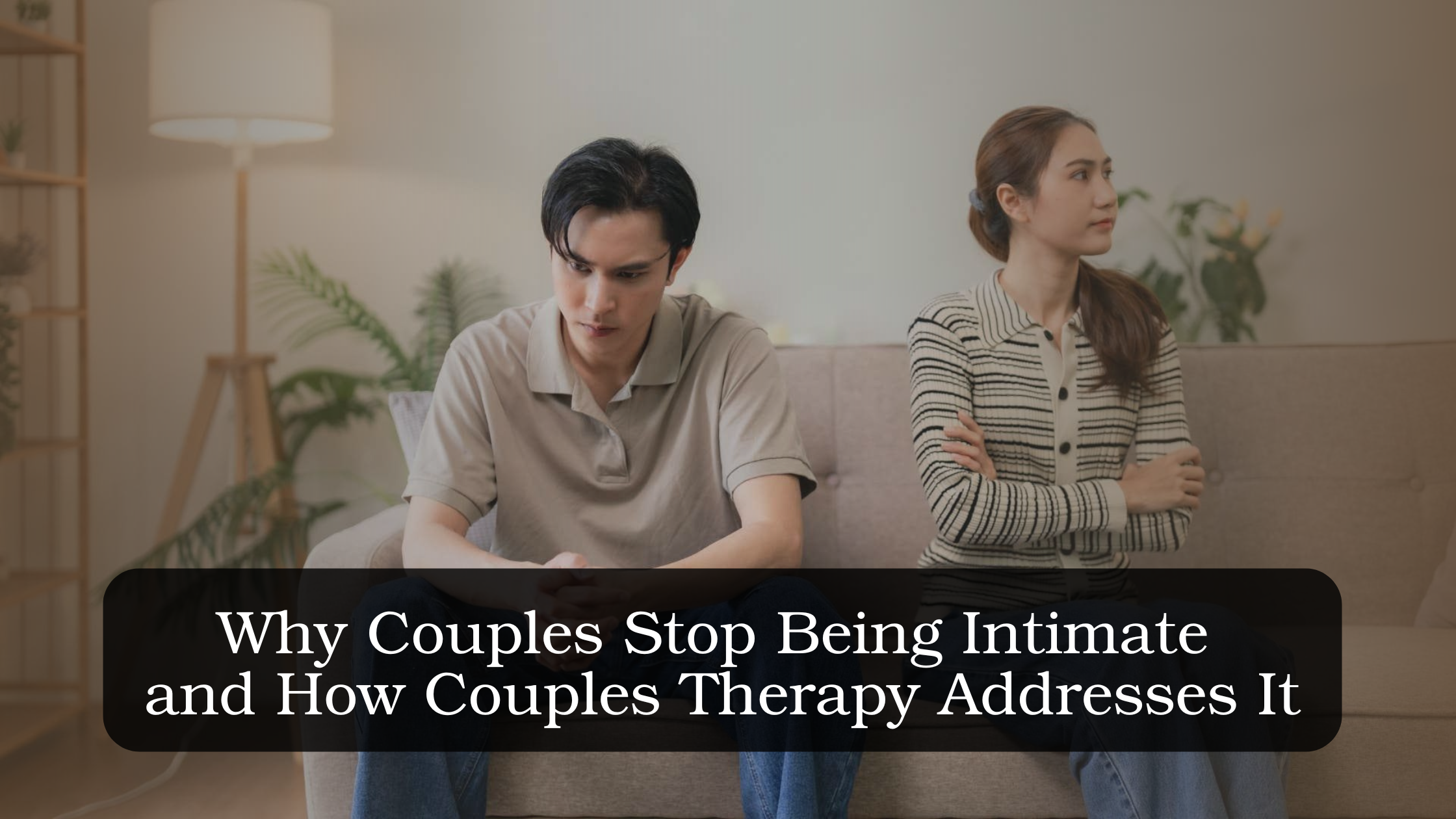
Why Couples Stop Being Intimate and How Couples Therapy Addresses It
Intimacy can change considerably over the course of a relationship. Couples who once felt naturally close may eventually have less sex, less physical affection, fewer meaningful conversations, or less willingness to be emotionally vulnerable. A change in intimacy does not automatically mean that love has disappeared. Stress, unresolved conflict, exhaustion, parenting, health concerns, changing responsibilities, and emotional disconnection can all influence how partners connect.
Sometimes the change happens so gradually that couples do not recognize how distant they have become until the lack of closeness starts affecting the relationship. Partners may still manage their household, work, finances, and family responsibilities while feeling increasingly disconnected from each other.
Understanding why intimacy has changed is often more useful than focusing only on how often a couple has sex. Therapy can help partners look beneath the visible change, identify the factors affecting connection, and work toward a form of intimacy that fits their relationship as it exists today.
What Does Intimacy Actually Mean?
Intimacy is broader than sexual activity.
It can include emotional vulnerability, physical affection, meaningful conversations, trust, shared experiences, feeling understood, and feeling safe enough to be open with your partner. Sexual connection can be an important part of intimacy, but it is only one aspect.
A couple may have frequent sex while feeling emotionally distant. Another couple may have little sexual activity during a demanding period while remaining emotionally close and supportive.
This distinction matters because the appropriate response depends on what kind of intimacy has changed and why.

Why Do Couples Stop Being Intimate?
There is rarely one explanation. Intimacy often changes because several relationship, personal, and situational factors begin interacting.
Stress and Exhaustion
Work pressure, financial concerns, parenting, caregiving, household responsibilities, and lack of sleep can leave partners with little energy for connection.
When couples spend most of their time managing practical demands, intimacy can repeatedly get postponed. Eventually, postponing connection can become the normal pattern.
The issue may not be a lack of love see also how stress impacts romantic relationships more broadly.
Unresolved Conflict and Resentment
It can be difficult to feel affectionate toward someone when you are carrying unresolved anger or hurt.
A couple may continue functioning well on the surface while avoiding difficult conversations. Over time, small disagreements can accumulate into resentment, making emotional and physical closeness more difficult.
For some couples, what appears to be a sexual problem is partly a relationship problem that has never been addressed.
Emotional Disconnection
Intimacy often begins outside the bedroom.
If partners stop asking about each other’s experiences, rarely discuss their thoughts and feelings, or communicate mainly about schedules and responsibilities, emotional closeness can gradually decline.
Eventually, the relationship may start feeling more like a practical partnership than a romantic one.
Changes in Attraction
Attraction naturally fluctuates for many people in long-term relationships. Bodies change, circumstances change, and partners change.
Some people become anxious when attraction feels different from the beginning of the relationship and assume that something must be wrong. Others experience a persistent change in attraction that deserves honest exploration.
Neither situation needs to be immediately interpreted as proof that a relationship is failing. The more useful question is what the change means and what else may be happening in the relationship.
Parenting and Family Responsibilities
Having children can significantly alter a couple’s relationship.
Sleep deprivation, childcare, reduced privacy, and competing schedules echo the same shifts described in why relationships feel different after having children.Partners can gradually become focused almost entirely on being parents and lose touch with their identity as a couple.
Rebuilding intimacy in this situation may require creating space for the relationship rather than simply expecting desire to return on its own.
How Differences in Desire Can Create Pressure Between Partners
Differences in desire can create a difficult cycle.
One partner may want more physical or emotional intimacy and begin pursuing connection more frequently. The other may experience those attempts as pressure and withdraw further.
The withdrawal can increase the first partner’s anxiety, leading them to pursue more strongly. Eventually, one person feels rejected while the other feels pressured.
Neither partner necessarily intends to create this dynamic. Yet once established, it can become self-reinforcing this is the pursuer-distancer cycle applied to physical and emotional intimacy specifically.
Therapy can help couples understand the cycle rather than reducing the problem to “one partner wants sex and the other doesn’t.”
How Emotional Safety Affects Physical Intimacy
Sexual intimacy involves vulnerability. For some people, feeling emotionally disconnected, criticized, rejected, or unsafe in the relationship can affect desire.
At the same time, not every change in sexual desire is caused by relationship difficulties.
Medical conditions, hormonal changes, medications, pain, sleep problems, stress, and other physical factors can influence sexual functioning and desire. Individual experiences and mental health can also play a role.
That is why intimacy concerns sometimes require attention at both the relationship and individual levels. When appropriate, discussing physical or sexual health concerns with a physician or other qualified healthcare professional can be an important part of understanding the situation.
How Resentment Can Interfere With Emotional and Physical Intimacy
Resentment can quietly change how partners experience each other.
Consider someone who feels they carry most of the household responsibilities. They may still love their partner, but repeated feelings of unfairness can make affection more difficult.
The same can happen when someone feels constantly criticized. Rather than moving toward their partner, they may begin protecting themselves through emotional or physical withdrawal.
In these situations, trying to increase romance without addressing the resentment may not solve the underlying problem.
The question becomes less about “How do we have more sex?” and more about what’s driving the underlying resentment in the first place.
Why Couples Avoid Talking About Intimacy
Intimacy can be difficult to discuss because the subject is personal and emotionally vulnerable.
One partner may be afraid to say, “I don’t feel desired anymore.” Another may worry that admitting a decrease in sexual interest will hurt their partner.
Some couples avoid the conversation because they expect it to become an argument.
Silence, however, can leave both partners filling in the gaps themselves. One may assume they are no longer attractive. The other may assume their partner is no longer interested in the relationship.
A direct but non-accusatory conversation can replace those assumptions with information.

How Couples Therapy Addresses Intimacy Problems
Couples therapy is not simply about encouraging partners to have more sex.
The therapist may help the couple understand what changed and what is maintaining the distance.
Depending on the situation, therapy may explore:
- Communication patterns
- Emotional disconnection
- Resentment and unresolved conflict
- Differences in desire
- Attachment needs
- Expectations around intimacy
- Stress and relationship roles
- Trust and emotional safety
- Major life transitions
- Individual experiences affecting desire
A therapist can also help partners discuss sensitive subjects without immediately moving into criticism, defensiveness, pressure, or withdrawal.
How to Rebuild Intimacy Outside the Bedroom
When couples are worried about sexual intimacy, they sometimes overlook the smaller forms of connection that support closeness.
Reconnection may begin with:
- Having conversations that are not about logistics
- Showing physical affection without making it an expectation for sex
- Expressing genuine appreciation
- Spending uninterrupted time together
- Sharing experiences and activities
- Asking about each other’s emotional experiences
- Making room for laughter and play
- Addressing resentment rather than avoiding it
- Protecting individual time and interests
These actions are not a formula for restoring desire. They can, however, help create the emotional conditions in which connection becomes easier.
Why Couples Should Not Turn Intimacy Into a Performance
Couples can create additional pressure when they start treating intimacy as a measurement of relationship health.
Questions such as “How often should we be having sex?” or “Are we normal?” can become another source of anxiety.
There is no universal amount of sex or physical affection that defines a healthy relationship.
What matters is whether partners can communicate about intimacy honestly, respect each other’s boundaries, understand differences in desire, and work together toward a relationship that feels fulfilling to both people.
Can Intimacy Return After a Period of Disconnection?
Intimacy can change again when the factors contributing to disconnection are addressed, although there is no guarantee that a relationship will return to exactly how it felt at the beginning.
That is not necessarily the goal.
Long-term relationships evolve. The intimacy a couple develops after years together may look different from the excitement of a new relationship. Partners may become more honest about their needs, understand each other’s vulnerabilities better, and create forms of closeness that reflect their current lives.
The goal is not necessarily to recreate the honeymoon period. It is to develop a relationship in which both partners can experience connection, respect, affection, vulnerability, and sexual intimacy in ways that work for them.
When Should Couples Consider Therapy?
Professional support may be helpful when:
- Intimacy has declined for an extended period.
- Conversations about intimacy repeatedly become arguments.
- One partner feels consistently rejected or unwanted.
- The other partner feels pressured.
- Resentment has begun affecting affection.
- Emotional connection has significantly decreased.
- Sexual concerns are creating ongoing distress.
- Infidelity has affected trust and intimacy.
- A major life transition has changed the relationship.
- Partners feel unable to discuss intimacy openly.
Couples do not need to wait until they are considering separation. Therapy can also be useful when both partners recognize that they have become disconnected and want to understand why.
How Dr. Harel Can Help With Intimacy Concerns
Dr. Harel Papikian is a licensed clinical psychologist in Los Angeles with more than 16 years of experience working with individuals and couples.
When couples seek help for intimacy concerns, Dr. Harel can look beyond the immediate question of sexual frequency and explore the relationship patterns surrounding it. This may include emotional distance, recurring conflict, resentment, communication difficulties, differences in expectations, attachment needs, and changes in how partners respond to one another. Dr. Harel’s ARM Method provides one structured way to work through these overlapping factors.
For couples who find conversations about intimacy difficult, therapy can provide a structured setting where both partners can discuss sensitive concerns without reducing the problem to blame or rejection.
The goal is to understand what is interfering with connection and help partners develop healthier ways of relating to each other.
Frequently Asked Questions
Intimacy can fluctuate throughout a relationship. Stress, parenting, health concerns, work, emotional changes, and other circumstances can affect physical and emotional closeness. A decrease in intimacy does not automatically mean that a relationship is failing.
There can be many possible reasons, including stress, exhaustion, emotional disconnection, relationship conflict, physical health factors, medications, pain, changes in attraction, or personal concerns. It is better to explore the reason than assume what your partner is feeling.
It can. For some people, unresolved conflict, resentment, reduced emotional closeness, or feeling disconnected from their partner can influence sexual desire.
Not necessarily. Love and sexual desire are related but are not identical experiences. Changes in sexual activity can have many causes.
Differences in desire are common. Couples can work on understanding the needs, emotions, expectations, and concerns behind the difference without turning intimacy into a demand or obligation.
It can help couples explore relationship factors that may be affecting intimacy, including communication, resentment, emotional disconnection, trust, conflict, and differences in expectations or desire.
Sometimes. Medical conditions, medications, hormonal changes, pain, sleep problems, and other physical factors can affect sexual desire and functioning. A qualified healthcare professional can help evaluate potential physical contributors.

Harel Papikian
Dr. Harel Papikian is a clinical psychologist and couples therapist with more than 15 years of experience. He offers marriage counseling and couples therapy in los Angeles. It help’s couples navigate their relationship challenges and deepen their connection. Our clinic uses a unique ARM method (Awareness, Release, Mastery) to achieve rapid and profound results for our clients. We serve a diverse clientele, including LGBTQ+ and heterosexual couples, addressing issues like communication breakdowns, conflict resolution, intimacy, and trust. You can also get individual therapy sessions for concerns like depression, anxiety, and trauma.
Pingback: Is Lesbian Bed Death a Real Phenomenon? - westhollywoodcouples.com