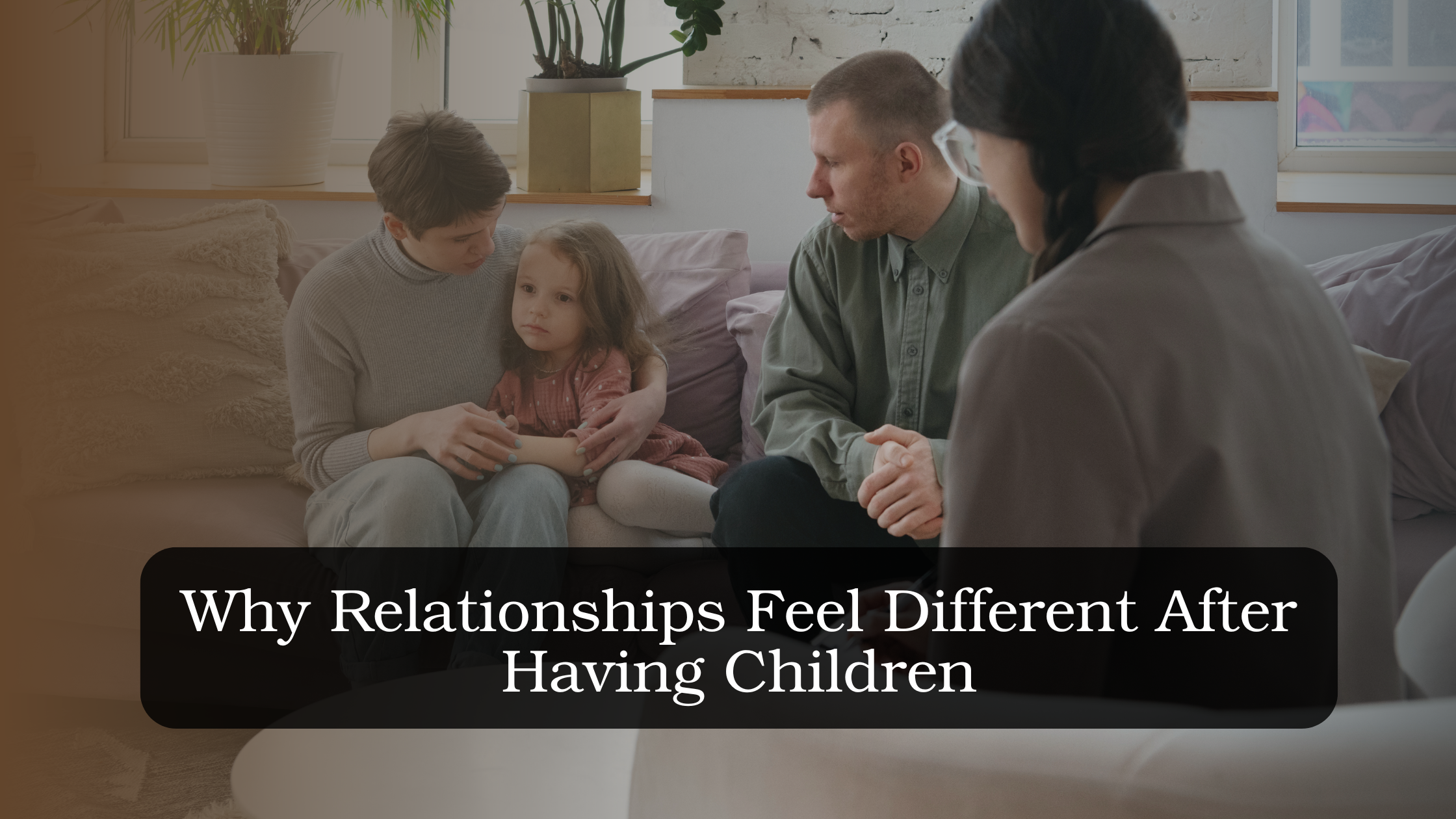
Why Relationships Feel Different After Having Children
Having a child can transform nearly every part of daily life, including the relationship between partners. Time, attention, energy, responsibilities, and identity begin to shift, and the connection that once felt spontaneous may suddenly require more effort. Even when love remains strong, emotional closeness and intimacy can become harder to maintain.
For some couples, this change feels confusing because nothing dramatic has happened. There may be no betrayal, major conflict, or loss of commitment, yet the relationship can begin to feel distant, functional, or unfamiliar. Parenthood can quietly reorganize how partners relate to one another.
Understanding these changes can help couples respond with compassion instead of assuming something is wrong. Recognizing how parenthood reshapes connection can make it easier to rebuild intimacy while creating a relationship that fits this new stage of family life.
How Parenthood Can Change the Relationship

The Relationship Shifts From “Partner-Focused” to “Child-Centered”
Before having children, couples often have more time and energy directed toward each other. Conversations can happen spontaneously, shared experiences are easier to plan, and emotional availability is often more accessible.
After a child arrives, attention naturally shifts toward caregiving. Parents become highly focused on the child’s needs, leaving less emotional and practical energy for the partnership itself.
This can mean:
- Conversations become more task-oriented
- Spontaneity is replaced by scheduling
- Intimacy competes with exhaustion
- Emotional energy is redirected toward caregiving
A couple may go from regular dinners and long conversations to discussing feeding schedules, daycare, work, appointments, and bedtime. Nothing is necessarily broken, but the emotional space between partners has been redistributed. Nothing is necessarily broken, but the emotional space between partners has been redistributed which is part of why couples therapy can be one of the best investments new parents make, even proactively.
Exhaustion Becomes a Third Partner
One of the most significant changes after having children is ongoing fatigue. Sleep disruption, multitasking, childcare, and emotional responsibilities can leave both partners with less capacity to communicate calmly.
When people are exhausted:
- Patience decreases
- Emotional regulation becomes harder
- Small frustrations feel larger
- Conflict can escalate more quickly
A disagreement about chores or timing may therefore become much more emotionally charged than it would have been before parenthood.
Exhaustion can almost feel like a third presence in the relationship because it affects tone, patience, emotional availability, and how partners interpret one another. A neutral comment may suddenly feel irritating or dismissive simply because both people are already overwhelmed.
The Loss of Spontaneous Emotional Connection
Before children, connection often happens naturally through shared activities, physical closeness, conversation, or unplanned moments together. After children, those moments often have to be created intentionally.
Couples may notice:
- Fewer uninterrupted conversations
- Reduced physical intimacy
- Less time for emotional check-ins ( one of the core habits behind ongoing relationship maintenance.)
- More conversations about logistics than feelings
The relationship may not have become less important. Instead, daily life may no longer automatically create the conditions that supported connection before.
Without intentional effort, emotional closeness can gradually move into the background of parenting and household responsibilities.
Some Changes That Can Create Emotional Distance

Identity Shifts Can Create Emotional Distance
Parenthood is not only a change in responsibilities; it can also be a major shift in identity.
Each partner may begin thinking of themselves differently:
- “I am a mother or father now.”
- “My responsibilities have changed.”
- “My priorities are different.”
This transformation can be meaningful while still creating challenges. People may feel that they are no longer primarily partners but caregivers, or that their individual needs and identities have become less visible.
When identity becomes heavily centered around parenting, the romantic identity within the relationship can become less active. This does not necessarily indicate a loss of love. It can simply reflect how much of each person’s identity is now being devoted to family responsibilities.
Unequal Emotional Load Can Create Resentment
Even when both partners are committed to parenting, the emotional and physical workload may not always feel equal.
One partner may carry more responsibility for:
- Managing schedules
- Anticipating the child’s needs
- Organizing appointments
- Coordinating childcare
- Handling daily household decisions
Over time, an imbalance can contribute to quiet resentment, feeling unsupported, emotional withdrawal, or greater sensitivity during disagreements.
The partner carrying more of the emotional load may feel unseen or overwhelmed, while the other partner may feel criticized or uncertain about how to contribute more effectively.
The issue is not always simply how much each person does. It can also be about whether each partner feels that their effort is recognized and shared fairly.
Communication Becomes More Functional
Parenthood often changes not only how much couples communicate, but what they communicate about.
Instead of discussing feelings, hopes, or experiences, conversations may revolve around:
- “Did you pick up milk?”
- “What time is the appointment?”
- “Who is handling bedtime?”
Functional communication is necessary, but when it becomes the dominant form of communication, emotional intimacy can gradually decrease.
Partners may begin to feel more like collaborators managing a household than emotional companions a shift that stress often accelerates even outside of parenthood. This is one reason some couples describe feeling more like roommates after having children.
How Parenthood Can Affect Intimacy and Conflict
Conflict Increases, but Repair Time Decreases
Couples do not necessarily become less compatible after having children. Conflict can increase because stress increases while emotional bandwidth decreases.
What can change most significantly is the opportunity for repair.
After having children:
- Conversations may be interrupted
- Sleep may take priority over resolving disagreements
- Emotional fatigue can delay difficult conversations
- Problems may be postponed rather than addressed
When repair does not happen consistently, smaller frustrations can accumulate. Over time, unresolved tension can make the relationship feel more distant even when individual disagreements seem relatively minor.
Intimacy Becomes More Complex
Physical and emotional intimacy can also change significantly after children.
Common factors include:
- Fatigue
- Reduced privacy
- Changes in body image and identity
- Emotional depletion
- Limited time
These changes do not automatically mean attraction or love has disappeared. Often, both partners simply have less emotional and physical capacity than they had before.
Without communication, however, reduced intimacy can be interpreted as rejection or disinterest. That interpretation can create additional emotional distance and make reconnection even more difficult.
Why These Changes Feel So Confusing
Parenthood can create an emotional contradiction.
You can simultaneously:
- Love your child deeply
- Remain committed to your partner
- Find family life meaningful
- Miss the emotional connection you once had
- Feel that spontaneity has disappeared
- Want more time with your partner
These experiences can all be true at the same time.
Many couples assume that love should feel the same throughout every stage of life. In reality, love may remain strong while the way connection is expressed changes significantly.
Recognizing this difference can prevent couples from immediately interpreting reduced connection as evidence that something is wrong with the relationship.
How Couples Can Begin Rebuilding Connection
Reconnection after having children does not necessarily require dramatic changes. Small, consistent efforts can help create emotional space within a busy family life.
Couples can begin by:
- Creating short, regular emotional check-ins
- Separating logistical conversations from emotional conversations
- Acknowledging exhaustion rather than interpreting it as disinterest
- Sharing personal experiences, not only parenting updates
- Protecting small moments of distraction-free connection
Even a short conversation or a few intentional moments together can help partners remember that their relationship is more than the responsibilities they share.
The goal is not to recreate the relationship exactly as it was before children. Instead, couples can build a new form of connection that fits their current stage of life.
How Couples Therapy Supports Couples During This Transition
The transition to parenthood can involve several changes at once. Couples may be adapting to new identities, disrupted sleep, increased responsibilities, changing communication patterns, and less time for themselves and each other.
Therapy can provide a structured space to examine these changes without reducing them to a single problem.
For some couples, the goal may be improving communication. For others, it may involve addressing resentment, rebuilding emotional intimacy, or understanding why the relationship feels different.
The focus is not necessarily on returning to the relationship they had before becoming parents. Instead, therapy can help couples understand their current reality and develop a healthier way of connecting within it. Instead, therapy can help couples understand their current reality and develop a healthier way of connecting within it couples therapy can help even when there’s no single crisis driving it.
How Dr. Harel Deals With Relationships After Having Children
In his Los Angeles practice, Dr. Harel works with couples adjusting to the relationship changes that can come with parenthood. Therapy can help couples:
- Understand what has changed between them after having children.
- Improve communication when conversations have become mostly about parenting and daily responsibilities.
- Address emotional distance and resentment related to stress, changing roles, or unequal responsibilities.
- Rebuild emotional and physical connection in ways that fit their life as parents.
The focus is not on returning to exactly how the relationship was before children. It is about helping couples understand their new relationship dynamic and find ways to feel connected within it.
Final Thoughts
Having children does not necessarily weaken a relationship. It transforms it.
What once felt spontaneous may become intentional. What once felt effortless may require planning. What once centered primarily around two people now exists within a larger family system.
These changes can feel difficult, but they do not automatically mean that love or commitment has disappeared. When couples understand how parenthood has redistributed their time, attention, energy, and identities, they may be better able to respond with compassion rather than blame.
The relationship after children is not supposed to feel exactly like the relationship before children. It is meant to evolve.
With awareness, communication, and intentional care, couples can create a different form of connection—one that reflects the realities of their new life while still protecting the partnership at its center.
Frequently Asked Questions
Yes. Missing aspects of your previous relationship does not mean you regret becoming a parent or love your partner less. It can simply reflect missing the freedom, privacy, spontaneity, and uninterrupted connection you once had.
Physical presence does not always create emotional connection. If most conversations focus on parenting and household responsibilities, partners can spend significant time together while still feeling emotionally disconnected.
Partners rarely adjust at exactly the same pace. Differences in adjustment can create frustration, particularly when one person expects the other to feel the same way. Open conversations about these differences can reduce judgment.
Yes. Parenthood can change emotional, practical, and physical needs. A partner who once valued spontaneity may now need predictability, while someone who previously wanted reassurance may primarily need practical support or rest.
Couples can have different ideas about what connection should look like after children. Discussing what each person considers meaningful quality time can be more useful than assuming that simply spending more time together will solve the problem.
Additional support can create breathing room. Childcare or help from trusted family members can give partners opportunities to rest, pursue individual interests, or spend time together without constantly managing responsibilities.
Caring for the relationship does not necessarily take attention away from the child. Protecting the partnership can help both parents maintain a meaningful connection beyond their caregiving roles.
There is no universal timeline. Couples adjust at different rates as they navigate changing sleep patterns, responsibilities, work demands, and family needs. If disconnection or resentment persists, professional support can help.

Harel Papikian
Dr. Harel Papikian is a clinical psychologist and couples therapist with more than 15 years of experience. He offers marriage counseling and couples therapy in los Angeles. It help’s couples navigate their relationship challenges and deepen their connection. Our clinic uses a unique ARM method (Awareness, Release, Mastery) to achieve rapid and profound results for our clients. We serve a diverse clientele, including LGBTQ+ and heterosexual couples, addressing issues like communication breakdowns, conflict resolution, intimacy, and trust. You can also get individual therapy sessions for concerns like depression, anxiety, and trauma.
Pingback: Why Couples Stop Being Intimate and How Couples Therapy Addresses It - westhollywoodcouples.com