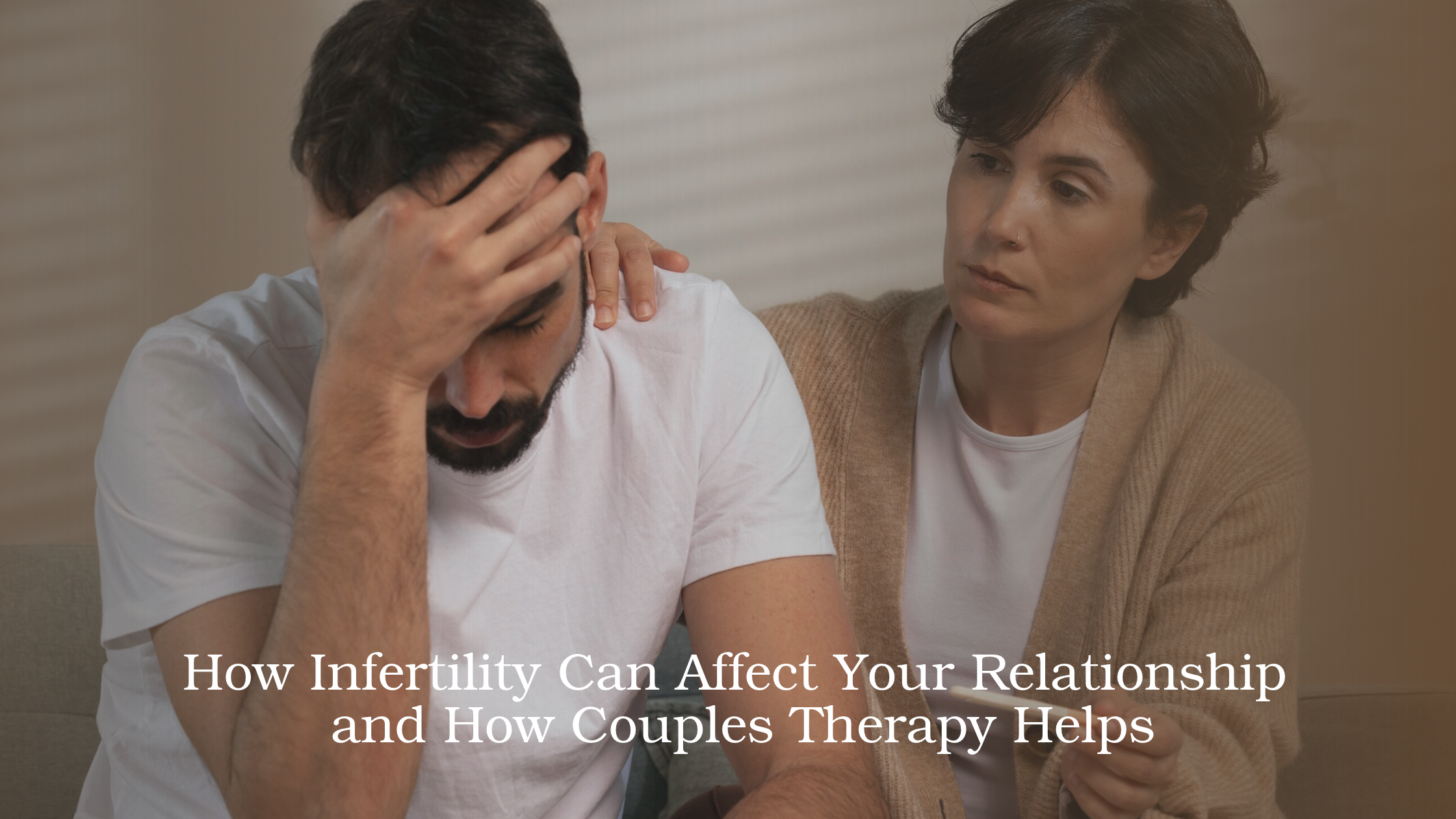
How Infertility Can Affect Your Relationship and How Couples Therapy Helps
Trying to conceive can become emotionally demanding when pregnancy does not happen as expected. Medical appointments, fertility testing, treatment decisions, and uncertainty about the future can create stress that affects both partners and their relationship.
Each partner may cope differently. One may want to discuss every appointment and possibility, while the other may avoid conversations that bring up disappointment. These differences do not necessarily reflect a lack of care, but they can lead to misunderstandings and emotional distance.
Couples therapy can help partners process difficult emotions, communicate their needs, and support each other through fertility decisions. It also provides space to address relationship strain while navigating an uncertain journey together.
How Infertility Can Affect a Relationship
Infertility can influence several aspects of a couple’s life, from emotional intimacy to everyday routines. The effects vary depending on individual experiences, the length of the fertility journey, treatment demands, and the support available to each partner.

1. Emotional Stress and Feelings of Grief
When conception does not happen, couples may experience repeated cycles of hope and disappointment. A negative pregnancy test, an unsuccessful treatment cycle, or an unexpected medical finding can bring sadness that is difficult to explain to others.
One or both partners may experience grief over the pregnancy they hoped for, the timeline they imagined, or the uncertainty surrounding their future as parents. They may also feel frustration, anxiety, guilt, or helplessness.
These emotions do not always occur at the same time or with the same intensity. One partner may need to talk about the disappointment immediately, while the other may need time to process it privately.
When these differences are misunderstood, partners can feel emotionally alone, much like the loneliness described in how stress impacts romantic relationships.
2. Communication Breakdowns and Repeated Arguments
Fertility-related stress can make conversations about ordinary decisions feel more complicated. Discussions about appointments, treatment options, expenses, or the next step may quickly turn into arguments.
One partner might interpret a lack of discussion as avoidance. The other might experience repeated questions as.pressure to provide reassurance they cannot honestly give, a version of the pursuer-distancer cycle.
Couples may also disagree about how much time, money, and emotional energy to invest in treatment. These disagreements can become particularly painful when each person believes they are trying to protect the relationship or preserve the possibility of becoming parents.
Learning to communicate about infertility requires more than sharing information. Partners need to understand the emotions behind their responses and make room for different ways of coping.
3. Changes in Sexual Intimacy
When conception becomes a priority, sex can begin to feel connected to ovulation schedules, medical instructions, and expectations about pregnancy.
Spontaneity may decrease, and physical intimacy can become associated with performance or disappointment. One partner may feel pressure to have sex at particular times, while the other may feel that sex has becomeanother task to complete, a kind of resentment that builds quietly when intimacy becomes obligation.
Fertility treatment can also affect desire because of physical discomfort, hormonal changes, fatigue, stress, or the emotional burden of repeated appointments.
These experiences can make it difficult to maintain intimacy that feels mutually desired, a pattern covered more broadly in why couples stop being intimate and how couples therapy addresses it.
It may help to distinguish between sex intended for conception and other forms of physical affection. Touch, cuddling, kissing, and time together can preserve closeness without creating an expectation that every intimate moment must lead to pregnancy.
4. Guilt, Shame, and Blame
Infertility can lead people to question their bodies, health, or sense of identity. Someone may feel guilty about a diagnosed fertility condition or worry that they are preventing their partner from becoming a parent.
These feelings can be especially painful when one partner believes they are responsible for the difficulty conceiving. Even when neither person expresses blame directly, shame may influence how they communicate or respond to each other.
It is important to remember that infertility is a medical condition, not a personal failure. Fertility difficulties can involve either partner, both partners, or circumstances that remain unexplained. A diagnosis does not determine a person’s worth or their ability to contribute meaningfully to a relationship.
Couples can work toward supporting one another without turning a medical challenge into a judgment about either person’s value.
5. Feeling Alone or Emotionally Disconnected
Partners may assume that because they are experiencing the same fertility journey, they should understand each other’s feelings automatically. In reality, their experiences can differ considerably.
One partner may seek information, join support groups, or talk openly with friends. The other may prefer privacy or find conversations with family members uncomfortable.
Social situations can also become difficult. Baby showers, pregnancy announcements, family gatherings, and questions about when the couple plans to have children may trigger sadness or frustration.
If partners respond differently to these situations, each may feel misunderstood. Over time, they may stop sharing their feelings to avoid upsetting the other person.
Maintaining emotional connection requires recognising that both partners can be hurting while needing different forms of support.
Why Partners May Cope With Infertility Differently
There is no single correct way to respond to infertility. Individual coping styles are shaped by personality, family experiences, previous losses, cultural expectations, and beliefs about emotional expression.
Some people cope by seeking information and taking action. They may research treatment options, arrange appointments, and want a clear plan. Others manage distress by focusing on work, maintaining routines, or limiting conversations about uncertain outcomes.
Neither approach automatically means that one partner cares more than the other.
However, differences can become a source of conflict when partners interpret coping styles as evidence of commitment or indifference.
For example, a person who wants to discuss every possible treatment may see their partner’s silence as a lack of investment. The quieter partner may be avoiding the subject because they feel overwhelmed, a form of emotional avoidance rather than indifference.
Couples therapy can help partners recognise these differences and communicate their needs more clearly. Instead of expecting each other to cope in identical ways, they can learn how to offer support that feels meaningful to both.
How Couples Therapy Helps Couples Facing Infertility
Couples therapy provides a structured setting to address the emotional and relational effects of infertility. It does not replace fertility treatment or medical guidance. Instead, it helps partners manage the psychological strain of the process and make decisions together.

1. Creating Space for Difficult Emotions
Some couples become so focused on appointments and treatment decisions that they have little time to process what they are experiencing emotionally.
Therapy offers an opportunity to discuss sadness, fear, disappointment, anger, and uncertainty without immediately trying to solve the problem.
Partners can express feelings they may have been reluctant to share because they did not want to upset each other. A therapist can help them listen without becoming defensive or rushing to offer reassurance.
The goal is not to eliminate difficult emotions. It is to help couples acknowledge those emotions without allowing them to create lasting distance.
2. Improving Communication and Reducing Conflict
A therapist can help identify patterns that repeatedly turn conversations into arguments.
Partners may learn to express concerns without assigning blame, ask for support more directly, and recognise when a conversation has become emotionally overwhelming.
For instance, instead of saying, “You never want to talk about treatment,” one partner might explain, “I feel frightened when we avoid discussing the next appointment, and I need to know when we can talk about it.”
The second statement communicates the underlying concern while giving the other partner a clearer opportunity to respond.
Therapy can also help couples establish boundaries around fertility-related conversations, including when to discuss appointments, finances, or treatment decisions and when to take a break from the subject.
3. Protecting Emotional and Physical Intimacy
Infertility can cause the relationship to revolve around conception, leaving little room for affection, shared interests, and experiences unrelated to fertility.
Couples therapy can help partners recognise when treatment demands are affecting their connection and consider ways to preserve intimacy.
This may include making time for activities they enjoy together, expressing affection without expectations about sex, or discussing changes in sexual desire without criticism.
There is no requirement to maintain the same level of sexual activity throughout fertility treatment. What matters is that both partners feel respected, heard, and free to communicate their needs.
4. Navigating Fertility Treatment Decisions Together
Fertility treatment can involve complex decisions about investigations, medication, assisted reproductive technologies, financial commitments, and how long to continue treatment.
Partners may differ in their willingness to pursue particular options. One may want to explore every available possibility, while the other may feel concerned about the emotional, physical, or financial costs.
A therapist can help couples clarify their priorities, discuss uncertainties, and understand the reasons behind their preferences.
Therapy should not determine which medical treatment a couple chooses. Those decisions belong to the couple in consultation with their qualified healthcare professionals. The therapist’s role is to support constructive communication and help both partners participate in decisions that affect their shared future.
5. Addressing Guilt, Shame, and Self-Blame
Feelings of inadequacy can affect how someone sees themselves and how they experience their relationship.
Therapy can help individuals examine self-critical beliefs and distinguish a medical diagnosis from personal worth. It can also help couples identify unintentional comments or behaviours that reinforce shame.
Partners can learn to express concern without trying to assign responsibility and offer reassurance without dismissing the reality of what the other person is experiencing.
This can be particularly important when one partner has received a fertility diagnosis and feels responsible for the couple’s difficulties.
6. Preparing for Different Possible Outcomes
A fertility journey may not follow the path a couple originally imagined. Treatment may succeed, take longer than expected, or remain unsuccessful. Couples may also need to consider alternatives such as adoption, donor conception, or a life without children, depending on their circumstances and preferences.
These possibilities can bring up difficult questions about identity, family expectations, finances, and the future of the relationship.
Therapy can help couples discuss these questions gradually, as with other major life transitions that change a couple’s plans. It can also help them recognise that considering alternatives does not mean giving up hope.
The purpose is to help partners approach uncertainty as a team while respecting that they may need different amounts of time to process each possibility.
When Should Couples Consider Therapy for Infertility?
Couples do not need to wait until their relationship is in serious difficulty before seeking support.
Therapy may be helpful when:
- Conversations about fertility repeatedly lead to arguments or withdrawal.
- One or both partners feel persistently overwhelmed, anxious, sad, or isolated.
- Sexual intimacy has become a source of pressure or conflict.
- Partners disagree about treatment options, expenses, or when to stop treatment.
- Guilt or blame is affecting the relationship.
- Family expectations or pregnancy announcements are becoming difficult to manage.
- The couple wants support before making major decisions about their future.
Individual therapy may also be useful when one partner is struggling with distress that feels difficult to manage within the relationship. Seeking individual support does not mean the couple has failed to cope together.
How Dr. Harel Papikian Can Help
Dr. Harel Papikian is a licensed clinical psychologist in Los Angeles with more than 16 years of experience working with individuals and couples.
For couples experiencing infertility, therapy can provide a setting to discuss emotional strain, recurring disagreements, changes in intimacy, and uncertainty about the future. Sessions can help partners understand their reactions, communicate their needs, and approach difficult decisions with greater clarity.Dr. Harel’s ARM Method can help partners understand their reactions, communicate their needs, and approach difficult decisions with greater clarity.
The focus is on the relationship and the emotional experiences surrounding infertility, rather than placing responsibility on either partner or promising a particular fertility outcome.
Couples can work toward feeling more connected and supported, even when the medical process remains uncertain. Therapy can also help them determine what support they need as they navigate the next stage of their journey.
Final Thoughts
Infertility can affect far more than a couple’s plans to become parents. It can influence emotional well-being, communication, sexual intimacy, and the way partners imagine their future together.
When each person is coping differently, misunderstandings can develop even when both are deeply invested in the relationship. Making space for these differences can help couples respond to each other with greater understanding.
Couples therapy offers a place to work through difficult emotions, strengthen communication, and make fertility-related decisions together. It cannot remove the uncertainty of infertility, but it can help partners navigate that uncertainty without losing sight of their relationship.
Frequently Asked Questions
Yes. Infertility can contribute to stress, grief, communication difficulties, sexual concerns, and disagreements about treatment. The impact varies, and supportive communication can help couples navigate these challenges.
Yes. Couples therapy can help partners manage treatment-related stress, discuss decisions, address differences in coping styles, and maintain emotional connection during IVF. It does not replace medical care.
Different coping styles are common. Therapy can help partners understand each other’s responses, communicate their needs, and provide support without expecting the other person to process everything in the same way.
Couples can benefit from therapy before, during, or after treatment. Beginning early may help them discuss expectations, boundaries, finances, and ways to manage uncertainty before stress becomes more difficult to handle.
Yes. Timed intercourse, treatment demands, stress, and disappointment can make sex feel pressured or less spontaneous. Couples can work on communicating about intimacy and maintaining affection without expectations.
If you are experiencing persistent sadness, anxiety, guilt, or difficulty functioning, consider speaking with a qualified mental health professional. A fertility-informed therapist can help you process these experiences alongside medical care.
Couples therapy is not a fertility treatment and cannot guarantee pregnancy. Its purpose is to support emotional well-being, communication, and relationship functioning during the fertility journey.
Therapy can help couples explore their emotional limits, priorities, concerns, and hopes while discussing whether to continue treatment. Medical decisions should be made with guidance from the relevant healthcare professionals.

Harel Papikian
Dr. Harel Papikian is a clinical psychologist and couples therapist with more than 15 years of experience. He offers marriage counseling and couples therapy in los Angeles. It help’s couples navigate their relationship challenges and deepen their connection. Our clinic uses a unique ARM method (Awareness, Release, Mastery) to achieve rapid and profound results for our clients. We serve a diverse clientele, including LGBTQ+ and heterosexual couples, addressing issues like communication breakdowns, conflict resolution, intimacy, and trust. You can also get individual therapy sessions for concerns like depression, anxiety, and trauma.
Leave a Reply