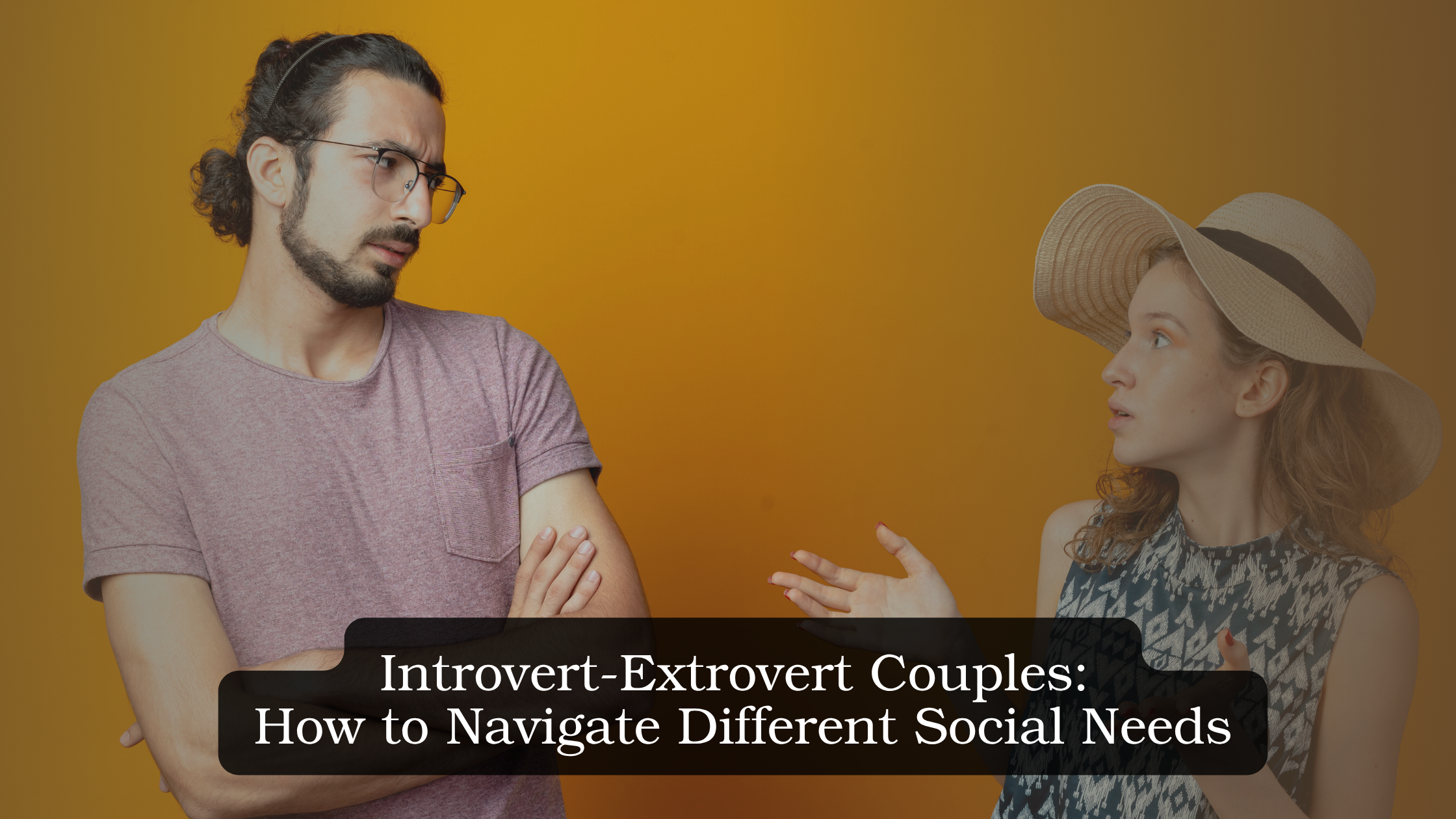
Introvert-Extrovert Couples: How to Navigate Different Social Needs
One partner may look forward to a weekend gathering with friends, while the other prefers a quiet evening at home. When these differences arise repeatedly, decisions about socialising and spending time together can become a source of tension.
Introvert-extrovert couples often have different social preferences. Introversion is generally associated with a preference for quieter environments and time alone, while extroversion often involves seeking social interaction and external stimulation. Neither personality style determines how much someone loves their partner or values the relationship.
Problems can arise when partners interpret these differences as personal rejection. An introverted partner may feel pressured to socialise, while an extroverted partner may feel excluded when invitations are declined. Understanding each other’s needs can help couples find a balance that respects both personalities.
Understanding Introversion and Extroversion in Relationships
Introversion and extroversion are personality tendencies, not rigid categories. Many people fall somewhere between the two, and a person’s social preferences can change depending on their mood, circumstances, energy levels, and the people involved.
An introverted partner may enjoy socialising but prefer smaller gatherings, meaningful conversations, or planned activities. After a busy day or an extended social event, they may need quiet time to feel restored.
An extroverted partner may feel energised by meeting people, attending events, or sharing experiences with a wider social circle. Regular interaction may help them feel connected and engaged.
Problems can arise when these differences are treated as character flaws. An introverted partner may be described as antisocial or boring, while an extroverted partner may be labelled attention-seeking or unable to enjoy their own company.
These assumptions overlook the fact that both partners can have healthy, fulfilling social lives while preferring different levels of interaction.
Common Challenges Introvert-Extrovert Couples Face

1. Disagreements About Social Plans
One of the most common sources of conflict is deciding how often to attend social events.
An extroverted partner may want to spend weekends with friends, attend parties, or accept invitations without much advance planning. An introverted partner may prefer a quiet evening, a smaller gathering, or enough notice to prepare for a social commitment.
The extroverted partner might interpret a refusal as a lack of interest in their friends or social life. The introverted partner might feel that their need for rest is repeatedly overlooked.
Over time, these disagreements can become about more than individual events. One partner may feel that the relationship limits their freedom, while the other feels that their preferences are never taken seriously.
The solution is not to establish a fixed number of events that every couple must attend. Instead, partners can discuss which social activities matter most to them and how to make room for both shared experiences and individual preferences.
2. Different Ways of Recharging
After a demanding week, one partner may want to meet friends or attend a concert, while the other wants to read, watch a film at home, or enjoy a quiet evening together.
Neither preference is inherently more valuable. The difficulty emerges when partners expect the other person to recover from stress in the same way.
An extroverted partner may feel restless when plans are cancelled, particularly if social interaction is an important source of enjoyment. An introverted partner may feel overwhelmed when every free evening involves activity or conversation.
Couples can reduce this tension by recognising that time apart does not necessarily weaken their connection. In some cases, allowing each person to recharge in their preferred way can make their time together more enjoyable.
3. Feeling Rejected or Left Out
Social differences can trigger insecurities that are not immediately obvious.
An extroverted partner may wonder why their partner does not want to meet their friends or attend family gatherings. They may interpret a declined invitation as embarrassment, disinterest, or a reluctance to be part of their life.
An introverted partner may feel that their social limits are being treated as a problem to fix. They may begin attending events out of obligation and feel resentful when their discomfort goes unnoticed.
These experiences can create a cycle in which one partner pushes for more participation while the other withdraws further, a version of the pursuer-distancer cycle.
It helps to distinguish between rejecting an activity and rejecting a person. Someone can care deeply about their partner while having limited interest in a particular gathering.
4. Different Expectations Around Friends and Family
Social preferences often become more complicated when extended family, close friends, or important celebrations are involved.
An extroverted partner may expect both people to attend birthdays, dinners, weddings, and informal get-togethers. An introverted partner may find frequent gatherings tiring, especially when they involve unfamiliar people or extended conversation.
Disagreements may become more sensitive when a partner feels that declining an invitation will be viewed as disrespectful.
Couples can discuss which occasions are especially important, which events each partner can attend independently, and how to communicate boundaries without creating unnecessary conflict.
The goal is to show consideration for relationships outside the couple while recognising that neither partner needs to attend every event to demonstrate commitment.
5. Different Communication Preferences
Introversion and extroversion can also influence how partners approach conversations, although personality alone does not determine communication style.
One partner may prefer to think privately before discussing a difficult subject. The other may want to talk immediately and work through their feelings aloud.
If one partner needs time to process, the other may mistake the silence for avoidance. If one wants to talk straight away, the other may experience the conversation as overwhelming.
These differences can be especially challenging during disagreements because each person may have a different idea of what productive communication looks like.
A useful approach is to agree on a process. For example, a partner who needs time can request a short break and commit to returning to the conversation at an agreed time. The partner who wants immediate discussion can practise allowing that spacewithout repeatedly demanding an answer, using fair fighting rules for couples as a guide.
This preserves the need for reflection while reassuring both people that the issue will not be ignored.
How to Balance Different Social Needs as a Couple

1. Talk About What Socialising Means to Each of You
Rather than debating how many events to attend, explore why social interaction matters to each partner.
For one person, socialising may provide friendship, belonging, excitement, or relief from work-related stress. For the other, quiet time may support emotional regulation, concentration, or a sense of comfort.
Understanding the meaning behind each preference makes it easier to find arrangements that address the underlying need.
Try asking each other:
- Which social activities do you enjoy most?
- What makes a gathering feel tiring or uncomfortable?
- How much notice do you need before making plans?
- How much time alone helps you feel restored?
- Which events are important for us to attend together?
These conversations work best when approached with curiosity rather than persuasion.
2. Make Plans That Allow for Flexibility
Couples do not need to attend every social event together. They can decide which occasions they want to share and which they are comfortable experiencing separately.
For example, an extroverted partner might attend a casual gathering with friends while the introverted partner enjoys an evening at home. Both could attend an important celebration together, with an agreed plan to leave at a reasonable time.
Another option is to alternate between social weekends and quieter ones, depending on each person’s schedule and energy.
The important point is that these arrangements should feel mutually agreed upon rather than imposed by one partner.
3. Find Social Activities You Both Enjoy
Not every shared activity needs to involve large groups or extended socialising.
Some couples enjoy dinner with one or two close friends, a walk with another couple, a small gathering at home, or a daytime activity with a clear beginning and end.
These options can provide meaningful connection without leaving one partner overwhelmed or the other feeling that their social needs are being ignored.
Couples should also recognise that a shared activity does not have to satisfy every preference equally. The aim is to create a balance across the relationship, not to make every outing ideal for both people.
4. Respect Time Apart Without Creating Distance
Healthy relationships allow room for individual interests and friendships.
An extroverted partner can maintain a social life without expecting their partner to accompany them everywhere. An introverted partner can enjoy time alone without feeling responsible for preventing their partner from having fun.
However, independence works best when it is combined with communication and connection. If one partner frequently spends evenings out while the other feels neglected, the issue may involve a lack of quality time rather than introversion or extroversion alone.
Couples can protect time for shared meals, conversations, dates, or activities they both enjoy, a balance explored in healthy independence vs. emotional distance.This reassures each person that independent social lives do not replace the relationship.
5. Set Boundaries Without Making the Other Person Feel Wrong
A boundary communicates what someone can comfortably manage. It does not require the other person to share the same preference.
An introverted partner might say, “I’m happy to join you for dinner, but I would prefer not to stay late.” An extroverted partner might say, “I understand that you don’t want to come tonight, but I’d still like to go and see my friends.”
These statements communicate preferences without blame.
It is equally important to avoid using personality labels to dismiss legitimate concerns. Saying “I’m an introvert” should not automatically end every discussion about shared responsibilities or meaningful events. Likewise, being extroverted does not mean a partner is entitled to constant social participation from the other person.
Boundaries should help couples negotiate differences, not prevent them from considering each other’s needs.
6. Avoid Keeping Score
When social preferences differ, partners may begin tracking who compromises more often.
One person may remember every event they attended reluctantly, while the other counts the invitations that were declined. This can turn shared decisions into a series of transactions, one way resentment builds in a relationship.
Instead of focusing exclusively on whether each person attends the same number of events, couples can consider the broader balance of the relationship.
Are both partners able to maintain meaningful friendships? Does each person feel supported during important occasions? Is there room for quiet time, social connection, and shared experiences?
Fairness does not always mean identical participation. It means both partners’ needs are considered and neither person consistently carries the burden of adapting.
When Different Social Needs Become a Deeper Relationship Issue
Sometimes the conflict is not primarily about personality. Repeated arguments about socialising may reflect concerns about belonging, independence, trust, or emotional availability.
For example, an extroverted partner who feels disconnected from their relationship may seek more time with friends because they are missing connection at home. An introverted partner who feels criticised may begin avoiding events because they no longer feel comfortable expressing their preferences.
In other cases, the disagreement may involve unequal responsibilities. One partner may want to attend social events frequently while expecting the other to manage childcare, household tasks, or other commitments.
It is worth looking beyond personality labels when the same argument keeps returning. Both partners need to consider whether their expectations are reasonable, whether responsibilities are shared fairly, and whether they can express their needs without fear of criticism.
How Dr. Harel Can Help Introvert-Extrovert Couples
Couples therapy can help partners understand why social differences lead to conflict and develop more constructive ways to manage them.
Dr. Harel Papikian is a licensed clinical psychologist in Los Angeles with more than 16 years of experience working with individuals and couples.
In couples therapy, couples can explore the assumptions they make about each other’s behaviour. An introverted partner may learn to communicate their need for quiet time without withdrawing from important conversations. An extroverted partner may learn to express a desire for connection without interpreting every refusal as rejection.
Dr. Harel’s ARM Method can help
- Identify recurring patterns of pressure, withdrawal, or resentment.
- Communicate social preferences without criticism or defensiveness.
- Negotiate expectations around friends, family events, and shared time.
- Establish boundaries that respect both partners’ needs.
- Address deeper concerns about belonging, independence, or emotional connection.
The goal is not to make one partner more introverted or the other more extroverted. It is to help them build a relationship in which differences can be discussed and accommodated without either person feeling that they must fundamentally change who they are.
Final Thoughts
Introvert-extrovert couples can have fulfilling relationships without sharing identical social preferences. One partner can enjoy busy weekends and large gatherings while the other prefers quieter plans and smaller circles of friends.
The difference becomes difficult when social choices are interpreted as signs of rejection, selfishness, or incompatibility. Understanding what each partner needs, communicating expectations clearly, and allowing room for individual interests can help prevent these misunderstandings from becoming persistent conflict.
If disagreements about socialising repeatedly affect your relationship, couples therapy can help you explore the patterns involved and find arrangements that feel fair to both partners. The aim is to create a shared life that makes room for connection, independence, and the different ways each person experiences the world.
Frequently Asked Questions
Yes. Different social preferences do not automatically create incompatibility. Mutual respect, clear communication, and flexibility can help couples balance individual needs and shared experiences.
Try separating their preference for quiet time from their feelings about you. Discuss which events matter to you and ask how you can stay connected without expecting them to attend everything.
They can. Attending some events separately allows each partner to maintain their preferred social life. Couples should also make time for shared activities that support their connection.
Discuss how much social time each person enjoys and what balance feels sustainable. You can negotiate shared events, independent plans, and quieter weekends without expecting either partner to give up their preferences entirely.
Yes. Therapy can help partners understand recurring misunderstandings, communicate their needs, and develop practical agreements that respect their different preferences.
There is no universal amount. Some people need substantial time alone, while others prefer frequent interaction. The important consideration is whether both partners feel their needs for independence and connection are being respected.
Consider therapy when disagreements repeatedly lead to resentment, criticism, withdrawal, or feelings of rejection, or when you struggle to find arrangements that work for both partners.

Harel Papikian
Dr. Harel Papikian is a clinical psychologist and couples therapist with more than 15 years of experience. He offers marriage counseling and couples therapy in los Angeles. It help’s couples navigate their relationship challenges and deepen their connection. Our clinic uses a unique ARM method (Awareness, Release, Mastery) to achieve rapid and profound results for our clients. We serve a diverse clientele, including LGBTQ+ and heterosexual couples, addressing issues like communication breakdowns, conflict resolution, intimacy, and trust. You can also get individual therapy sessions for concerns like depression, anxiety, and trauma.
Leave a Reply