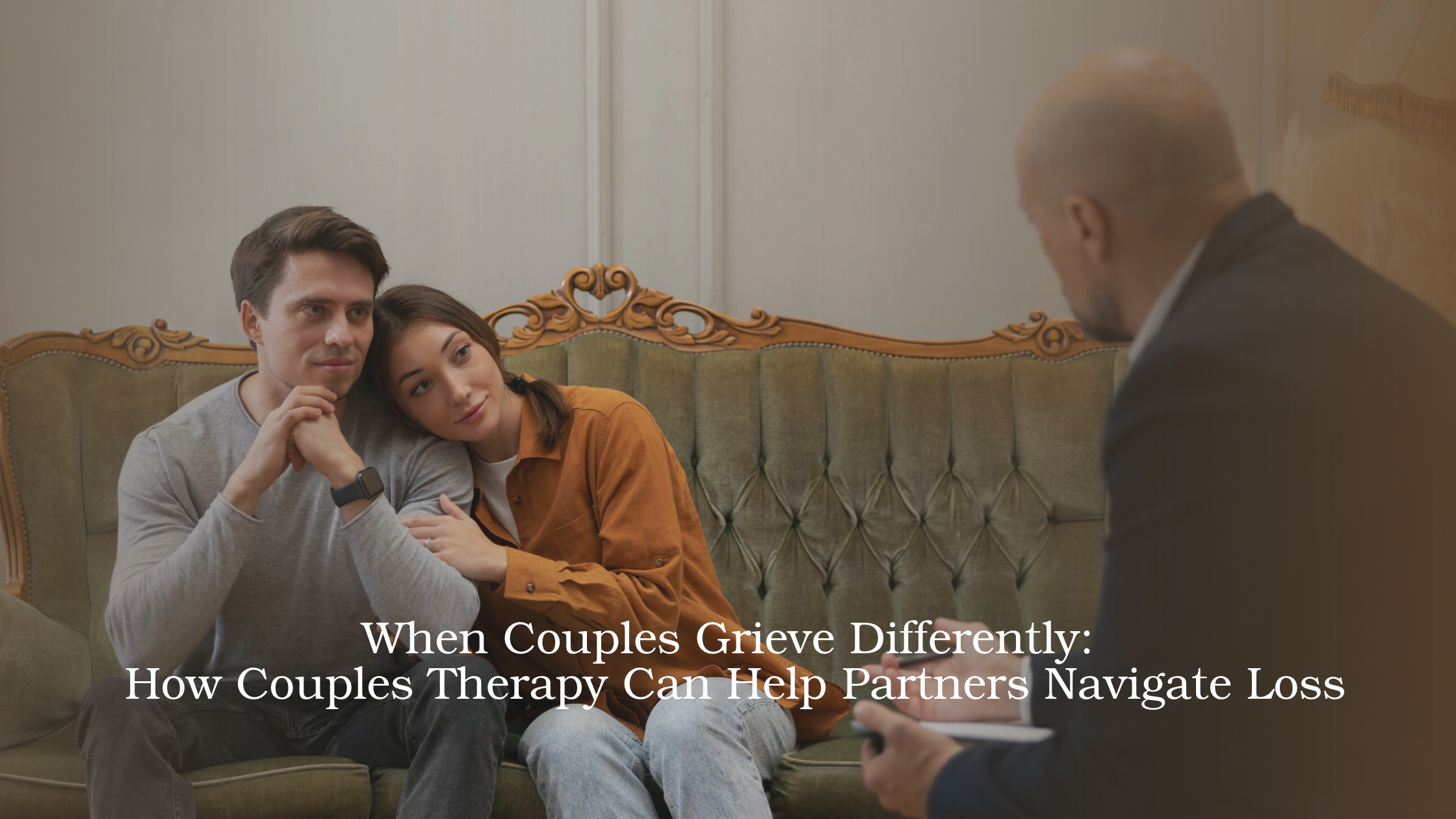
When Couples Grieve Differently: How Couples Therapy Can Help Partners Navigate Loss
Grief can change the way people communicate, connect, and experience everyday life. After losing someone or something meaningful, one partner may want to talk about the loss frequently, while the other prefers privacy or tries to maintain familiar routines. Both may be hurting deeply, yet their different responses can make it difficult to feel understood.
When couples grieve differently, misunderstandings can develop alongside the pain of loss. One partner may interpret silence as emotional distance, while the other may experience repeated conversations as overwhelming. These differences can leave both people feeling alone at a time when they need connection.
Couples therapy can help partners understand their individual grieving processes, communicate their needs, and find ways to support each other without expecting grief to look the same. Learning to navigate loss together can help couples protect their emotional connection while making room for each person’s experience.
Why Couples Grieve Differently
Grief is an individual response to loss. Although partners may experience the same event, their emotional reactions, coping habits, and support needs can differ considerably.
One person might cry openly, revisit memories, and seek reassurance. The other might focus on practical responsibilities, return to work quickly, or need time alone to process what happened. Neither response necessarily indicates that one person cares more or is coping better.
Several factors can influence how partners grieve.

Personal History and Previous Losses
Past experiences with death, separation, illness, or other significant changes can shape how someone responds to a new loss. A person who has experienced repeated losses may become withdrawn or anxious, while someone else may find comfort in talking openly about their feelings.
Family experiences also matter, a theme covered in how childhood experiences affect adult relationships. Some people grow up in households where emotions are discussed freely, while others learn to cope privately or focus on practical tasks rather than emotional expression.
Different Ways of Processing Emotions
Some people make sense of grief by talking, crying, and sharing memories. Others prefer reflection, physical activity, creative pursuits, or time alone.
These differences can become difficult when partners expect each other to process grief in the same way. A person who wants to talk may feel rejected when their partner withdraws, while the partner seeking quiet may feel pressured to discuss emotions before they are ready.
Cultural and Family Expectations
Beliefs about death, mourning, remembrance, and emotional expression can influence how people grieve. Partners may have different traditions or expectations surrounding funerals, anniversaries, family gatherings, and memorial practices.
Discussing these differences can help couples understand what matters to each person and decide how to honour the loss together.
The Nature of the Loss
Grief following the death of a parent may feel different from grief after losing a child, experiencing a miscarriage, receiving a serious diagnosis, or facing an unexpected change in life circumstances.
Even when couples experience the same loss, they may have different relationships with the person or situation involved. Their grief may therefore include different memories, fears, and emotional needs.
Common Challenges When Partners Grieve Differently
Grieving differently does not automatically damage a relationship, though stress can affect romantic relationships in ways that compound it. Difficulties often arise when partners struggle to understand what the other person needs or interpret their coping style as a reflection of love and commitment.
1. One Partner Wants to Talk While the Other Withdraws
One partner may need to share memories, discuss painful feelings, or revisit the circumstances surrounding the loss. The other may become quiet because talking feels overwhelming or emotionally exhausting.
The partner seeking conversation may feel abandoned, while the partner who withdraws may feel that there is no room to process grief privately.
Without explanation, both responses can be misinterpreted, a version of the pursuer-distancer cycle. Discussing these needs openly can help couples find a balance between connection and personal space.
2. Different Timelines Create Frustration
Grief does not follow a predictable schedule. One partner may begin engaging with daily activities sooner, while the other continues to experience intense sadness, uncertainty, or difficulty concentrating.
Returning to work, attending social events, or enjoying a pleasant moment does not necessarily mean that someone has moved on. Likewise, continuing to grieve intensely does not mean someone is refusing to heal.
When partners expect each other to recover at the same pace, they may unintentionally create pressure or shame. Recognizing that grief changes differently for each person can reduce these expectations.
3. Practical Responsibilities Replace Emotional Connection
After a significant loss, couples often need to manage arrangements, finances, family responsibilities, and everyday tasks. One partner may focus on these practical demands as a way to cope, while the other feels that the emotional impact is being overlooked.
Practical support can be valuable, but it may not meet every emotional need. Couples may need to make intentional time for conversations, shared remembrance, or simply being together without trying to solve anything.
4. Partners Feel Alone Despite Being Together
When each person is coping differently, both may feel isolated. The partner who talks openly may believe their pain is not understood, while the partner who remains quiet may feel unable to express their own distress.
This can create a painful sense of disconnection. Couples may continue fulfilling responsibilities while .avoiding conversations that feel too difficult, a pattern covered in emotional avoidance and how it slowly destroys relationships.
Recognizing this pattern can help partners approach each other with curiosity rather than assuming they no longer understand or care about one another.
5. Disagreements Develop Around Remembrance
Partners may differ in how they want to honour a person or acknowledge a loss. One may want to mark anniversaries, display photographs, or talk about memories, while the other may find these activities difficult.
These differences do not necessarily reflect different levels of love.Couples can explore ways to remember the loss, approaching each other’s needs with curiosity.
How to Support Your Partner When You Grieve Differently
Couples do not need to experience grief in the same way to remain emotionally connected. They need ways to communicate, respect differences, and recognize when the other person needs support.
Acknowledge Each Other’s Experience
Avoid assuming that your partner’s behaviour reveals how much they care. Instead, ask what the loss has been like for them and listen without immediately comparing their experience with your own.
You might say, “I know we have been handling this differently. I want to understand what you are going through.”
This creates an opportunity for both partners to share their feelings without having to defend their coping styles.
Ask What Support Looks Like
People do not always need the same kind of comfort. One partner may appreciate a conversation, while the other may prefer practical help, physical closeness, or quiet companionship.
Ask specific questions, such as, “Would you like to talk about it, or would it help if I sat with you for a while?”
These conversations can reduce guesswork and help partners respond to each other’s needs more effectively.
Make Room for Both Connection and Space
Supporting a grieving partner does not mean being available for every conversation at every moment. It also does not mean withdrawing indefinitely when emotions become uncomfortable.
Discuss how to balance time together with individual processing. If one partner needs space, agree on a way to reconnect so that the request does not feel like an unexplained rejection.
Create Shared Rituals Without Forcing Them
Some couples find comfort in lighting a candle, visiting a meaningful place, sharing memories, or observing an anniversary together. Others prefer private ways of remembering.
You can create a shared ritual while respecting individual preferences. The important part is that remembrance feels meaningful rather than becoming another expectation to meet.
Recognize When Grief Needs Additional Support
Grief can affect sleep, concentration, relationships, and daily functioning. If either partner feels persistently overwhelmed, increasingly isolated, or unable to manage everyday responsibilities, individual therapy or grief counselling may be helpful.
Couples therapy may also be useful when grief repeatedly leads to conflict or when partners feel unable to support each other without becoming overwhelmed themselves.
How Couples Therapy Can Help Partners Navigate Loss
Couples therapy provides a structured space to discuss grief and its effects on the relationship. Rather than expecting partners to reach the same emotional place, therapy can help them understand their differences and find ways to remain connected.

Understanding Different Grieving Styles
A therapist can help partners identify how their personal histories, emotional needs, and coping habits influence their responses to loss. This can reduce assumptions that one person is avoiding grief or that the other is becoming stuck in it.
Understanding these differences can help partners approach each other with greater patience and less judgment.
Improving Communication During Grief
Grief can make ordinary conversations more difficult. Partners may struggle to explain what they need or react defensively when they feel misunderstood.
Couples therapy can help them express sadness, anger, fear, or uncertainty more clearly. It can also support active listening, validation, and more constructive ways of responding when emotions run high.
Addressing Conflict and Resentment
Unresolved misunderstandings can gradually become sources of resentment. One partner may feel that they have been carrying the emotional burden alone, while the other may feel criticized for coping differently.
Therapy helps couples examine these patterns and discuss the hurt beneath their disagreements. The goal is to understand how each person experiences the relationship during grief and identify changes that may help.
Rebuilding Emotional Connection
Grief can alter routines, intimacy, shared activities, and expectations for the future. Couples may need time to understand how the loss has changed their lives and what connection looks like now.
Therapy can help partners identify manageable ways to spend time together, offer support, and maintain closeness without pretending that everything has returned to normal.
Making Space for Individual and Shared Grief
Partners can acknowledge that some parts of grief are personal while recognizing that the loss also affects their relationship. Couples therapy supports both experiences, allowing each person to process their feelings while discussing how they want to navigate the loss together.
Depending on the circumstances, individual grief therapy may complement couples sessions, particularly when one partner needs additional support.
How Dr. Harel Helps Couples Navigate Grief
Dr. Harel’s relationship-focused work can help couples understand how grief influences communication, emotional availability, and recurring disagreements. When partners respond differently to loss, he helps them explore their experiences and needs without assuming that either person’s way of grieving is wrong.
Through online couples counselling for partners in Los Angeles, Dr. Harel provides space to discuss feelings that may be difficult to express at home. Couples can examine patterns of withdrawal, misunderstanding, or conflict and develop more constructive ways to communicate during emotionally challenging periods.
His approach may incorporate the ARM method (Awareness, Release, Mastery) and Neuro-Linguistic Programming (NLP), depending on the couple’s concerns and therapeutic goals. The focus is on increasing awareness of relationship patterns, understanding emotional responses, and supporting healthier interactions.
The aim is not to make grief disappear or require partners to heal at the same pace. It is to help couples find ways to support one another while respecting their individual experiences of loss.
Finding Connection While Grieving
Grief can change a relationship, but partners do not have to experience it identically to support each other. Making room for different emotions, respecting individual coping styles, and communicating openly can help couples navigate loss without losing sight of their connection.
If grief has left you feeling distant from your partner or struggling to understand each other’s needs, couples counselling may help you find a way forward.
Dr. Harel offers online couples counselling for partners in Los Angeles, California. Book a Free Phone Consultation to discuss your concerns and explore available support.
Frequently Asked Questions
Yes. Partners may have different emotional responses, coping habits, and support needs, even when they experience the same loss. These differences do not necessarily reflect how much either person cares.
Different grieving styles do not automatically damage a relationship. However, misunderstandings, emotional withdrawal, and unmet support needs can create distance when partners struggle to communicate about their experiences.
Your partner may need time or may process emotions privately. Let them know you are available without pressuring them to talk. You can also discuss how to stay connected while respecting their need for space.
People may return to daily routines at different times, and outward behaviour does not always reflect internal feelings. Explain what you are experiencing and ask your partner how they have been coping rather than assuming they no longer care.
Couples therapy can provide a space to discuss the emotional and relational effects of these losses. Partners may benefit from support in communicating their needs, navigating differences in grief, and maintaining connection. Individual grief support may also be appropriate.
Consider professional support when grief repeatedly leads to conflict, either partner feels emotionally isolated, or communication becomes increasingly difficult. Individual therapy may also help if grief significantly affects daily functioning or emotional well-being.
No. Therapy can help partners understand each other’s experiences without requiring them to feel or express grief in the same way. The focus is on communication, mutual support, and the relationship’s needs.

Harel Papikian
Dr. Harel Papikian is a clinical psychologist and couples therapist with more than 15 years of experience. He offers marriage counseling and couples therapy in los Angeles. It help’s couples navigate their relationship challenges and deepen their connection. Our clinic uses a unique ARM method (Awareness, Release, Mastery) to achieve rapid and profound results for our clients. We serve a diverse clientele, including LGBTQ+ and heterosexual couples, addressing issues like communication breakdowns, conflict resolution, intimacy, and trust. You can also get individual therapy sessions for concerns like depression, anxiety, and trauma.
Leave a Reply