Relationship Anxiety: Why You Constantly Worry About Your Relationship
Relationship anxiety is not just occasional worry. It is a persistent sense of uncertainty that shows up even when the relationship is objectively stable. People experiencing it often find themselves overanalyzing messages, reading into tone, questioning their partner’s feelings, or mentally preparing for something to go wrong, even when there is no clear evidence of danger.
This experience can feel confusing because it does not always match reality. A partner may be loving, consistent, and committed, yet the mind still says: What if something is off? What if I am being replaced? What if this won’t last?
In his work with individuals and couples across Los Angeles, Dr. Harel, a licensed clinical psychologist with over 16 years of experience, often explains that relationship anxiety is less about the actual relationship and more about the nervous system’s learned response to closeness, uncertainty, and emotional dependence. When this internal system is activated, even healthy relationships can feel emotionally unsafe.
Understanding why this happens is the first step toward reducing its intensity and building more secure connection.
What Relationship Anxiety Actually Is
Relationship anxiety is a pattern of persistent worry, doubt, and emotional hypervigilance within a romantic relationship. It often includes:
- Overthinking your partner’s words or behavior
- Seeking frequent reassurance
- Fear of abandonment or rejection
- Difficulty trusting stability even when things are going well
- Interpreting neutral events as negative signs
It is important to distinguish relationship anxiety from normal concern. All relationships involve occasional doubt. Relationship anxiety becomes a pattern when the mind repeatedly scans for threats even in safe situations.
The core experience is not just worry—it is uncertainty that feels emotionally intolerable.
Why Your Brain Creates Relationship Anxiety
At the root of relationship anxiety is the brain’s threat detection system. This system is designed to protect you from emotional or physical harm. In relationships, however, it can become overly sensitive.
When someone becomes emotionally important to us, the brain treats the relationship as something worth protecting. If there is any perceived inconsistency, like delayed replies, changes in tone, or emotional distance, the mind may interpret it as a potential threat.
This can trigger:
- Heightened emotional alertness
- Constant scanning for signs of rejection
- Difficulty relaxing in the relationship
- Overinterpretation of ambiguous behavior
The problem is not the relationship itself. It is the overactivation of the internal alarm system.
In places like Los Angeles, where fast-paced lifestyles, digital communication, and social comparison are common, this system can become even more reactive because there is constant exposure to uncertainty and perceived alternatives.

How Attachment Patterns Influence Relationship Anxiety
One of the strongest contributors to relationship anxiety is attachment style, which is shaped by early emotional experiences.
Anxious attachment tendencies
People with anxious attachment often learned early on that emotional availability was inconsistent. As adults, this can show up as:
- Fear of abandonment
- Strong need for reassurance
- Sensitivity to emotional distance
- Overanalysis of partner behavior
- Difficulty feeling secure without external validation
Developing self-soothing skills reduces reliance on external validation this is essentially what emotional regulation looks like in practice.
Even small changes in a partner’s behavior can feel emotionally significant.
Avoidant attachment tendencies (in the partner or self)
When one partner is more avoidant, the anxious partner may experience increased uncertainty because emotional distance feels like rejection, even when it is not intended that way.
This creates a cycle:
- One partner seeks closeness
- The other seeks space
- The anxious partner feels rejected
- Anxiety increases
- Pursuit intensifies
This dynamic often reinforces relationship anxiety over time.
This dynamic often reinforces relationship anxiety over time, and for some people it becomes a repeating pattern see why some people keep ending up with emotionally unavailable partners.
The Role of Uncertainty in Emotional Distress
Humans generally prefer certainty in close relationships. When certainty is missing, the mind tries to fill in the gaps.
In relationship anxiety, these gaps are often filled with worst-case interpretations:
- “They are losing interest.”
- “Something is wrong but they are not telling me.”
- “I am not enough.”
Even when there is no evidence, uncertainty creates emotional discomfort that the mind tries to resolve quickly.
This is why reassurance feels temporarily calming—but does not eliminate the underlying pattern. The brain learns to rely on reassurance instead of developing internal security.
Over time, this creates a cycle where anxiety returns again and again.
How Past Experiences Shape Present Anxiety
Relationship anxiety is often connected to earlier relational experiences, not just the current partner.
For example:
- If love was inconsistent in childhood, stability in adulthood may still feel unfamiliar or fragile
- If past relationships involved betrayal or emotional unpredictability, the mind may stay on alert
- If emotional needs were minimized in early life, self-doubt may become a default response
These experiences shape internal beliefs such as:
- “People eventually leave.”
- “I have to monitor the relationship to stay safe.”
- “If I relax, something will go wrong.”
These beliefs operate beneath conscious awareness but strongly influence emotional reactions.
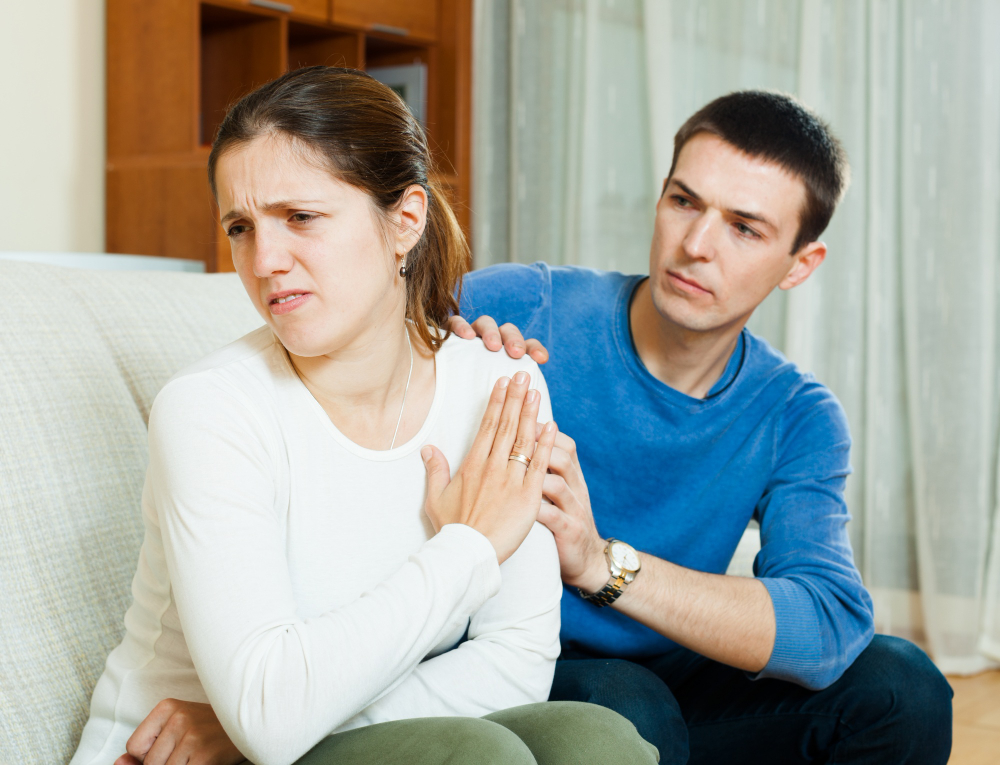
How Relationship Anxiety Shows Up in Daily Life
Relationship anxiety is often subtle but persistent. It may appear as:
- Re-reading messages to analyze tone
- Feeling uneasy when a partner is busy or less responsive
- Overthinking small changes in behavior
- Comparing your relationship to others
- Seeking frequent reassurance about feelings or commitment
- Difficulty focusing on other areas of life when uncertain about the relationship
These patterns can feel exhausting because the mind is constantly engaged in monitoring the relationship rather than experiencing it.
Why Reassurance Does Not Fully Solve It
Reassurance from a partner often provides short-term relief. However, it does not address the underlying emotional pattern.
This is because the anxiety is not only about information, it is about emotional regulation.
When reassurance becomes the primary coping strategy:
- Anxiety temporarily decreases
- But returns when uncertainty reappears
- The need for reassurance gradually increases
- The nervous system becomes dependent on external calming
Over time, this can create tension in the relationship because one partner may feel responsible for constantly reducing the other’s anxiety.
How Relationship Anxiety Affects the Relationship Itself
If left unaddressed, relationship anxiety can unintentionally impact the relationship in several ways:
- Increased conflict due to repeated reassurance seeking
- Emotional exhaustion for both partners
- Misinterpretation of neutral behaviors as negative intent
- Reduced spontaneity due to fear of disconnection
- Pressure on the relationship to constantly “prove” stability
The relationship may still be healthy, but the emotional experience becomes strained.
How to Begin Calming Relationship Anxiety
The goal is not to eliminate all doubt. The goal is to reduce emotional reactivity to uncertainty.
Some helpful shifts include:
1. Noticing the trigger before reacting
Instead of immediately seeking reassurance, pause and observe:
“What am I afraid is happening right now?”
2. Separating facts from interpretations
Ask:
“What do I actually know, and what am I assuming?”
3. Tolerating small amounts of uncertainty
Learning that discomfort does not always require immediate resolution helps reduce dependency on reassurance.
4. Building internal grounding
Developing self-soothing skills reduces reliance on external validation.
5. Communicating needs clearly without escalation
For example:
“I’m feeling a bit anxious and could use some clarity,” instead of repeated questioning or checking behaviors.
I’m feeling a bit anxious and could use some clarity,” instead of repeated questioning or checking behaviors. These kinds of therapist-approved communication skills can make that conversation land better
How Couples Can Support Relationship Anxiety Together
When one partner experiences relationship anxiety, the dynamic matters as much as the individual experience.
Healthy support includes:
- Consistent but not excessive reassurance
- Open communication about emotional needs
- Avoiding dismissive responses like “you’re overthinking”
- Encouraging emotional self-regulation skills
- Creating predictable patterns of connection
Creating predictable patterns of connection, which is closely tied to coregulation between partners
The goal is not to eliminate all uncertainty, but to create enough emotional safety that uncertainty is tolerable.
How Therapy Helps Reduce Relationship Anxiety
Therapy helps individuals and couples understand the deeper patterns behind relationship anxiety rather than only managing surface symptoms.
Therapy helps individuals and couples understand the deeper patterns behind relationship anxiety rather than only managing surface symptoms and couples therapy can help even when the relationship itself is stable.
In his Los Angeles practice, Dr. Harel often works with clients who experience persistent relational worry despite being in stable relationships. Therapy focuses on identifying attachment patterns, reframing emotional interpretations, and building internal security rather than dependence on external reassurance.
Over time, individuals learn to respond to uncertainty with greater calm, clarity, and emotional stability.
Final Thoughts
Relationship anxiety is not a sign that something is wrong with you or your relationship. It is a signal that your nervous system is working overtime to protect you from emotional uncertainty.
The challenge is not the presence of thoughts or fears, it is the intensity and repetition of those thoughts even in safe relationships.
When understood properly, relationship anxiety becomes less about predicting the future and more about learning how to feel safe in the present moment.
Because healthy relationships are not built on the absence of doubt—they are built on the ability to stay connected even when doubt appears, without letting it take control of the relationship experience.
Frequently Asked Questions
Yes. Strong feelings for a partner can sometimes make uncertainty feel more significant, especially when the relationship is emotionally important to you. Relationship anxiety does not necessarily mean you have doubts about whether you love your partner.
Not necessarily. Relationship anxiety often involves recurring fears and uncertainty that persist even when there is little evidence that something is wrong. Genuine relationship concerns may be based on specific behaviors, incompatibilities, or problems that need to be addressed.
It can. Repeated worry may lead you to analyze your feelings, compatibility, or the future of the relationship excessively. This can make it difficult to distinguish a genuine relationship concern from anxiety-driven doubt.
A calm relationship does not automatically switch off an established anxiety response. If your mind has become accustomed to looking for signs that something might go wrong, periods of stability can still feel uncertain or unfamiliar.
Persistent relationship worry can be emotionally exhausting and may make it difficult to relax, concentrate, or stay present in everyday activities. The ongoing cycle of monitoring and analyzing can also increase overall stress.
In many cases, open communication can help your partner understand what you are experiencing instead of interpreting your behavior as distrust or disinterest. Sharing your feelings without making your partner responsible for eliminating the anxiety can create a healthier conversation.
The goal is not necessarily to eliminate every anxious thought. With greater awareness and appropriate support, many people can learn to respond differently to uncertainty so that anxious thoughts become less intense, frequent, and disruptive.
It may be affecting your daily life when relationship-related thoughts regularly interfere with work, sleep, concentration, friendships, or your ability to enjoy time with your partner. Frequent checking, analyzing, or reassurance seeking can also indicate that anxiety is taking up too much mental space.

Harel Papikian
Dr. Harel Papikian is a clinical psychologist and couples therapist with more than 15 years of experience. He offers marriage counseling and couples therapy in los Angeles. It help’s couples navigate their relationship challenges and deepen their connection. Our clinic uses a unique ARM method (Awareness, Release, Mastery) to achieve rapid and profound results for our clients. We serve a diverse clientele, including LGBTQ+ and heterosexual couples, addressing issues like communication breakdowns, conflict resolution, intimacy, and trust. You can also get individual therapy sessions for concerns like depression, anxiety, and trauma.
Leave a Reply