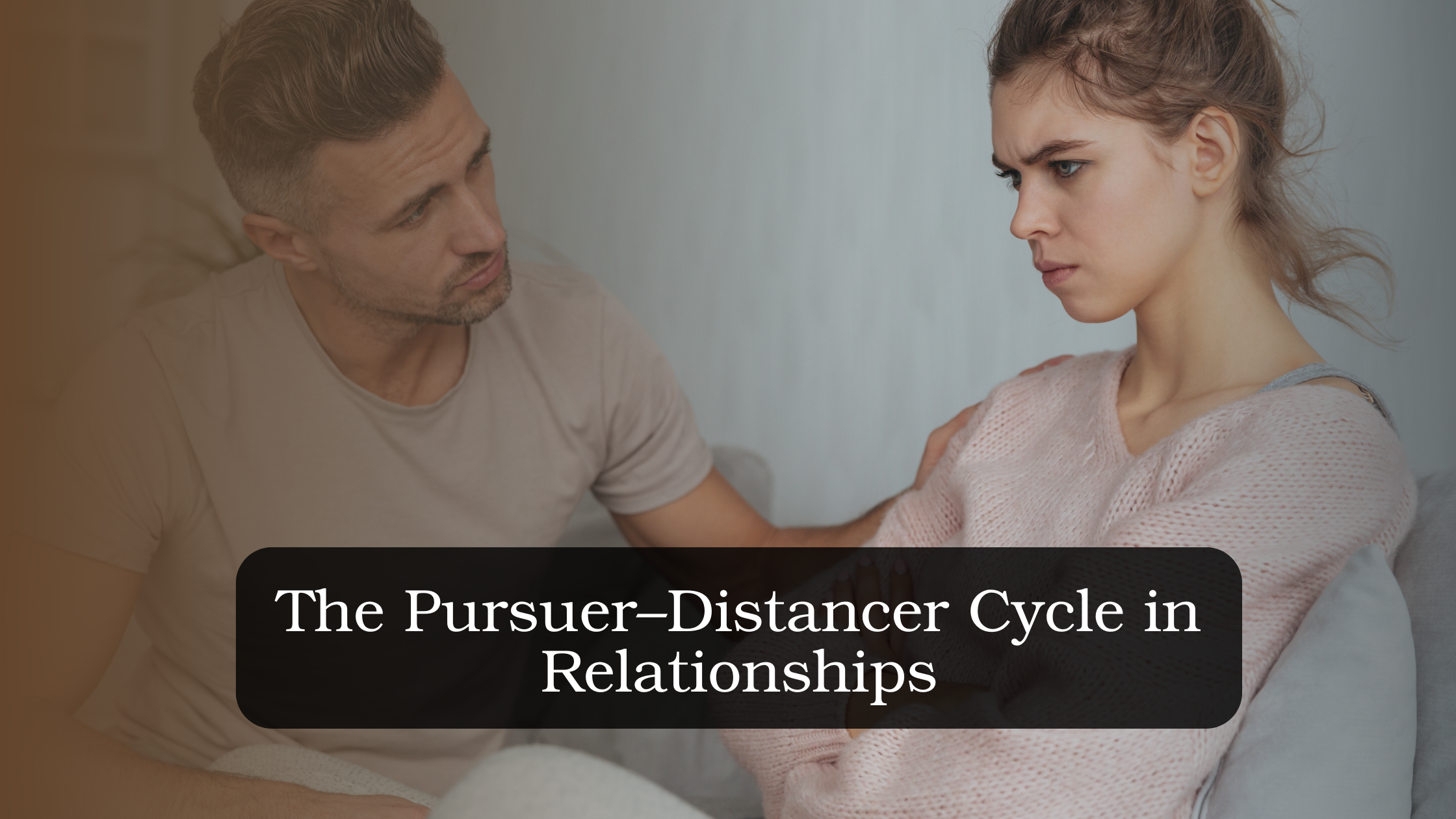
The Pursuer–Distancer Cycle in Relationships
A relationship can become exhausting when one person reaches for conversation just as the other pulls away. One may want reassurance, clarity, or a solution immediately, while the other needs time to think and settle down. Neither response means a lack of love or commitment. The difficulty begins when each reaction intensifies the other.
This pattern is called the pursuer–distancer cycle. Research on demand-withdraw interactions links pressure and withdrawal with poorer functioning, while couples therapy approaches use the cycle to understand distress.
In his practice, Dr. Harel Papikian works with couples around communication, patterns, intimacy, and relationship challenges. His practice describes more than 16 years of clinical experience. Recognizing the cycle can help partners stop treating each other as the problem and address the interaction that keeps them stuck.
What Is the Pursuer–Distancer Cycle?
The pursuer–distancer cycle is an interaction in which one partner moves toward the relationship during distress while the other moves away. The pursuer may seek discussion, reassurance, closeness, or immediate resolution. The distancer may seek quiet, physical space, or time before continuing the conversation.
The cycle often follows this sequence:
- One partner senses disconnection or uncertainty.
- They initiate questions or attempts to resolve the problem.
- The other experiences pressure or emotional overload.
- They become quiet, defensive, distracted, or leave.
- The first partner interprets withdrawal as rejection.
- They increase efforts to reconnect.
- The second partner withdraws further.

What the Pursuer May Be Experiencing
Pursuit is often an attempt to restore security rather than create conflict. When communication suddenly stops, uncertainty can feel threatening. The pursuer may wonder whether their partner cares or whether the problem will become permanent.
This can lead to repeated questions, requests for reassurance, frequent texts, or pressure to resolve the disagreement immediately. From the outside, these behaviors may look demanding. Internally, they may reflect a strong desire for connection and certainty.
What the Distancer May Be Experiencing
Withdrawal is not always indifference. For some people, emotional intensity makes it difficult to think clearly or communicate constructively. Stepping away can feel like a way to prevent escalation.
A distancer may become quiet, leave the room, delay responding, or ask to discuss the issue later. A deliberate pause can reduce emotional intensity, but “later” becomes harmful when the conversation never returns.
Research has linked demand-withdraw communication with lower relationship satisfaction and poorer conflict resolution. The goal is not to eliminate space, but to make it predictable and temporary which is part of what coregulation between partners actually looks like in practice.
Why the Pursuer–Distancer Cycle Becomes More Intense
Each person’s behavior appears to confirm the other’s fear. The pursuer thinks, “They are pulling away, so I need to try harder.” The distancer thinks, “They are pushing harder, so I need more space.”
Over time, the original disagreement may become secondary. A discussion about money, household responsibilities, intimacy, parenting, or plans can turn into an argument about whether one partner cares and whether the other can be trusted to stay engaged.
How the Pursuer–Distancer Cycle Shows Up in Everyday Life
The pattern can develop through ordinary moments. One partner may want to discuss an uneven workload immediately while the other asks to wait. After a misunderstanding, repeated texts may meet brief replies or silence. At bedtime, one partner may want resolution while the other needs rest.

How Couples Can Break the Pattern
Breaking the cycle does not require identical communication styles. Both partners can change the responses that keep the loop moving.
- Name the cycle: “I think we’re getting caught in the same pattern.”
- Separate space from abandonment: A break should communicate that the conversation will continue.
- Set a return point: Agree on when you will reconnect.
- Lower the intensity: Discuss feelings and needs rather than attacking character one of the core fair fighting rules for couples.
- Offer reassurance: “I need an hour, but I want to work this out.”
- Reduce pressure: “I want to talk about this, but I can give you some time.”
- Return to the issue: Once calm, discuss the original concern.
A healthier exchange might be: “I feel disconnected and want reassurance. Can we talk after dinner?” The other partner might respond: “I need some time to settle down, but I am not avoiding the conversation.” Both lines reflect therapist-approved communication skills more than natural instinct..
When Should Couples Seek Professional Support?
Couples may benefit from professional support when the pursuer–distancer cycle becomes repetitive and difficult to break on their own.
Consider couples therapy when:
- The same conflicts keep happening without resolution.
- One partner repeatedly pursues while the other withdraws.
- Taking space regularly turns into prolonged avoidance.
- Communication often leads to defensiveness, criticism, or shutdown.
- Emotional or physical intimacy has noticeably decreased.
- One or both partners feel lonely, unheard, or disconnected.
- Attempts to improve the pattern have not created lasting change.
Therapy can help couples understand the cycle, improve communication, and develop healthier ways to handle conflict while maintaining emotional connection.
How Dr. Harel Helps Couples Break the Pursuer–Distancer Cycle
In his Los Angeles practice, Dr. Harel works with couples who may feel stuck in repeating patterns of pursuit, withdrawal, conflict, and disconnection. Rather than viewing one partner as the problem, his approach focuses on understanding the interaction between both partners and what keeps the cycle going.
Through couples therapy, Dr. Harel can help partners:
- Recognize the pattern as it is happening.
- Identify the triggers that lead one partner to pursue and the other to withdraw.
- Understand the emotions underneath each person’s reaction.
- Communicate needs without criticism, pressure, or shutdown.
- Take space without making the other partner feel abandoned.
- Return to difficult conversations and practice repair.
- Develop healthier ways of responding during conflict.
The goal is to help couples shift their focus away from “You are the problem” and toward “What is happening between us when this pattern begins?” By understanding the cycle, partners can begin responding differently and create more opportunities for emotional safety and connection.
Final Thoughts
The pursuer–distancer cycle is not proof that one partner cares more and the other cares less. It is a relational pattern in which two attempts at emotional protection collide. One person moves closer to restore connection; the other moves away to manage overwhelm.
Once couples recognize the sequence, conflict can become less personal. The question shifts from “How do I make you stop?” to “What can we both do differently when this starts?” That shift creates room for reassurance, boundaries, repair, and emotional connection and couples therapy can still help even when the relationship isn’t in crisis.
Frequently Asked Questions
Yes. Stress, exhaustion, tension, and major life changes can temporarily intensify pursuit and withdrawal. The concern is whether the pattern becomes repetitive and repair is possible.
Yes. Roles can change according to the situation, topic, and level of stress. Neither is a permanent identity.
Start with your own behavior. Describe the sequence without assigning labels, and focus on what happens between you.
There is no universal time limit. A break should reduce intensity while preserving an intention to return. Agreeing when to reconnect can prevent avoidance.
It can. Repeated messages may increase pressure, while delayed replies can increase uncertainty. A calmer conversation may reduce misinterpretation.
Mutual withdrawal may reduce visible arguing without resolving the problem. The challenge is rebuilding enough safety to re-engage.
Consider support when the pattern persists, conflict escalates, withdrawal becomes prolonged, or intimacy declines. Therapy can help partners understand the cycle and practice different responses.

Harel Papikian
Dr. Harel Papikian is a clinical psychologist and couples therapist with more than 15 years of experience. He offers marriage counseling and couples therapy in los Angeles. It help’s couples navigate their relationship challenges and deepen their connection. Our clinic uses a unique ARM method (Awareness, Release, Mastery) to achieve rapid and profound results for our clients. We serve a diverse clientele, including LGBTQ+ and heterosexual couples, addressing issues like communication breakdowns, conflict resolution, intimacy, and trust. You can also get individual therapy sessions for concerns like depression, anxiety, and trauma.
Pingback: Ten Communication Habits That Damage Relationships